TOP500 crowns China system as U.S. boosts quantum push
China supercomputer LineShine topped the June 2026 TOP500 list, but experts say the ranking may not reflect the best systems for AI workloads.
Jason Kwon ·
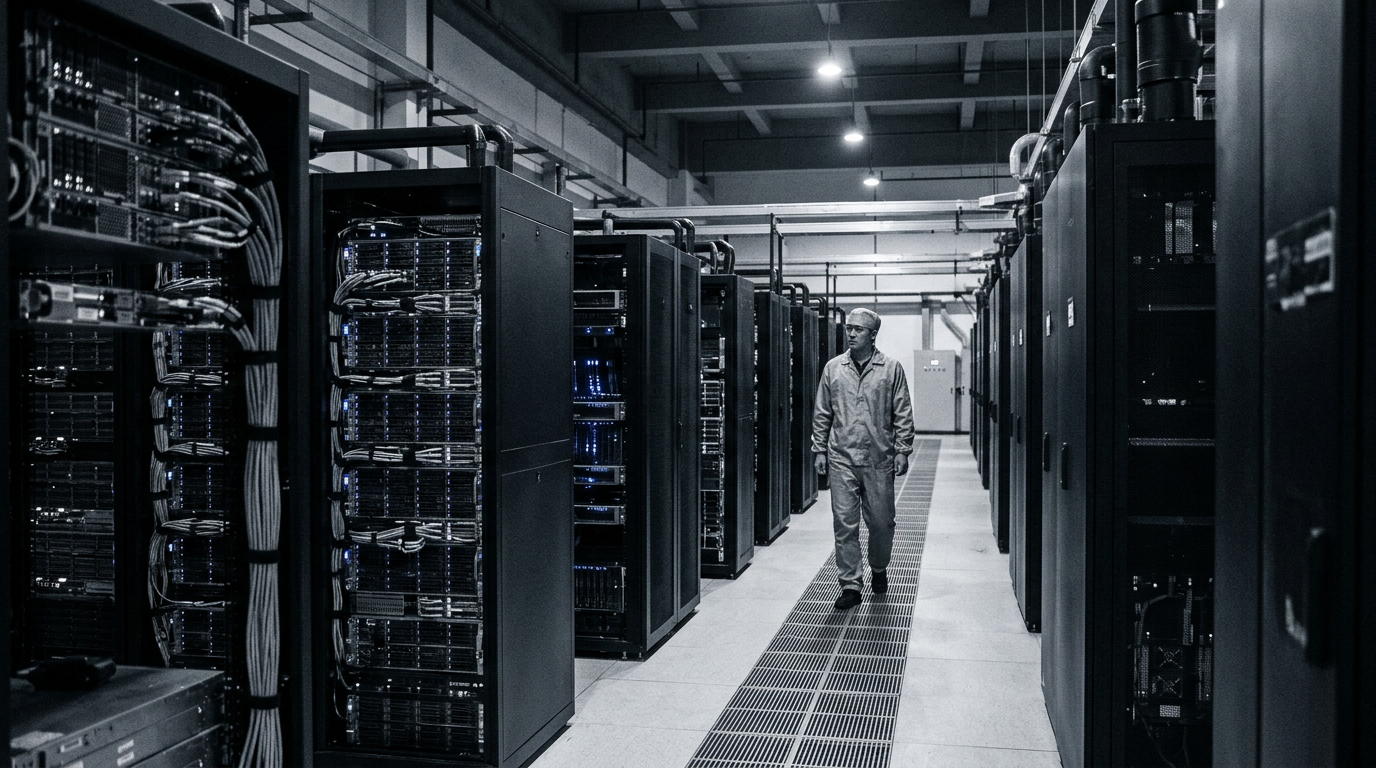
China supercomputer LineShine has moved into first place on the TOP500 list, a June 2026 ranking that tracks the world’s most powerful machines.
The system, installed at the National Supercomputing Centre in Shenzhen, is built around chips designed in China and marks the country’s first appearance on the list in three years.
Researchers and policy analysts cautioned that the headline result is best read as a signal of China’s push to prove it can field high-end computing with domestic components, rather than as a definitive measure of leadership in AI computing.
TOP500 lead changes hands as China returns to the list
TOP500 is published twice a year and ranks systems using a long-standing performance test focused on high-performance computing workloads.
In the new edition, LineShine displaced El Capitan, the previous No. 1 system located at Lawrence Livermore National Laboratory in the United States. The U.S. government uses El Capitan for mission work tied to stewardship of the country’s nuclear weapons stockpile.
The Shenzhen installation’s debut also stands out because it relies on domestically designed processors, a detail that aligns with Beijing’s broader emphasis on reducing dependence on foreign technology.
While the TOP500 ranking is widely cited, it is not the only yardstick used by governments and companies to gauge compute capacity for modern AI systems.
Experts: No. 1 on TOP500 does not equal No. 1 for AI
Specialists pointed to shifts in how cutting-edge AI is trained and deployed, noting that the most important performance measures today often differ from the benchmark TOP500 uses to order its list.
On an additional benchmark intended to reflect workloads closer to AI-style computation, LineShine placed fourth, according to the same ranking release. That gap suggests that the system’s strengths may be better captured by traditional supercomputing tests than by metrics more aligned with AI training and inference.
The distinction matters because the global debate over “AI leadership” frequently centers on access to large amounts of accelerator-rich compute and the ability to scale models efficiently, not solely on peak performance on a classic HPC benchmark.
For policymakers, a top spot can still carry weight as a public proof point of engineering capability, industrial coordination, and—critically in China’s case—progress on building a domestic supply chain for advanced processors.
U.S.-China compute rivalry widens, with quantum in focus
The new TOP500 results land amid intensifying U.S.-China competition in advanced computing. In Washington, President Donald Trump signed an executive order on Monday aimed at strengthening U.S. positioning in quantum computing, an emerging field viewed as strategically important for security and next-generation computation.
Quantum initiatives sit alongside ongoing efforts to expand conventional high-performance systems and AI infrastructure, areas where both countries see economic and national-security stakes.
LineShine’s domestic-chip design is likely to be interpreted in that geopolitical context, particularly as both governments pursue policies that encourage onshore technology development and resilience against supply disruptions.
Next, industry observers will watch whether China’s return to the TOP500 with a domestic-chip flagship is followed by broader, repeatable deployments—and whether future benchmark results narrow the gap between traditional HPC leadership and AI-relevant performance.