

President Targets Regional AI Hubs to Bridge National Economic Divide
President Lee Jae-myung is shifting AI infrastructure investment to regional hubs to combat economic concentration, while identifying labor shortages as a…
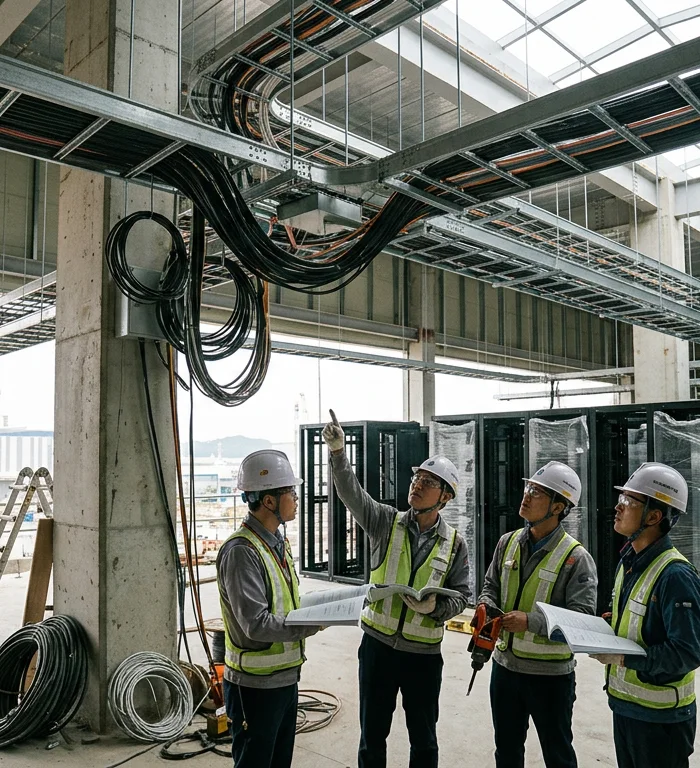
President Lee Jae-myung has signaled a strategic shift in national infrastructure policy by prioritizing the development of AI data centers in regional hubs rather than the capital region. During a site visit to an AI data center project in Ulsan, the President framed these regional investments as the modern equivalent of the Gyeongbu Expressway, intended to catalyze industrial growth and facilitate a national AI transition.
This initiative is part of a broader government effort to mitigate the economic and social risks associated with excessive concentration in the Seoul metropolitan area. By incentivizing large-scale projects in regions such as Ulsan and Chungnam, the administration aims to establish new growth momentum and address long-standing regional development disparities. The government views these facilities as essential infrastructure for supporting advanced technologies, including robotics and autonomous vehicles.
President Lee Jae
Despite the focus on regional expansion, the administration faces significant operational risks regarding labor shortages in high-tech construction. The President acknowledged that the current lack of skilled personnel for semiconductor fabrication and data center construction poses a threat to project timelines. Given that international competitiveness in the AI sector is heavily dependent on the speed of infrastructure deployment, the government is now evaluating policy interventions to address these human capital gaps.
Institutional stakeholders should monitor potential shifts in regulatory incentives and government-backed training programs designed to support these regional projects. The administration’s commitment to these "mega-projects" suggests that future state-led investment will likely favor regional sites that can demonstrate both technical viability and the capacity to alleviate metropolitan congestion. Continued coordination between the Ministry of Science and ICT and local municipal governments will be critical to maintaining the momentum of these developments.
More stories
- ICE arrests at Seattle airport draw protests and scrutiny
- EU rejects COP31 deal as fossil fuel divisions block pact
- Staff notice in Commission cyberattack tests EU response
- Britain-EU deal eases food checks and youth travel rules
- European troops in Poland drill near reported missile crash
- Brooklyn collapse kills eight as city orders site sweeps
- AK Party Dismisses Early Election Speculation, Cites 2028 Timeline
- Istanbul Bilgi University's Operating License Revoked by Presidential Decree
Latest news
- Trump prepares tariffs on China and other major exporters
- New-car buyers pay record average $50,087 in October
- Banks face ECB reserve debate over liquidity and profits
- Investors see Anthropic debut gains fade below $83 a share
- Iraq orders federal control over Kurdish-area oilfields
- Germans oppose Ukraine aid as poll shows support slipping
- Kim Jong-un receives 10 envoys after constitutional shift
- Ukraine claims Libya strike sinks Russian naval corvette