

AI Compute Density Drives Shift Toward High-Voltage DC Infrastructure
Rising AI compute density makes AC power inefficient. Shift to 800VDC architectures to improve energy delivery and boost operational capacity.
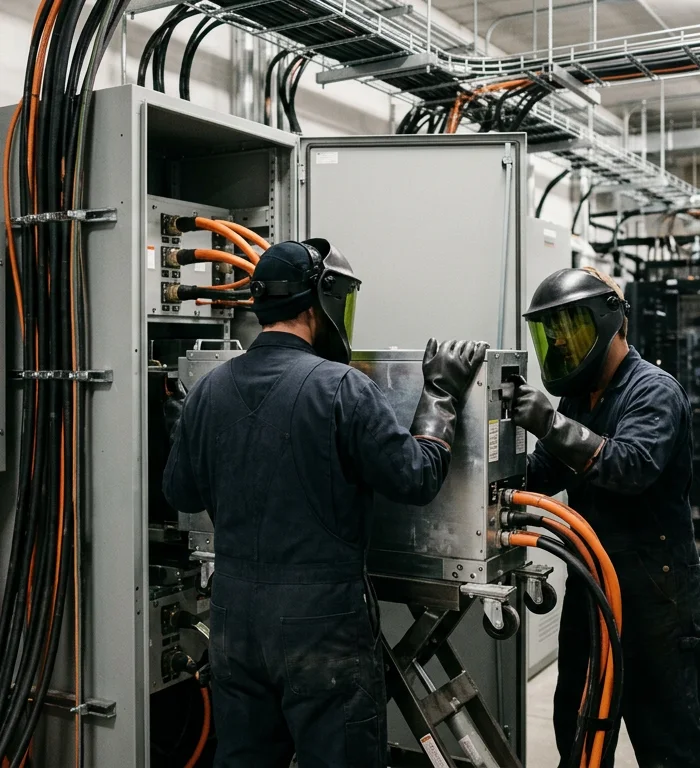
The rapid expansion of artificial intelligence infrastructure is forcing a transition from traditional alternating current (AC) power architectures to direct current (DC) systems. Projections indicate that global AI data center capacity will increase by over 100GW between 2026 and 2030. This growth is accompanied by a surge in compute density, with server rack requirements escalating from approximately 10kW to nearly 1MW.
Existing AC-based infrastructure relies on multiple power conversion stages, which result in energy losses ranging from 10% to 30%. These inefficiencies generate significant waste heat, necessitating additional cooling capacity and increasing operational costs. As power availability becomes a primary constraint for data center expansion, these losses represent a critical barrier to scaling operations.
Industry leaders are increasingly advocating for 800VDC architectures to support megawatt-scale racks. Higher voltage DC systems reduce current requirements, minimize resistive losses, and allow for more efficient power delivery through existing conductors. This shift is expected to reduce copper usage and installation complexity while improving overall system efficiency.
Existing AC
The transition to DC-native architecture is expected to occur in stages, moving from current AC-reliant models to fully integrated DC systems. The ultimate objective is the implementation of solid-state transformers (SSTs), which enable the direct conversion of medium-voltage grid power to high-voltage DC. By utilizing advanced semiconductor materials like silicon carbide, SSTs can eliminate multiple conversion layers and achieve system efficiencies approaching 98%.
For new data center projects, the industry is shifting toward designing for 800VDC from the outset rather than relying on retrofits. This approach is considered more cost-effective and operationally efficient for facilities managing high-density AI workloads. Policymakers and financial stakeholders should monitor this transition as a key factor in the long-term viability and energy efficiency of large-scale digital infrastructure.
More stories
- Europe faces attribution gap after 16 cyber, physical incidents
- PIF backs Grand Theft Auto as Saudi players embrace game
- Signal limits screenshots to curb AI access to messages
- Cognition runs Devin Mac workspaces on EC2 in 6 AWS regions
- Salesforce engineers cut 600-failure triage to 90 minutes
- Türkiye Desk: GTA 6 puts console access and network demand in focus
- Nvidia opens board inquiry into alleged foreign targeting
- Nvidia opens board inquiry into alleged foreign targeting
- Chinese open-source AI study challenges US ban proposals
- Netflix commits $200 million to Women's World Cup rights
Latest news
- Trump prepares tariffs on China and other major exporters
- New-car buyers pay record average $50,087 in October
- Banks face ECB reserve debate over liquidity and profits
- Investors see Anthropic debut gains fade below $83 a share
- Iraq orders federal control over Kurdish-area oilfields
- Germans oppose Ukraine aid as poll shows support slipping
- Kim Jong-un receives 10 envoys after constitutional shift
- Ukraine claims Libya strike sinks Russian naval corvette