Netflix commits $200 million to Women's World Cup rights
Netflix is set to pay $200 million for 2027 FIFA Women’s World Cup rights in the U.S. and Canada, people familiar said.
Jason Kwon ·
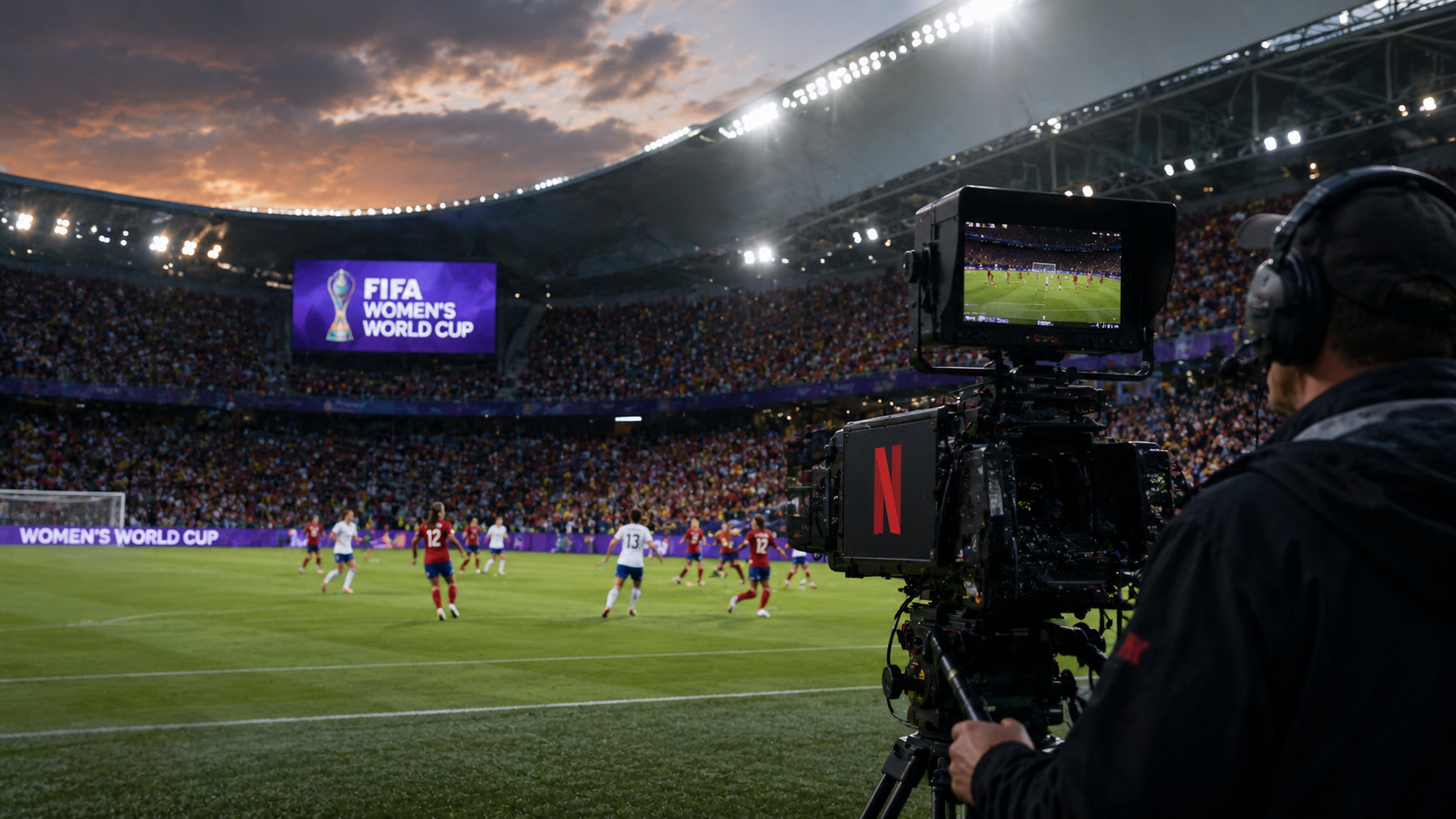
Netflix is set to pay $200 million for U.S. and Canadian broadcast rights to the 2027 FIFA Women’s World Cup, people familiar said.
The people were not authorized to discuss the deal publicly, leaving the figure unattributed to a company filing or official statement. Netflix Inc. had already said it secured rights to carry matches in the U.S. and Canada for the 2027 and 2031 tournaments, but the price had not been made public in that announcement.
$200 million rights price
The reported fee places a clear dollar figure on Netflix’s move into a global soccer property at a time when live sports remain one of the few entertainment formats that can pull large audiences at scheduled times. The available account ties the $200 million price to next year’s tournament rather than breaking out how the 2031 rights are valued.
That distinction matters because sports-rights economics depend on duration, territory, exclusivity and the number of matches included. The source account confirms the countries, the tournament years and the reported price, but it does not state whether every match package carries the same commercial terms.
Netflix expands live sports
For Netflix, the deal adds another high-profile live event to a business still built mainly around on-demand entertainment. A Women’s World Cup package gives the company a sports property with international recognition while keeping the rights limited to two North American markets named in the earlier announcement.
The rights also test how Netflix can turn event viewing into subscriber engagement. If the reported cost holds, the company will need the tournament to support more than one metric: live audience, retention, advertising demand and the broader value of being seen as a home for premium sports programming.
Women’s soccer gets streaming leverage
The industry implication is direct: a streaming platform is assigning a large reported price to women’s soccer rights in two major media markets. That can influence future negotiations for sports bodies, leagues and broadcasters by giving sellers another bidder category beyond traditional television networks.
For FIFA’s women’s tournament, the reported fee signals that digital distribution has become central to how global sports properties are packaged. The source does not identify the full contract terms, so the competitive impact depends on factors still undisclosed, including exclusivity, production obligations and match availability.
Scenarios for Netflix and FIFA
If the $200 million price is confirmed and Netflix delivers strong viewing around the 2027 tournament, the macro effect would be incremental rather than economy-wide: more sports-rights spending could shift from linear television budgets into subscription and advertising platforms. For Netflix, that path would strengthen the case for selective live sports investment, while the wider sector would face higher competition for premium event rights.
If audience conversion is weaker than the reported fee implies, Netflix may treat the tournament as a brand-building expense rather than a template for larger sports commitments. That outcome would limit any broader market signal and keep rights sellers cautious about assuming every global sports package can command similar streaming premiums.
A third path depends on execution. If live delivery, promotion and advertiser demand line up, the tournament could give Netflix a repeatable model for event-based programming; if technical or commercial performance falls short, rivals may see the deal as a costly experiment rather than a new benchmark.
The open questions are concrete: whether the $200 million figure is formally confirmed, how the 2027 and 2031 packages are divided, and what rights Netflix holds beyond the U.S. and Canada. Until those details are disclosed, the deal is best read as a reported price for a strategic test, not a complete map of Netflix’s sports ambitions.