

Researchers Identify 128,000-Year-Old Ice Record in Tibet
The discovery of 128,000-year-old ice in Tibet provides a new, long-term climate record that challenges previous theories regarding the survival of mountain…
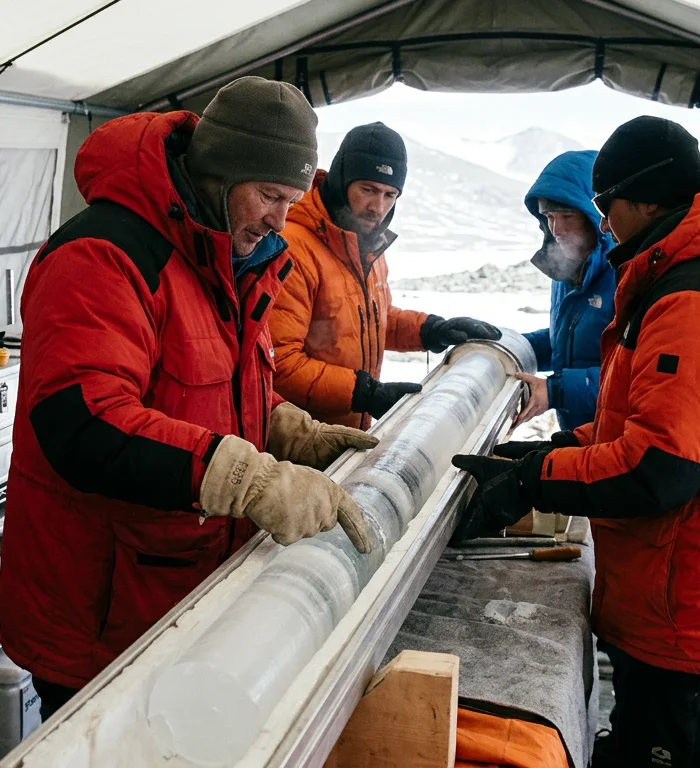
Scientists have confirmed that ice cores extracted from the Guliya Plateau in Tibet contain climate data dating back more than 128,000 years. This discovery significantly extends the known glacial record for the region by over 100,000 years, establishing these samples as the oldest recovered from non-polar mountain environments. The findings challenge previous assumptions that Tibetan ice masses did not survive the transition from the last ice age into the Holocene epoch.
The research team utilized advanced dating techniques, specifically measuring the decay of radioactive beryllium and chlorine isotopes. By identifying chemical signatures associated with the Leschamp Geomagnetic Excursion—a magnetic field disturbance occurring approximately 41,000 years ago—researchers were able to calibrate the timeline of the ice layers. Cross-referencing these results with oxygen isotope data from regional cave deposits confirmed the reliability and reproducibility of the climate record.
This extended timeline provides a critical dataset for This extended timeline provides a critical dataset for modeling how mountain glaciers respond to long-term shifts in global climate. The persistence of this ice suggests that high-altitude glaciers possess greater resilience to environmental fluctuations than previously estimated. Understanding these natural cycles is essential for improving the accuracy of climate models and predicting future glacial stability.
Future analysis of the Guliya cores will focus on extracting additional environmental indicators preserved within the ancient layers. These findings are expected to refine the understanding of glacial formation and retreat patterns throughout Earth's history. The ability to verify these records across samples collected decades apart underscores the significance of the Guliya Plateau as a primary site for longitudinal climate research.
More stories
- Europe faces attribution gap after 16 cyber, physical incidents
- PIF backs Grand Theft Auto as Saudi players embrace game
- Signal limits screenshots to curb AI access to messages
- Cognition runs Devin Mac workspaces on EC2 in 6 AWS regions
- Salesforce engineers cut 600-failure triage to 90 minutes
- Türkiye Desk: GTA 6 puts console access and network demand in focus
- Dimon says Mythos raises global cybersecurity risks tenfold
- PC Pulse: Ace Combat 8 sets a franchise Steam launch record
Latest news
- Trump prepares tariffs on China and other major exporters
- New-car buyers pay record average $50,087 in October
- Banks face ECB reserve debate over liquidity and profits
- Investors see Anthropic debut gains fade below $83 a share
- Iraq orders federal control over Kurdish-area oilfields
- Germans oppose Ukraine aid as poll shows support slipping
- Kim Jong-un receives 10 envoys after constitutional shift
- Ukraine claims Libya strike sinks Russian naval corvette