Wonderful Pistachios says it signed seven college athletes, shifting spend to NIL social
In a GlobeNewswire press release dated Sept. 15, Wonderful Pistachios said it has signed seven college sports stars to its first-ever NIL roster for a…
Hannah Vogel ·
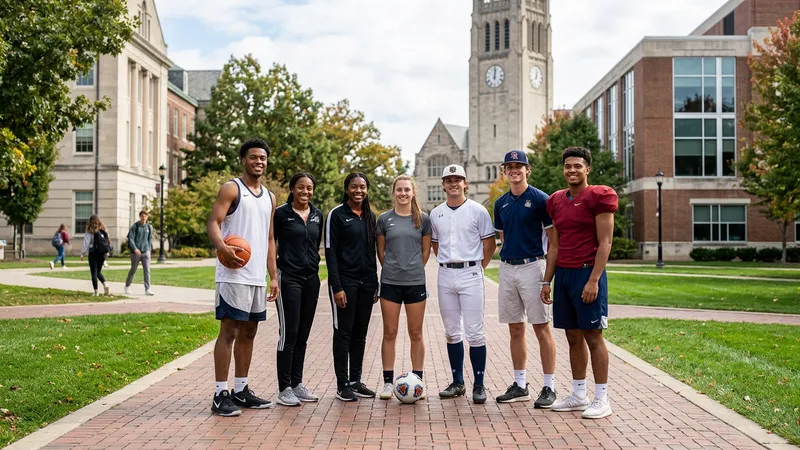
In a press release distributed via GlobeNewswire on Sept. 15, Wonderful Pistachios said it has signed seven college sports stars to its first-ever name, image and likeness roster, branded the “Don’t Hold Back All-Stars,” for a social-first campaign spanning six sports and all Power Four conferences. The release describes Wonderful Pistachios as “America’s No. 1 Snack Nut Brand,” a marketing claim the company did not baseline with a cited source, timeframe or category definition. This is, so far, single-source — a company press release with no independent confirmation — and it contains no disclosed spend, contract terms, posting cadence, platforms, or attribution method.
A seven-athlete roster is a channel strategy, not a single-celebrity bet
What Wonderful Pistachios has chosen is a roster, not a headliner. In its own description, the brand says the group comprises seven athletes across six sports in all Power Four conferences — a design that suggests distributed reach, multiple creative narratives, and the ability to show up in different game-week contexts without relying on one personality or one sport’s calendar. Read as a media plan rather than a branding flourish, the choice looks like a calculated way to buy frequency across many micro-moments while keeping any one athlete’s individual performance risk from dominating the campaign’s outcome. The company’s use of “social-first” signals that the content is intended to live natively in athletes’ and brand-owned feeds, with paid amplification a likely companion even though no platforms are named in the release. For CMOs and social leads, that means the operational unit of work is not a single master asset, but an always-on content slate that has to clear brand, legal and athlete approvals on social timelines. The release does not specify who owns creative direction or what guardrails apply, leaving the cadence and consistency question unanswered.
The missing denominator: no budget, no reach, no lift disclosed
The press release contains no dollar figure, no audience reach estimate, no post volume commitment, and no retail or e-commerce tie-ins. Without those denominators, “first-ever NIL roster” is a channel move rather than a performance claim. For an operator deciding whether to copy this pattern, the unanswered questions are the load-bearing ones: Is this budget incremental to paid social or displacing other sports inventory? Is it funded from brand, shopper, or a joint bucket with retail partners? And how will the team attribute any sales movement to this roster versus seasonality, promotions, or retail media? The company’s “No. 1” positioning is also presented without the basis that would make it comparable — for example, whether the claim refers to dollar sales, unit share, or household penetration, and over what period. In the absence of those metrics, the development is best understood as a distribution choice for creative and attention, not as evidence of marketing effectiveness.
Why the timing matters for how fall snack dollars move
A social-first roster launched in mid-September is intended to ride the heart of the college sports calendar. That timing matters for budget owners who have to decide where to place marginal dollars in the final third of the year. A seven-athlete portfolio across all Power Four conferences can be pointed at regional audiences where household snack purchases are concentrated. If that is the intent, it implies a tilt toward addressable, creator-led reach that is closer to retail decision windows than national broadcast footprints — a choice that often has implications for how shopper and brand budgets connect. The release does not say whether any of the roster’s content will be adapted for retail media networks, in-store activations, or co-op placements; if it is, observers should expect to see common brand creative and athlete narratives echoed in those channels. If it is not, the plan is likely to stay contained within social and owned media with limited spillover to the shelf. That choice will determine whether this becomes a brand signal or a sell-through driver.
The operational burden shifts to procurement, legal and social production
A roster spanning multiple sports and schools is easy to announce and messy to run. Every athlete adds a contract to negotiate, a calendar to manage, and an approvals path to clear. The press release does not disclose usage windows, exclusivity, or content rights — the contract levers that determine whether assets can be repurposed for paid ads, retailer pages, or future compilations. Without those terms, social managers and media buyers are guessing at how far each clip can travel. If the brand intends to boost athlete-generated posts or reuse footage in brand channels, those permissions will need to be explicit and consistently enforced. And if the plan is to stitch the roster into a coherent brand narrative, creative operations will have to reconcile tone, quality and athlete availability across seasons and sports, an effort that does not scale on autopilot. The company’s choice to emphasize “social-first” increases the number of content atoms, and with it, the need for clear briefing, asset management and compliance workflows.
The skeptic’s read: without paid support and retail linkage, fragmentation looms
Seven athletes across six sports sound comprehensive; they can also be thin if not backed by paid distribution and a plan to concentrate attention. The release does not name platforms or paid support. If each athlete produces a handful of posts that live only in their own feeds, the campaign’s aggregate reach could fragment into pockets too small to move any measurable outcome. Fragmentation risk is not a verdict; it is the practical constraint of a multi-creator plan without a disclosed amplification strategy. Similarly, without coupon codes, store locators, or retailer-specific calls-to-action visible in the creative, it will be hard for a commercial team to argue the roster drove incremental sell-through rather than awareness alone. The most convincing versions of this approach typically tie athlete content to a short path to purchase; the release leaves that linkage an open question.
What operators should watch for in the next six weeks
The first sign that this is more than a brand announcement will be the appearance of the roster in the brand’s own feeds and in athletes’ posts in a way that is consistent, frequent and clearly labeled as part of the “Don’t Hold Back All-Stars” campaign. If the intent is to pull this through to commerce, expect to see the same creative motifs show up in paid social, retailer dot-com product pages, and endcap or secondary display creative where snack purchases are made. If a shopper budget is involved, watch for offers or bundle messaging that connect athlete narratives to purchase prompts. If this budget is primarily brand, expect a heavier focus on identity, lifestyle and behind-the-scenes content with less direct commerce language. None of those signals are disclosed in the press release; they are the observable choices that will reveal where Wonderful Pistachios placed its actual chips.
What this changes for peers considering NIL as a paid social line
The most useful part of Wonderful Pistachios’ move for other brands is not which athletes it picked but how it framed the buy: a named roster, a social-first emphasis, and coverage across all Power Four conferences. That framing gives permission to treat NIL as a routinized line item in the paid social mix rather than as an opportunistic one-off. If the brand follows through with consistent content and amplification, it will have demonstrated a way to buy breadth and season-long relevance without a single-anchor ambassador. If instead the campaign registers as a launch without a program behind it, it will serve as a reminder that NIL rosters can be announcement vehicles that don’t automatically translate into scaled distribution.
The disclosure gap is the real story today
Because the press release offers no spend, reach, or performance data and no specifics on content or media plans, it asks the market to take “first-ever NIL roster” as a signal of intent. That matters: intent can be enough to nudge copycats and redirect internal budgets. But intent is not outcome. The operational denominator — how much is being bought, where it will live, and how it will be measured — is the difference between an ad trade headline and a marketing organization changing how it allocates attention and money. Until Wonderful Pistachios or its retail partners publish observable assets or results, this development should be filed under channel strategy, not marketing effectiveness.