

Market Valuation Disparity Between Indian Corporates and Global AI Firms Sparks Policy Debate
The $2 trillion valuation of a US-based AI firm has triggered a debate over India’s lack of deep-tech investment and the structural challenges facing its…
The recent public listing of US-based artificial intelligence firm Anthropic, which achieved a market valuation of approximately $2 trillion, has prompted a critical assessment of India’s corporate innovation landscape. The firm raised $81.3 billion in its initial public offering, a record-breaking figure that exceeds the combined market capitalization of India’s ten largest publicly traded companies. This valuation gap has ignited a debate among financial leaders and economists regarding the structural impediments to deep-tech development within the Indian economy.
Institutional critics argue that Indian industry, despite benefiting from significant corporate tax concessions and healthy cash reserves, has failed to prioritize capital expenditure in research and development. Government officials have recently expressed dissatisfaction with the private sector’s performance, specifically citing a lack of investment in capacity expansion, job creation, and product quality. This criticism aligns with broader concerns that domestic capital is disproportionately allocated toward consumer-facing startups rather than frontier technologies such as semiconductors, advanced computing, and artificial intelligence.
Conversely, some market participants contend that comparing traditional sectors—such as banking, energy, and consumer goods—with AI-native firms constitutes a fundamental error in asset pricing. Proponents of this view suggest that AI entities are currently valued as "call options" on future synthetic GDP, whereas traditional Indian firms are valued based on cash flows derived from human-dependent economic activity. This perspective emphasizes that the valuation of AI firms reflects speculative potential for autonomous economic output rather than current operational performance.
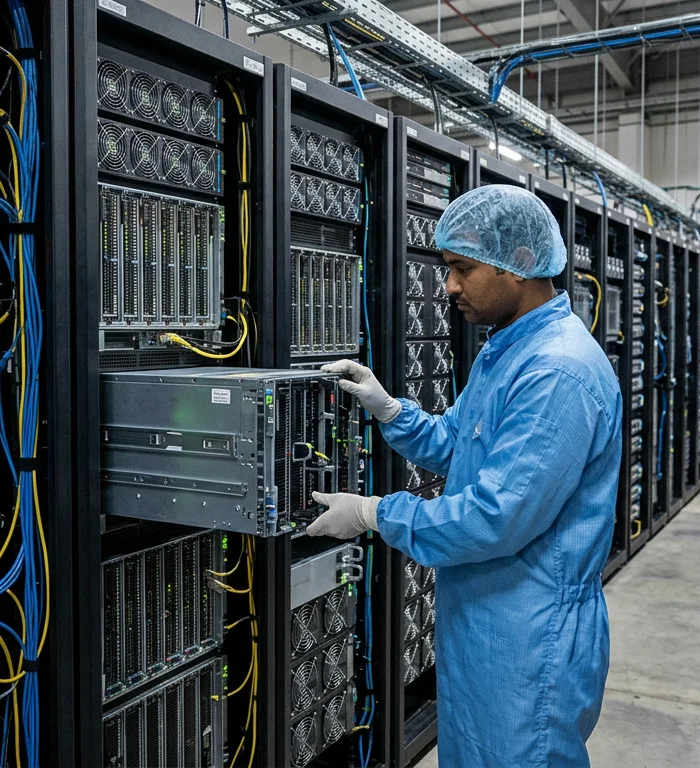
Despite these defenses, the discourse highlights a growing pressure on Indian conglomerates to pivot toward "infrastructure of intelligence" investments. Major industrial groups have begun outlining multi-billion dollar roadmaps for energy, computing, and data center infrastructure to integrate AI-driven "cobotic" models. The ongoing debate underscores a shift in expectations for Indian firms, moving from traditional growth metrics toward a requirement for deep-tech integration to maintain global competitiveness in an increasingly automated macroeconomic environment.
More stories
- Singapore core inflation eases to 1.5% in October
- Greece targets 2.3% growth in 2027 budget
- US stocks face Goldman warning on further forced selling
- Bitcoin falls below $57,742 as investors seek other bets
- Nvidia SEC probe examines chipmaker’s accounting issues
- Rwanda women-owned exports fall 51% from 2021 peak
- Strategy crypto treasury pauses BTC, buys back STRC stock
- Oil prices top $108 as Gulf energy routes face new threats
Latest news
- Nigeria's family-planning budget falls 97%
- Peter Attia reviews cold therapy claims on longevity
- Social Security raises 2027 benefits 3.6%
- Hull City 2–0 Brighton: When Resilience Beat Reputation
- David Parr House to honor Victorian art-workman with blue plaque
- Iran's attacks hit 25 tankers near Strait of Hormuz
- FCC approves prison cellphone jamming despite 2.5-mile warning
- Russia strikes Ukraine as Odesa faces electricity strain