

AI-Driven Protein Structure Prediction Accelerates Biological Research and Drug Discovery
AI-driven protein structure prediction has reached a scale of 200 million mapped proteins, significantly accelerating drug discovery and synthetic biology…
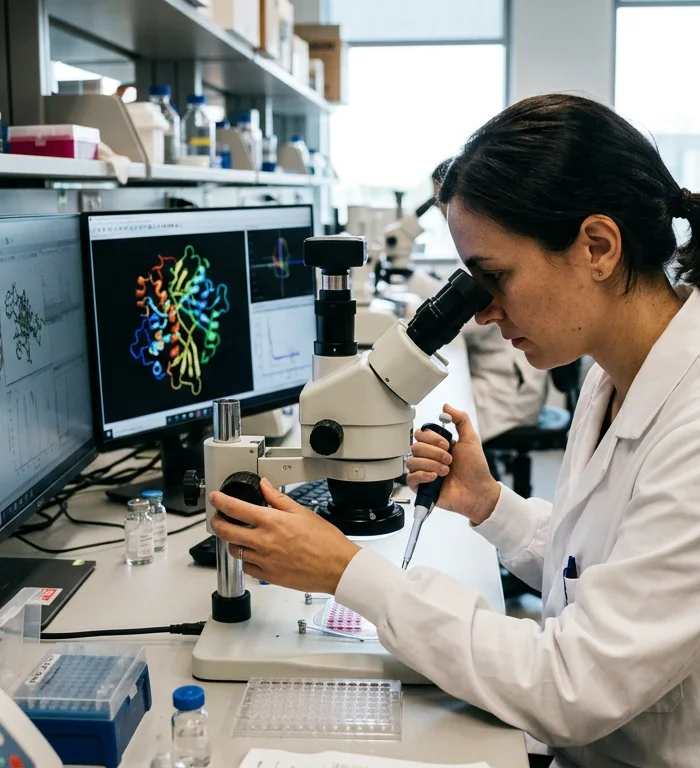
The integration of transformer-based artificial intelligence into structural biology has significantly reduced the time required to map protein structures, shifting the timeline from months of laboratory work to hours of computational processing. This technological shift, centered on the AlphaFold system, has enabled the prediction of approximately 200 million protein structures, effectively cataloging nearly all known proteins in current scientific databases. The capability to predict these structures with atomic-level accuracy has established a new baseline for research in disease pathology, synthetic biology, and pharmaceutical development.
Institutional adoption of these predictive models has expanded beyond initial expectations, influencing diverse fields ranging from agricultural research—such as studying disease resistance in honeybee populations—to the design of synthetic proteins. The ability to model protein interactions, including multi-protein complexes, has provided a foundational tool for researchers attempting to engineer proteins capable of breaking down environmental pollutants or targeting specific disease pathways. This acceleration in protein design represents a significant shift in the R&D cycle for biotechnology and life sciences firms.
Despite the rapid integration of these tools, developers emphasize that the output remains a database of predictions rather than empirical laboratory data. The reliance on these models necessitates a balanced approach to interpretation, as the accuracy of the predictions is contingent upon the underlying training data and the evolutionary information provided to the neural networks. While the technology has successfully addressed a long-standing biological challenge, its utility in clinical and industrial applications remains subject to the limitations of predictive modeling.
Looking forward, the trajectory of this technology suggests a broader convergence between large language models and scientific discovery. The success of these architectures in biology indicates potential for similar breakthroughs in other complex, data-heavy scientific domains. For policymakers and financial stakeholders, this development signals a shift toward AI-augmented discovery models that may compress innovation cycles in the pharmaceutical and chemical industries, potentially altering the competitive landscape for firms reliant on traditional, slower-paced laboratory methodologies.
More stories
- Europe faces attribution gap after 16 cyber, physical incidents
- PIF backs Grand Theft Auto as Saudi players embrace game
- Signal limits screenshots to curb AI access to messages
- Cognition runs Devin Mac workspaces on EC2 in 6 AWS regions
- Salesforce engineers cut 600-failure triage to 90 minutes
- Türkiye Desk: GTA 6 puts console access and network demand in focus
- SK Hynix stock tumble drags Kospi into halt Monday
- AI models chase lower costs as corporate bills climb fast
Latest news
- FCC approves prison cellphone jamming despite 2.5-mile warning
- Russia strikes Ukraine as Odesa faces electricity strain
- Bahrain reports two injuries after Iranian aerial attacks
- Congress tests Black Democrats' growing policy influence
- Baltic responders fight Sparta II fire after drone strike
- Dietitians advise small swaps for plant-based eating
- Cotton faults Lutnick over AI chips allegedly sent to China
- Young adults overestimate life insurance costs by 10 times