

Emerging Nuclear Reactor Designs Present New Challenges for Waste Management Infrastructure
New nuclear reactor designs create non-traditional waste, potentially requiring significant updates to existing storage and disposal infrastructure.
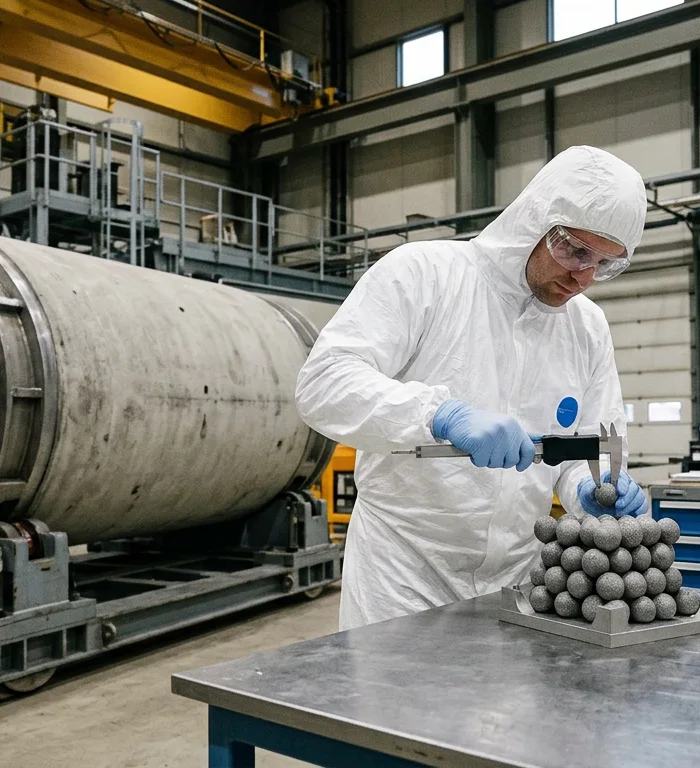
The global nuclear industry, which currently manages approximately 10,000 metric tons of spent fuel annually, faces potential operational shifts as next-generation reactor designs enter the market. While existing disposal protocols—primarily wet storage followed by dry cask containment—remain the standard, novel fuel types and coolants may necessitate significant engineering adjustments to current waste management systems.
Advanced reactor designs, such as those utilizing TRISO (tri-structural isotropic) fuel, introduce physical changes to waste profiles. Because TRISO fuel is embedded in graphite shells, the resulting waste volume is significantly bulkier than that produced by conventional low-enriched uranium reactors. Current technical limitations make the separation of these protective layers economically unfeasible, requiring the entire assembly to be processed as high-level waste.
Liquid-fueled molten-salt reactors present a different set of
Liquid-fueled molten-salt reactors present a different set of Liquid-fueled molten-salt reactors present a different set of logistical requirements. In these systems, the fuel is dissolved directly into the coolant, meaning the entire volume of molten salt must be treated as high-level waste upon decommissioning or fuel replacement. Conversely, fast reactors may achieve higher fuel burn-up rates, potentially reducing the total volume of spent fuel but altering the thermal and radioactive characteristics of the waste that remains.
While Finland is nearing the operational phase for
While Finland is nearing the operational phase for Long-term disposal remains the primary bottleneck for the industry, with deep geologic repositories identified as the preferred solution. While Finland is nearing the operational phase for its repository, similar projects in other jurisdictions remain stalled due to political and regulatory friction. Consequently, the industry continues to rely on onsite storage at both active and decommissioned power plants.
Regulatory bodies are currently reviewing waste management plans submitted by developers of advanced reactors. While some designs, such as those utilizing TRISO fuel, may allow for immediate dry storage by bypassing the need for initial wet cooling pools, the lack of standardized disposal pathways for non-traditional waste forms remains a critical risk factor. Policymakers and industry stakeholders must determine whether existing infrastructure can be retrofitted to accommodate these diverse waste streams or if entirely new containment technologies will be required to maintain safety standards.
More stories
- Europe faces attribution gap after 16 cyber, physical incidents
- PIF backs Grand Theft Auto as Saudi players embrace game
- Signal limits screenshots to curb AI access to messages
- Cognition runs Devin Mac workspaces on EC2 in 6 AWS regions
- Salesforce engineers cut 600-failure triage to 90 minutes
- Türkiye Desk: GTA 6 puts console access and network demand in focus
- Gemini flags 69% of held-out thermal-video falls
- Anthropic reports $80.7 billion loss ahead of planned IPO
Latest news
- Trump prepares tariffs on China and other major exporters
- New-car buyers pay record average $50,087 in October
- Banks face ECB reserve debate over liquidity and profits
- Investors see Anthropic debut gains fade below $83 a share
- Iraq orders federal control over Kurdish-area oilfields
- Germans oppose Ukraine aid as poll shows support slipping
- Kim Jong-un receives 10 envoys after constitutional shift
- Ukraine claims Libya strike sinks Russian naval corvette