Washington faces Turkey’s missile push as F-16 leverage stays in play
Turkey’s GÖKHAN and GÖKBORA programs are becoming a fresh test of how much defense autonomy Washington will tolerate inside NATO.
Lauren Collins ·
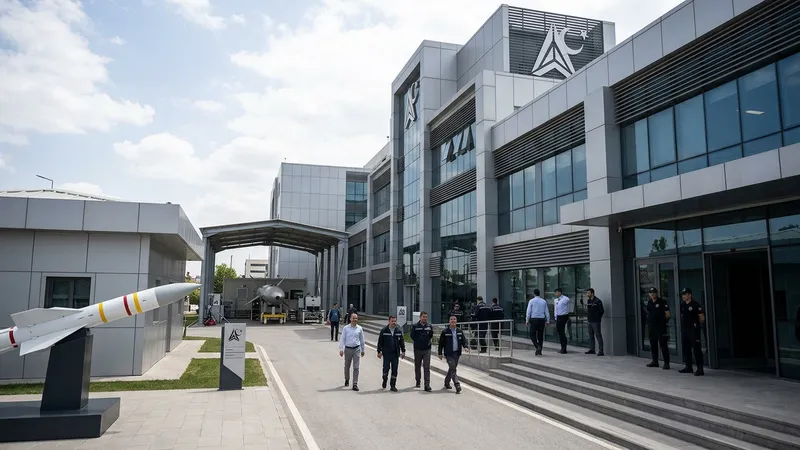
Washington faces Turkey’s missile push as F-16 leverage stays in play
Washington is reassessing Turkey’s push into long-range air-to-air missiles after Turkish briefings in the past 72 hours pointed to progress on the GÖKHAN and GÖKBORA programs. The question for US officials on September 29, 2026, is whether Ankara’s bid for greater defense autonomy can remain compatible with NATO systems, US export controls and the still-sensitive politics of F-16 modernization.
The immediate trigger is not a single weapons test disclosed in Washington, but the renewed Turkish emphasis on indigenous missiles at a moment when the United States, China and Russia are all pursuing air-to-air weapons with ranges described in the hundreds of kilometers. Europe’s METEOR missile, built around ramjet propulsion, is the reference point in the debate because that technology can help a missile sustain speed over longer distances than a conventional rocket motor in some flight profiles.
Turkey’s long-range missile bid
GÖKHAN and GÖKBORA sit inside a wider Turkish effort to reduce dependence on foreign suppliers for high-end air combat systems. Publicly available descriptions frame them as next-generation air-to-air missiles intended to extend Turkish aircraft’s reach beyond older short- and medium-range inventories, though verified details on range, test status and deployment timelines remain limited.
For Washington, the military issue is interoperability. In NATO terms, that means whether Turkish systems can communicate, target and operate safely alongside allied aircraft, sensors and command networks. A missile that gives Ankara more independent reach could still fit within NATO planning if it is integrated transparently; it becomes harder for US officials if the program is paired with opaque targeting architecture, third-country technology or export ambitions that complicate alliance control.
The political issue is leverage. Turkey wants to modernize its air force, and the F-16 remains the most practical US-linked platform at the center of that discussion. Any Turkish move toward a more autonomous missile ecosystem gives Ankara more bargaining power over time, but it also gives Congress and the administration another reason to ask whether future defense transfers reinforce NATO alignment or simply underwrite a more independent Turkish posture.
Ankara’s autonomy problem in Washington
Turkey’s defense industry has expanded partly because Ankara no longer wants its most sensitive systems hostage to foreign licensing decisions. That logic is not unique to Turkey; governments from Europe to Asia are trying to secure munitions supplies after years of strain on Western defense production. The difference is that Turkey is a NATO ally whose foreign policy has often moved on a separate track from Washington’s preferences.
That makes GÖKHAN and GÖKBORA more than procurement stories in Washington. The State Department would look at alliance diplomacy and export-control commitments, the Pentagon would focus on operational compatibility, and Congress would ask whether Turkey’s weapons choices support allied deterrence or weaken US influence. The National Security Council would have to balance those concerns against the larger need to keep Ankara inside NATO planning at a time of pressure from Russia, China and regional conflicts.
The ramjet comparison matters because it points to the type of capability Ankara appears to be pursuing. A ramjet-powered missile can, depending on design and launch conditions, preserve energy deeper into flight, which can make it harder for a target aircraft to escape near the end of an engagement. That does not by itself prove Turkish systems will match European, US, Russian or Chinese weapons, but it explains why Washington watches the technology path as closely as the headline range.
F-16 leverage meets NATO rules
If Turkey demonstrates credible progress on GÖKHAN or GÖKBORA while keeping the programs aligned with NATO communications, identification and targeting standards, the US response could be contained. In that scenario, Washington would have an incentive to keep F-16 modernization moving, use technical integration as the control point and argue that allied aircraft armed with interoperable Turkish missiles still add to NATO deterrence.
If Ankara instead presents the missiles as a symbol of strategic independence from Western constraints, the dynamic changes. Congress could press for tighter conditions on future arms approvals, the administration could slow technical cooperation, and European allies could become more cautious about data-sharing with Turkish platforms. The mechanism would be simple: long-range missiles depend on sensors, targeting information and software integration, and those are precisely the areas where allied trust matters most.
A third path is slower and more ambiguous. Turkey may continue public briefings and development claims without a near-term operational missile that forces an immediate US decision. That would preserve Ankara’s domestic message of technological progress while giving Washington time to avoid a public confrontation, but it would also keep the issue alive in every broader discussion about F-16s, NATO command arrangements and Turkish defense exports.
The forward test is whether, by 2026-12-28, Turkish defense authorities provide a concrete GÖKHAN or GÖKBORA milestone and US officials or lawmakers respond by linking F-16 modernization, alliance support or technology access to NATO interoperability. The call is right if Washington makes that linkage explicit after a Turkish progress signal; it is wrong if the missile programs advance in public debate without any US condition, or if Ankara pivots away from NATO-compatible integration without a visible US attempt to use defense leverage.