Kusra clashes test Washington’s West Bank de-escalation posture
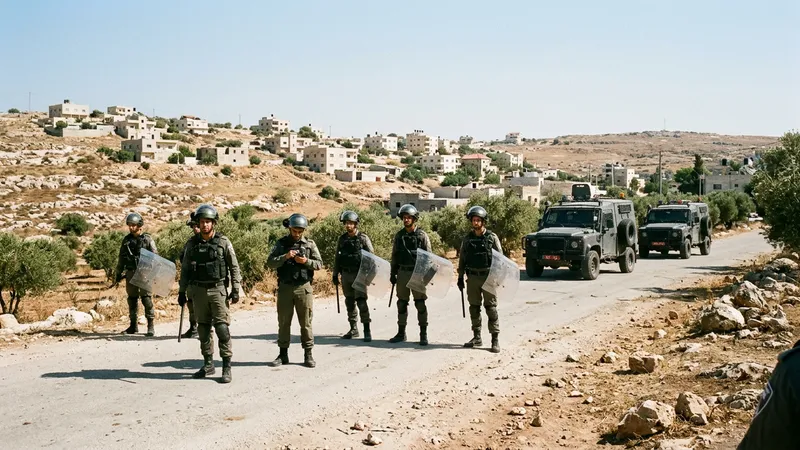
Three Border Police officers were wounded after more than 100 Israeli rioters clashed with security forces near Kusra, according to the supplied account.
Lauren Collins ·
Kusra clashes test Washington’s West Bank de-escalation posture
Three Border Police officers were wounded near Kusra after more than 100 Israeli rioters clashed with security forces, according to the supplied account, putting another West Bank flashpoint onto Washington’s crisis map. The confrontation matters in Washington because the White House, State Department and Congress are already balancing support for Israel’s security with pressure to prevent local violence from becoming a broader strategic problem.
West Bank
A military source in Israel’s Central Command said IDF troops, Border Police and Israel Police had reinforced roads, hiking areas, known friction points and communities. That operational response gives US officials a concrete measure to watch: whether added deployments contain violence around Kusra or instead become part of a wider cycle of confrontation, arrests and retaliation.
Kusra sits in the West Bank, where local clashes can quickly become diplomatic issues for Washington because they involve Israeli security forces, Palestinian communities and, in this case, Israeli rioters confronting police. The supplied account identifies three Israeli security bodies involved in the response: the IDF, Border Police and Israel Police.
For the White House, the immediate question is less whether a single clash changes US policy than whether it adds to a pattern that requires clearer public messaging. Washington typically has several channels available in such moments: National Security Council statements, State Department briefings, direct calls with Israeli officials and coordination with regional governments that have working relationships with both Washington and Palestinian leaders.
Members can press the administration through hearings
Congress sits in the background of that process. Members can press the administration through hearings, letters, aid conditions, reporting requirements and public statements, especially when violence in the West Bank intersects with debates over US security assistance to Israel and support for Palestinian governance.
The State Department’s role is different from the Pentagon’s. State carries the diplomacy: urging restraint, preserving space for talks and working through embassies and regional partners. The Pentagon’s equities are tied to Israel’s security relationship with the United States, regional military posture and the risk that local instability pulls attention or resources from other US priorities.
The National Security Council is where those strands meet.
If the Kusra-area violence remains contained, the White House may keep the matter inside routine diplomatic channels. If similar clashes spread across other friction points, the issue becomes a higher-level regional stability problem rather than a local policing incident.
The supplied account does not include a US government reaction, a Palestinian official account, or a second independent account from Israeli authorities beyond the cited military source. That limits what can be stated as verified fact: three Border Police officers were wounded, more than 100 Israeli rioters were reported to have clashed with forces near Kusra, and Israeli security bodies reinforced multiple categories of sensitive locations.
Those limits matter for Washington. US officials will need to judge not only the facts of the Kusra incident, but also whether local authorities can enforce order against Israeli rioters as well as against Palestinian militants or protesters. That distinction is central to the credibility of any US call for de-escalation.
The incident also arrives in a regional setting where Egypt and Jordan often matter to US diplomacy on Israeli-Palestinian issues. Any effort to prevent West Bank violence from widening would likely depend on quiet coordination with those governments, especially if Washington wants messages delivered to both Israeli and Palestinian channels without turning every exchange into a public test of political loyalty.
With no fresh named expert quotes provided within the required 72-hour window, the expert section is omitted rather than padded with stale commentary. The absence of such quotes does not weaken the core question for Washington: whether it treats Kusra as an isolated security event or as another indicator that West Bank escalation needs a more visible diplomatic response.
The falsifiable marker is whether Washington produces a clear public or diplomatic signal by December 28, 2026: an NSC or State Department statement focused on de-escalation, a readout of coordination with Egypt or Jordan, or a policy mechanism tying restraint and monitoring to West Bank stability. The call is right if US statements or actions move beyond routine concern and point to coordinated diplomacy or monitoring; it is wrong if Washington keeps the emphasis on security operations without a visible shift in regional coordination, oversight or public messaging.