Video reveals robotic hand design for faster object grips
Foundation Robotics showed a robotic hand catching a baseball, using forearm-mounted motors and tendon routing to reduce finger bulk and improve grip control.
Jason Kwon ·
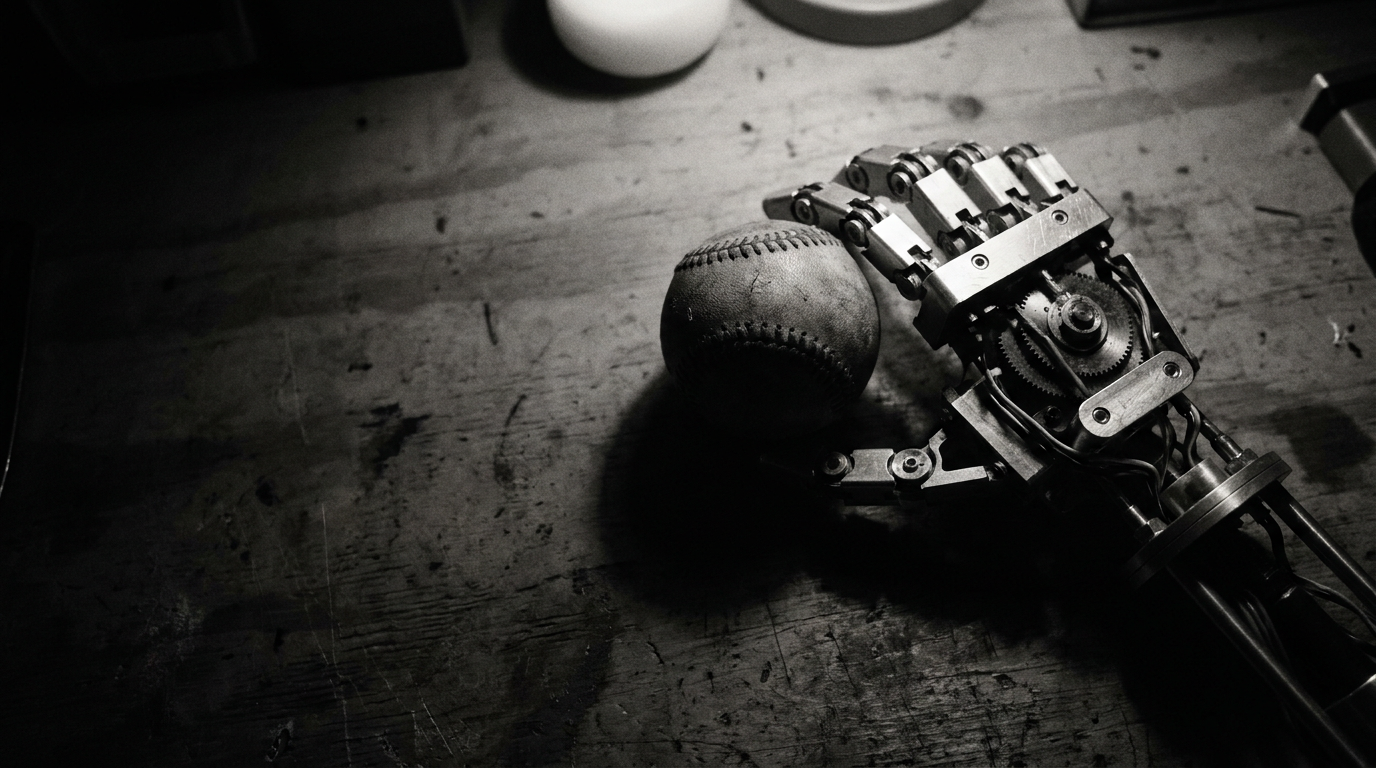
Foundation Robotics' robotic hand caught a baseball on video, testing tendon design and motion planning in a fast grip for machines.
The US-based company framed the clip as evidence that its latest hand can execute a quick, timed grasp rather than only handle slow pickup tasks. The object was a baseball, a useful test because spherical shapes punish weak timing and uneven finger pressure.
Foundation Robotics, described as San Francisco-based, said the demonstration reflects gains in mechanical design and control. The claim is narrow but meaningful: the video does not prove general-purpose manipulation, yet it shows a hand managing speed, contact and shape adaptation in one short action.
Forearm motors cut finger bulk
At the center is a tendon architecture that moves the actuators out of the digits and into the forearm. That layout lets the fingers stay slimmer and lighter while still receiving force through routed tendons.
The design separates the motions that close and reopen the hand. Flexion tendons pull the fingers shut; extension tendons return them outward, creating coordinated movement across multiple joints.
That matters because robotic fingers often face a trade-off between strength and size. Putting motors inside each finger can add mass near the point of contact, while tendon routing shifts weight away from the fingertips and leaves more room for shape-conforming motion.
A planned throw limits the claim
The baseball catch was not presented as an unscripted field test. The ball path was prearranged, which reduces the perception burden and makes the task more about timing, control and grip execution.
That distinction is important for robotics buyers and engineers. Catching a known throw is different from reading a chaotic warehouse bin, sorting irregular parts or reacting to objects arriving at unexpected angles.
The company’s description did not include throw velocity, catching distance, trial count or failure rate. Without those data points, the video is best read as a controlled capability signal rather than a benchmark.
Factory dexterity is the prize
Foundation Robotics is pointing the hand toward industrial applications, where dexterity is valuable only if it repeats under operational conditions. A gripping system must survive variation in object size, surface texture, speed and placement before it changes factory economics.
If the tendon design can repeat this type of catch across less predictable inputs, the company gains a stronger case for end-effectors that handle fragile or rounded items without custom tooling. If performance depends heavily on preplanned paths, the product remains closer to a demonstration platform than a deployable manipulation layer.
For the wider robotics sector, the mechanism to watch is not the baseball itself. It is whether lighter fingers, forearm-based actuation and better motion planning can reduce the gap between impressive lab clips and reliable industrial cycle times.
The next useful disclosure would be quantitative: speed, repeatability, payload, object variety and error rates under changing conditions. Those figures would tell investors, customers and engineers whether Foundation’s hand is advancing robotic dexterity or simply producing a cleaner video of a tightly bounded task.