Exomoon discovery opens a new path beyond alien planets
Astronomers reported the first massive exomoon detection, using gravitational wobble measurements to find a Jupiter-size body orbiting a brown dwarf.
Amina Diallo ·
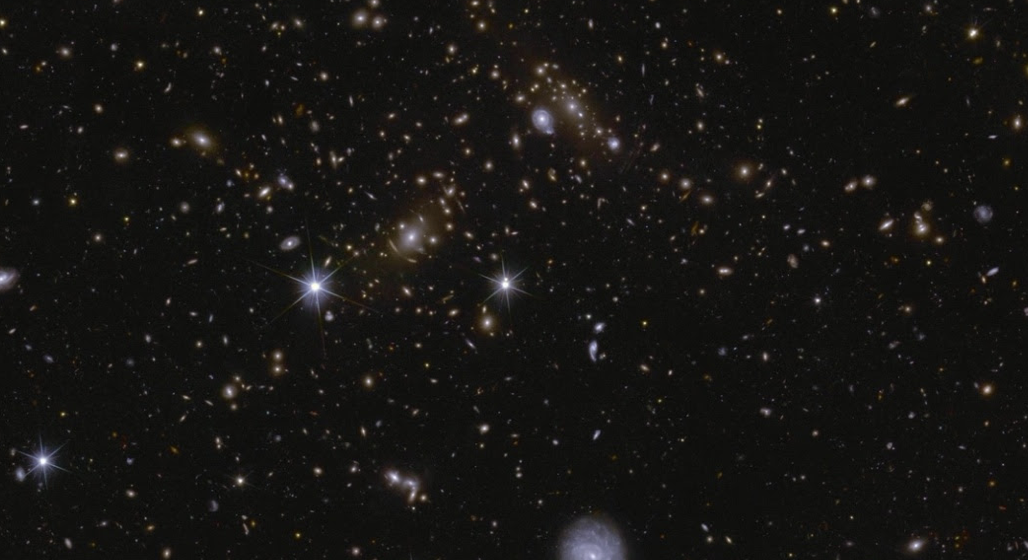
Exomoon research reached a new marker after astronomers reported a massive moon around a brown dwarf. The find turns on gravity, not dimmed starlight.
The reported object is unusually large for a moon, with a size described as almost comparable to Jupiter. It is said to orbit a brown dwarf, a body heavier than the largest planets but not massive enough to become a star.
Gravity replaces the dimming test
The detection matters because most planet-hunting has relied on a different signal: a star briefly losing brightness when a planet passes in front of it. That method has helped astronomers identify more than 6,000 planets beyond the solar system, according to the source account.
Moons have been harder to isolate because they are typically much smaller than planets and produce weaker signals. A nearly Jupiter-size companion changes that equation, giving observers a larger gravitational footprint to study.
The method used in this case looks for wobble caused by gravity rather than for a shadow crossing a star. When an unseen body pulls on its host or companion system, the motion can reveal that another object is present.
A 1992 threshold widened
The report also puts the discovery in a longer shift in astronomy. Until 1992, the source account says, there was no direct proof that stars outside the solar system had planets at all.
That changed as telescope sensitivity improved and surveys became better at measuring tiny changes in light. The result was a catalog of thousands of exoplanets, but a moon beyond the solar system remained a far more difficult target.
A brown dwarf adds another layer to the classification problem. It sits between planet and star, so a moon around such an object challenges observers to sort companion bodies by mass, orbit and formation history rather than by familiar solar-system labels alone.
Follow-up will test the claim
The immediate question is whether additional observations can reproduce the wobble signal and rule out other explanations. Without a named observing program, publication date or instrument details in the source material, the strength of the claim depends on evidence that has not been provided here.
If the signal holds, astronomy gains a practical path for finding more large moons around distant objects. That would affect the field less through near-term economics than through telescope time, survey design and the scientific priority given to brown dwarf systems.
If later data weaken the interpretation, the episode still clarifies the challenge ahead: moon detection requires separating small gravitational effects from a crowded set of possible causes. For the reported exomoon, the key test is confirmation; for the wider field, it is whether wobble measurements can scale from a rare large candidate to a repeatable search method.