USS Abraham Lincoln reaches Thailand after 286-day tour
USS Abraham Lincoln reached Thailand after a 286-day deployment, offering shore leave after a Middle East mission the Navy says included 10,000 sorties.
Lauren Collins ·
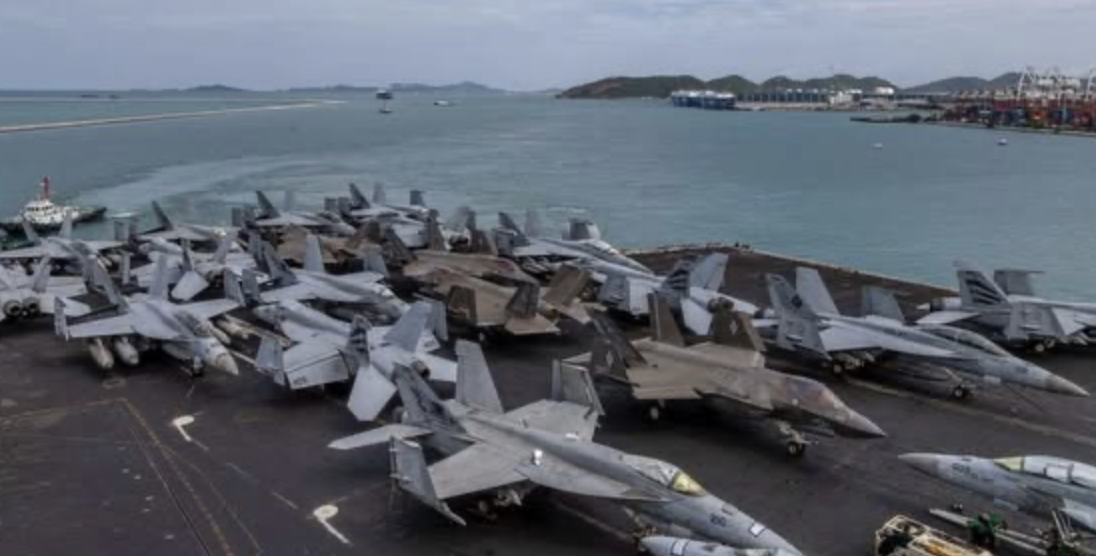
USS Abraham Lincoln arrived in Thailand on Wednesday after 286 days offshore, giving almost 5,000 service members a full port stop.
The aircraft carrier docked in eastern Thailand alongside USS Frank E. Petersen Jr., a guided-missile destroyer, and USS Robert Smalls, a guided-missile cruiser. The Navy said the visit was the Lincoln’s first extended port call of a deployment that began in San Diego in November, after shorter stops in Guam in December and Oman in July.
Pattaya gives crews shore leave
Pattaya, a Thai beach city with a tourism economy tied to nightlife, became the first prolonged break on land for many sailors and Marines in more than nine months. Crew members left the ship in civilian clothes, carrying bags into a port area where Americans and local expatriates had gathered.
The arrival turned a military deployment into a family and labor story as well as a strategic one. Long missions at sea shift the costs of US policy onto crews, spouses and relatives who absorb missed birthdays, illness and household decisions from a distance.
Iran mission sets the scale
Acting Secretary of the Navy Hung Cao said the Lincoln spent more than 200 of its 286 deployment days in a combat zone and conducted more than 10,000 sorties. The Navy has described the carrier as part of US bombing operations against Iran and President Trump’s continuing blockade of Iranian ports.
Rear Adm. Robert E. Loughran, commander of Carrier Strike Group 3, credited the crews in a Navy statement as the ships reached Thailand. "What this strike group has accomplished is truly historic," Loughran said, adding that he was proud of the professionalism shown across the group.
The sortie count gives the port call a larger frame than a routine liberty stop. It also shows how a single carrier strike group can become both a military tool and a pressure point for personnel policy when a deployment stretches past the normal expectations of families ashore.
Food complaints meet Navy denials
The length of the mission has drawn scrutiny from relatives and Democratic lawmakers after reports of fresh-food shortages and a sailor going overboard. The Navy has acknowledged the strain associated with extended deployments but said provisions remained sufficient and mental-health cases involved a small number of personnel with no deaths.
Official posts from the carrier in recent days showed a hangar-bay barbecue, with sailors lined up for burgers and hot dogs. The same account said the deployment included 1,031 fitness classes and 36 fitness competitions, figures the Navy used to present routine and morale programs aboard the ship.
One sailor in a Navy video described the personal cost in direct terms, saying he missed every birthday and anniversary and was absent after deaths in his extended family. He added that one point of pride was "not quitting," a phrase that captured both endurance and the pressure created by the mission’s length.
Three paths after Thailand
If the Thailand stop remains a short reset before a measured return cycle, the global macro effect is limited to continuity in US naval presence around Iran-linked risks. For the Navy, the benefit would be crew recovery without an immediate public fight over readiness, while defense logistics providers would continue supporting routine sustainment rather than emergency repairs.
If President Trump’s Iranian port blockade intensifies or the carrier group is sent back into higher-tempo operations, the macro channel would run through shipping confidence, insurance costs and energy-market risk rather than through the port call itself. The Navy would face renewed strain on crew endurance, and ship maintenance yards, suppliers and regional bases would carry more of the operational load.
If complaints over food, mental health and deployment length gain traction in Congress, the next pressure point would be oversight rather than tactics. The open question is whether lawmakers treat the Lincoln’s 286-day tour as an exception tied to Iran, or as evidence that the carrier force is being asked to cover more missions than its personnel cycle can comfortably sustain.