

Widespread US IT Outages Prompt Review of Infrastructure Resilience and AI Integration
Widespread US IT outages, attributed to infrastructure dependencies and AI-driven update cycles rather than cyberattacks, have prompted calls for improved…
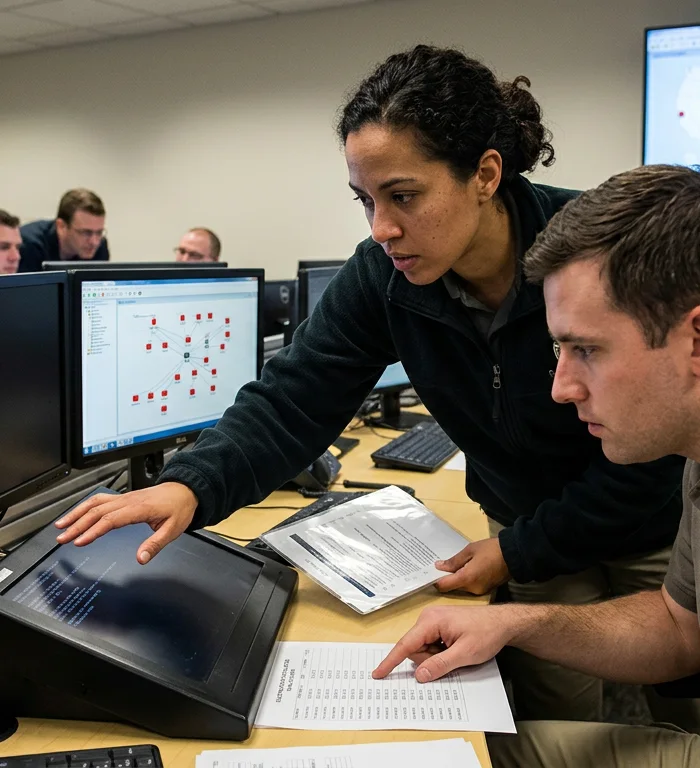
A series of high-profile technology outages across the United States has disrupted operations for major corporations, financial institutions, and federal agencies, including the Federal Aviation Authority and Security Agency. While the incidents have caused significant operational downtime, federal officials and intelligence leadership have stated there is no evidence of coordinated cyberattacks or state-sponsored malign activity. Current assessments suggest the disruptions are likely the result of shared infrastructure dependencies, such as common cloud providers, networking vendors, and DNS services, rather than a singular malicious event.
Government officials and industry experts are increasingly focusing on the role of artificial intelligence in these failures. The rapid deployment of AI-driven updates and the accelerated discovery of legacy software vulnerabilities have created systemic friction. Organizations are under mounting pressure to patch systems quickly, which can lead to instability when automated changes are pushed to production environments without sufficient human oversight or rigorous testing.
Security analysts emphasize that these outages highlight critical gaps in business continuity planning. Even in the absence of a cyberattack, widespread operational downtime creates windows of vulnerability that threat actors may exploit through social engineering or opportunistic incursions. The incidents have underscored the necessity of re-evaluating the 'CIA Triad'—confidentiality, integrity, and availability—with a renewed focus on system availability as a core component of national and corporate security.
Institutional stakeholders are advised to conduct comprehensive audits of their critical dependencies and third-party vendor relationships. Resilience strategies must now account for the speed of AI-driven iteration, ensuring that recovery protocols are tested against scenarios where primary communication and operational channels are compromised. Future policy discussions are expected to prioritize the balance between rapid technological advancement and the maintenance of stable, secure infrastructure.
More stories
- Europe faces attribution gap after 16 cyber, physical incidents
- PIF backs Grand Theft Auto as Saudi players embrace game
- Signal limits screenshots to curb AI access to messages
- Cognition runs Devin Mac workspaces on EC2 in 6 AWS regions
- Salesforce engineers cut 600-failure triage to 90 minutes
- Türkiye Desk: GTA 6 puts console access and network demand in focus
- Accel funding hits $3.5 billion for global startup bets
- OpenAI executive Brad Lightcap exits after COO transition
Latest news
- Trump prepares tariffs on China and other major exporters
- New-car buyers pay record average $50,087 in October
- Banks face ECB reserve debate over liquidity and profits
- Investors see Anthropic debut gains fade below $83 a share
- Iraq orders federal control over Kurdish-area oilfields
- Germans oppose Ukraine aid as poll shows support slipping
- Kim Jong-un receives 10 envoys after constitutional shift
- Ukraine claims Libya strike sinks Russian naval corvette