Justice Department Rejects Bias Claims in Campus Probes
The Justice Department rejected a former lawyer’s claim that campus anti-Semitism cases were politically steered, as Congress begins scrutiny.
Atlas Newsdesk ·
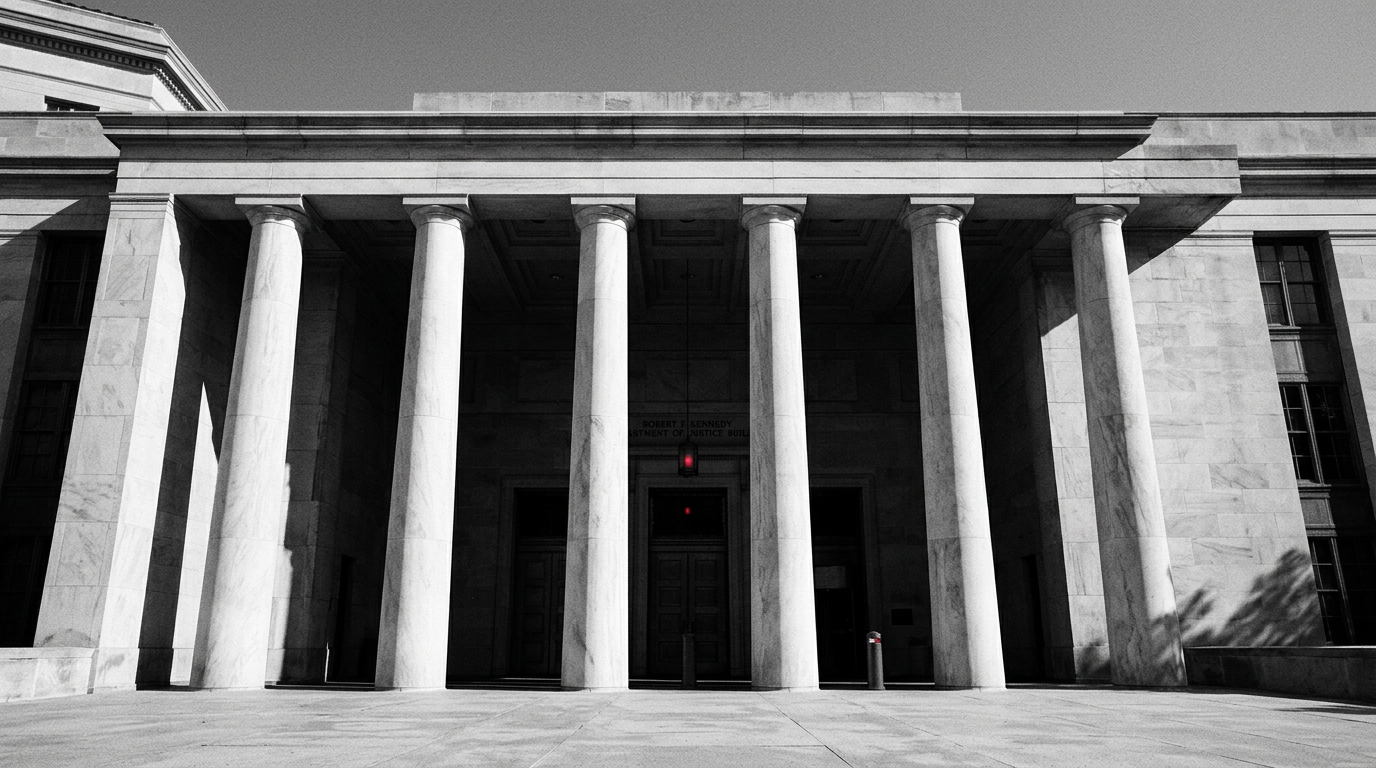
The United States Department of Justice has rejected allegations by a former staff attorney who said investigations into anti-Semitism at elite universities were pushed toward political outcomes rather than guided by evidence.
The dispute centers on a whistleblower complaint filed by former DOJ lawyer Haley Van Erem, who argued that the government’s approach to campus-related civil rights cases was directed from senior levels. Van Erem resigned in May 2025 and said the Joint Task Force to Combat Anti-Semitism sought predetermined results involving Ivy League institutions.
Van Erem’s complaint targets internal decision-making The United Van Erem’s complaint targets internal decision-making The United States Department In her complaint, Van Erem alleged that political appointees overruled career investigators while pursuing multimillion-dollar settlements. She said those settlement efforts moved forward even when, in her view, there was insufficient evidence of civil rights violations. Her account portrays pressure inside the task force and describes investigative outcomes as being shaped to reach particular conclusions. The material also describes the issue as politically sensitive because it involves campus conduct, government oversight, and how enforcement is carried out at prominent universities. DOJ disputes her role and defends the findings In response, a Justice Department spokesperson said Van Erem did not work on the specific university investigations during her time at the department. The spokesperson added that the Justice Department stands by the integrity of its findings. With the department disputing Van Erem’s account, key details remain unclear in public. Among the unresolved questions are how decisions were made inside the task force and which officials approved settlement strategies.
House Judiciary inquiry focuses on task force operations
The controversy has drawn formal attention from Congress. Representative Jamie Raskin, the ranking member of the House Judiciary Committee, has started an inquiry into the operations of the Joint Task Force to Combat Anti-Semitism. The United States Department The task force was created by executive order in February 2025. According to the source material, its creation was tied to addressing campus protests, placing university-related civil rights enforcement in the center of a wider debate over campus conduct and federal oversight.
Settlements and a Harvard funding ruling shape outcomes
Two universities cited in the source material have already reached settlement agreements. Columbia and Brown universities entered deals totaling $250 million.
At the same time, related administration efforts have faced court intervention. Federal courts have recently acted in connected cases, including a ruling that blocked the administration from withholding $2.6 billion in research funding from Harvard.
Together, the settlements and the Harvard ruling illustrate that outcomes are being shaped through several channels at once: executive-branch enforcement choices, negotiated resolutions with universities, and judicial review. As the House inquiry proceeds and the department maintains its denial, a central uncertainty remains the extent to which the task force’s investigative and settlement decisions were insulated from political direction.