HM Treasury updates 2026 CRA spending reporting rules
HM Treasury updated 2026 CRA guidance on Aug 13, setting standardized templates and rules so only identifiable spending counts in regional totals.
Lauren Collins ·
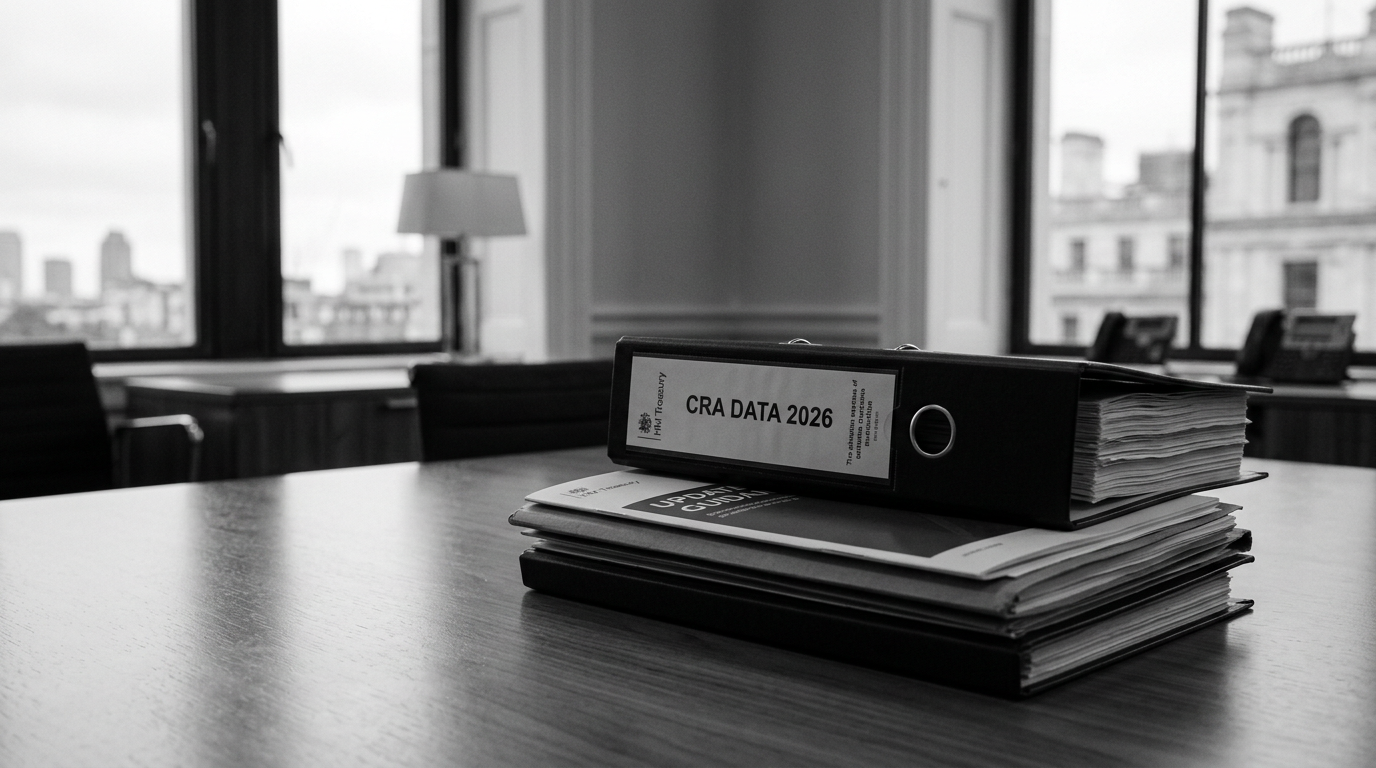
HM Treasury on August 13, 2026 published updated guidance for the 2026 Country and Regional Analysis (CRA) data collection exercise, setting out how public bodies should report spending returns across the UK.
The guidance applies to government departments, devolved administrations, local authorities, and public corporations. It requires them to complete returns using standardized spreadsheet templates provided for the exercise, HM Treasury said.
How the CRA allocates public spending across the UK HM Treasury described the CRA as a tool HM Treasury described the CRA as a tool designed to show how public expenditure is distributed across the UK. Under the CRA approach, spending is assigned to the location of the people and businesses that benefit, rather than the place where funds are paid out. This methodology is intended to support a consistent view of geographic benefit from public services when compiling country and regional spending information. HM Treasury said the CRA is conducted annually and combines actual regional spending data with statistical methodologies. Identifiable expenditure will define regional totals in 2026 The updated guidance distinguishes between “identifiable expenditure,” which can be attributed to a specific country or region, and “non-identifiable expenditure,” which is treated as benefiting the UK as a whole.
For the 2026 reporting cycle
HM Treasury cited defence spending as an example of non-identifiable expenditure under the CRA framework. For the 2026 reporting cycle, the guidance states that only identifiable expenditure will be counted in the CRA’s regional totals.
HM Treasury’s guidance indicates that the separation is central to how the returns should be prepared, because it determines whether spending contributes to regional figures or remains outside them as UK-wide benefit.
Connection to the Total Expenditure on Services framework
HM Treasury said the CRA is built on the Total Expenditure on Services (TES) framework, which provides the overall structure for the spending returns. The guidance includes technical notes that departments are expected to follow to maintain consistent allocation across the TES framework.
The updated templates and methodology are used as an input for assessing the geographic distribution of public services. HM Treasury also said the CRA outputs inform longer-term fiscal planning and regional policy development.
While the guidance sets the reporting requirements and the treatment of identifiable versus non-identifiable expenditure for 2026, the practical effect will depend on how consistently organisations apply the technical notes and complete the standardized templates across the different parts of the public sector.