Tensions Rise Between Donald Trump and Pope Leo XIV Over Iran War
Trump-Pope rift over the Iran war deepens as Pope Leo XIV condemns the conflict and Trump defends continued military pressure.
Lauren Collins ·
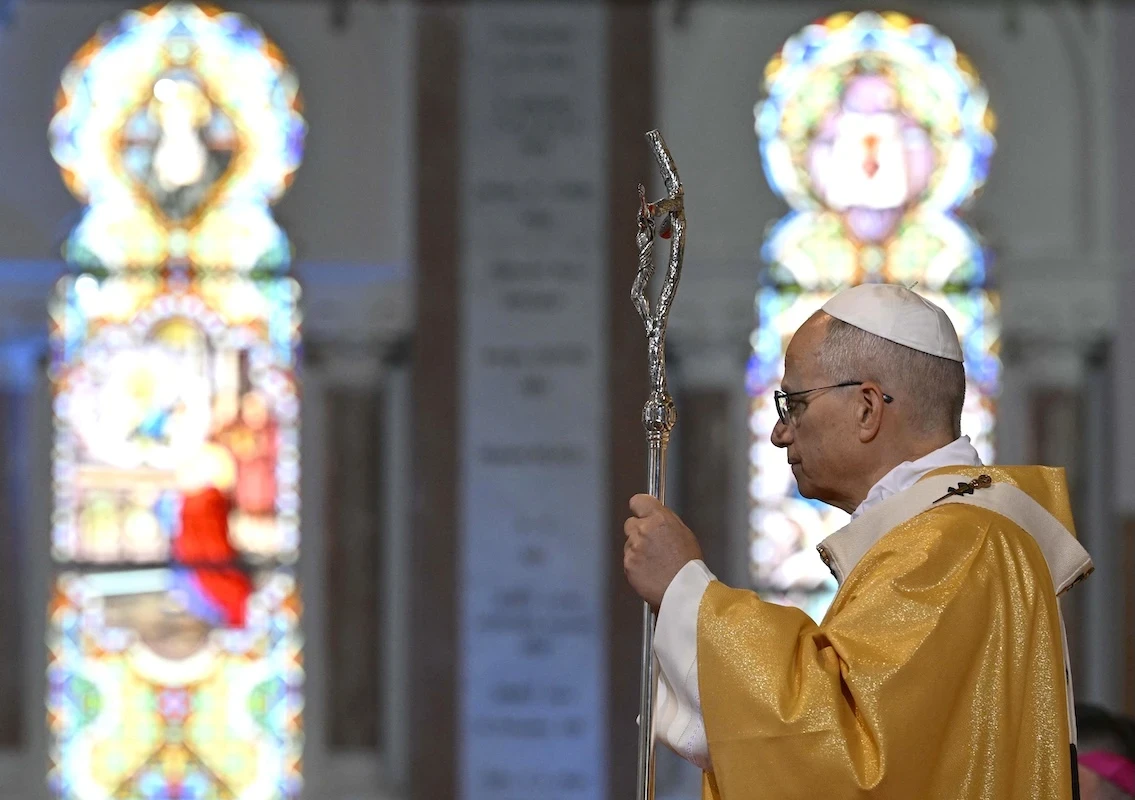
A public split has opened between U.S. President Donald Trump and Pope Leo XIV over the war with Iran, with both figures taking sharply different positions on whether the conflict is legitimate and whether it should continue. Trump has argued that Iran represents a global threat and that military pressure must be sustained. Pope Leo XIV, the spiritual leader of the Catholic world, has condemned the war as “unacceptable” and “morally wrong.”
The Vatican message has been delivered in unusually direct terms in recent days. During a Mass at the Vatican, Pope Leo XIV urged world leaders to move toward negotiation and peace, saying the conflict is rooted in an “illusion of power and dominance.” Observers have described the tone as a departure from the Vatican’s typically cautious diplomatic approach, placing the Pope’s moral critique at the center of an active geopolitical dispute.
Trump responded by rejecting the Pope’s framing and emphasizing what he described as the need to prevent Iran from developing nuclear weapons. He presented the issue as central to global security and made clear that he disagrees with the Vatican’s stance on the war. In his pushback, Trump also suggested the Pope appeared “weak” on foreign policy matters, sharpening the political edge of the exchange.
The dispute is widening beyond a single policy disagreement into a broader clash between political and religious perspectives. Pope Leo XIV has insisted that war cannot be justified under any sacred pretext, reinforcing a moral argument against the conflict itself. The Trump administration, by contrast, continues to maintain that sustained military pressure on Iran is necessary, underscoring a security-first rationale for continuing the campaign.
In the United States, the confrontation is also being discussed through a domestic political lens. Experts said the dispute could shape political dynamics among Catholic voters, a constituency that can be influential in national elections. Trump’s criticism of the Pope has drawn backlash in some religious circles, while Democrats are beginning to frame the disagreement as a political opening.
Alongside the public rhetoric, diplomatic efforts linked to the Iran conflict are continuing. The possibility of a temporary ceasefire and renewed negotiations remains under discussion, as the international community seeks to prevent further escalation. For governments and markets watching the region, the episode highlights how quickly a military confrontation can become entangled with moral authority and political messaging, adding another layer of complexity to efforts aimed at de-escalation.