Ukrainian drones power Honduras anti-trafficking push
Honduras plans to buy Ukrainian drones to counter drug trafficking, underscoring Kyiv’s expanding defense exports and overseas licensing deals.
Lauren Collins ·
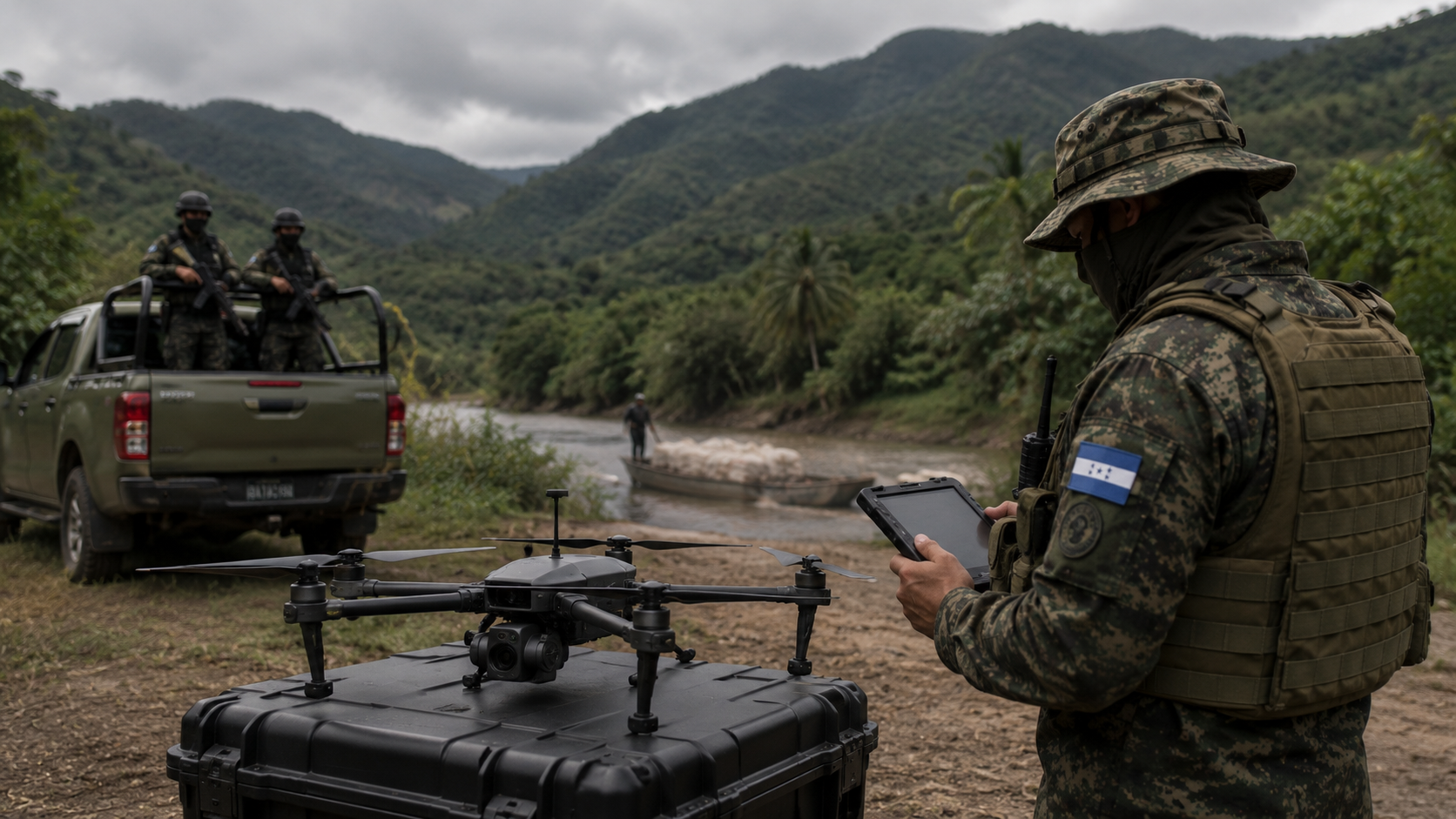
Honduras is moving to purchase Ukrainian drones as part of its campaign against drug trafficking, a step that highlights Ukraine’s expanding role as a defense-technology supplier beyond the battlefield.
The decision follows a meeting between the countries’ presidents last week, signaling a closer security relationship as Honduras faces rising pressure to disrupt narcotics movements through its territory.
Honduras seeks aerial tools to disrupt trafficking routes
Honduras sits on a key corridor for cocaine shipments moving from South America toward North American markets. Security agencies have long described the country as a transit point where traffickers exploit remote terrain and maritime routes.
Recent assessments also point to a risk that Honduras could develop into more than a passageway, with signs it may be shifting toward some level of production in addition to transshipment. That combination can complicate enforcement, as authorities must address both supply nodes and logistics networks.
Drones are increasingly used worldwide for border surveillance, reconnaissance over hard-to-reach areas, and real-time targeting information for law enforcement operations. While the announcement did not specify models, quantities, or delivery timelines, the intent is to add persistent eyes in the sky to improve interdiction and monitoring.
Ukraine’s drone sector widens from wartime surge to exports
Ukraine’s drone ecosystem has accelerated sharply since Russia’s full-scale invasion in 2022, as Kyiv sought cost-effective ways to offset advantages in manpower and conventional weaponry. The country has become a prominent developer of unmanned systems used for both strike missions and defensive tasks.
That rapid innovation cycle is now translating into commercial outreach. A chief executive of a Ukrainian drone manufacturer recently traveled to Tokyo to explore opportunities in Asian markets, an effort occurring amid heightened regional security concerns tied to Taiwan.
Kyiv has also pursued international production partnerships rather than relying solely on direct exports. Licensing arrangements have been signed with Canada and several Gulf countries, creating pathways for local assembly and adaptation while broadening the industrial footprint of Ukrainian designs.
Broader defense-industrial ties emerge beyond drones
Interest in Ukrainian defense engineering is not limited to unmanned aircraft. A German defense manufacturer is seeking to produce cruise missiles based on Ukrainian designs, reflecting a trend in which wartime-developed systems attract foreign manufacturing and investment interest.
According to people familiar with the effort, the Ukrainian-designed cruise missiles under consideration are positioned as lower-cost alternatives to comparable US systems while offering similar range performance. If advanced, such manufacturing could deepen European supply chains connected to Ukrainian intellectual property and accelerate access to cheaper precision capabilities.
For Honduras, the planned drone purchase aligns a domestic security need with a supplier known for rapidly iterating unmanned platforms under combat conditions. For Ukraine, the deal adds to evidence that its defense sector is building international customers and partners even as the war continues.
Next steps likely include finalizing procurement terms and clarifying how the drones will be integrated into Honduras’ counter-narcotics strategy, including training, maintenance, and operational rules. Separately, markets will watch whether additional Latin American governments follow Honduras in sourcing Ukrainian systems and whether Kyiv’s licensing model expands further into Asia and Europe.