Senate approves Iran war curbs, testing Trump’s authority
An Iran war vote in the U.S. Senate approved a War Powers resolution urging an end to hostilities, as the Trump administration pursues a peace deal.
Lauren Collins ·
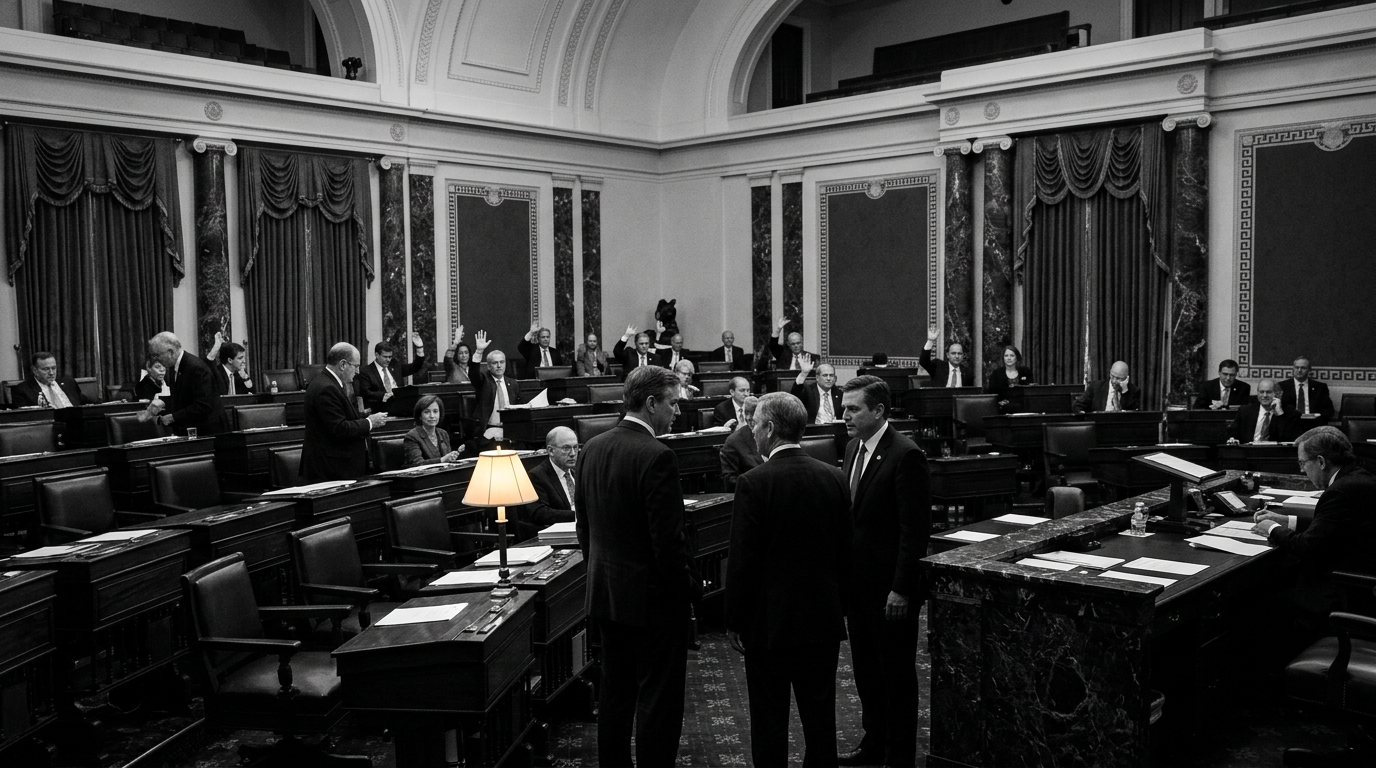
An Iran war vote in the U.S. Senate approved a War Powers resolution directing President Donald Trump to end U.S. involvement in hostilities with Iran, as peace talks continue.
The Senate’s 50-48 decision on Tuesday added bipartisan pressure on the administration, even as the practical impact on ongoing military operations remained uncertain.
Senate passes War Powers resolution amid unease in GOP ranks
The measure is a concurrent resolution that previously cleared the House of Representatives earlier this month. It reflects sharpening concern in Congress about the conflict that began on Feb. 28 and has drawn criticism as unpopular.
The vote split largely along party lines. Four Republicans supported the resolution alongside all but one Democrat, while two Republicans did not vote.
In its text, the resolution instructs Trump to remove U.S. armed forces from hostilities with or against Iran. Supporters framed the step as a congressional check on executive war-making authority under the War Powers framework.
Why the measure may not change military operations quickly
Despite passing both chambers, the resolution is not automatically headed to the White House for the president’s signature. Under the 1973 War Powers Act procedures governing this type of measure, it functions differently than a bill that becomes law through enactment.
That design has led many lawmakers and analysts to treat the vote as primarily expressive rather than immediately enforceable. The White House has argued the legislation is unconstitutional and therefore not binding on the executive branch.
The administration’s position raises a central question: whether Congress can compel a withdrawal in this manner when the president disputes the resolution’s legal force. That dispute has been a recurring feature of modern war powers debates, with presidents of both parties often asserting broad authority as commander in chief.
Legal uncertainty and the prospect of court fights
Legal experts describe the issue as unsettled and potentially headed toward litigation. However, even a court challenge could face hurdles over who is entitled to sue and what remedy a court could order.
Scott Anderson, a senior fellow at the Brookings Institution and senior editor at Lawfare, said the executive branch would likely disregard the resolution on constitutional grounds. He also noted uncertainty about who would have standing to bring a case to enforce it.
The question of standing can determine whether a lawsuit ever reaches the merits. If no party can demonstrate a concrete legal injury traceable to the government’s actions, courts may dismiss a challenge without ruling on the scope of presidential war authority.
The timing adds another layer of complexity because the Trump administration is negotiating a peace agreement with Iran. Lawmakers backing the resolution may be seeking to shape those talks by signaling that congressional support for continuing hostilities is limited.
For Republicans, the vote highlighted fissures inside the president’s party over the costs and strategy of the conflict. For Democrats, the outcome offered a rare moment where a cross-party majority endorsed a formal rebuke of ongoing military engagement.
Next steps will hinge on whether the administration alters operations voluntarily, whether congressional leaders pursue additional constraints through other legislative tools, or whether any legal challenge emerges that courts agree to hear. Attention is also likely to focus on the peace negotiations and on whether the Feb. 28 conflict shows signs of de-escalation in the weeks ahead.