

Independent Verification Confirms AI-Assisted Proof of Riemann Hypothesis
Independent organizations have verified an AI-assisted proof of the Riemann hypothesis, sparking debate on private tech in mathematical research.
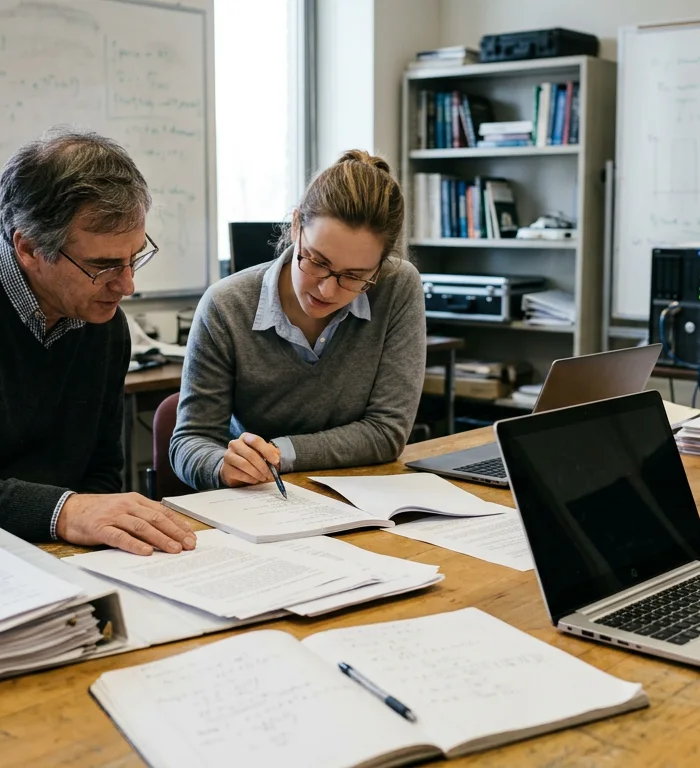
Independent research organizations have verified a proof of the Riemann hypothesis, a 170-year-old mathematical problem, developed by a mathematician utilizing the artificial intelligence model Claude. The Lean Focused Research Organization and the Mathlib Initiative confirmed the validity of the proof after reviewing the associated Lean programming language code. This development marks a significant milestone in the application of generative AI to complex theoretical mathematics.
The Riemann hypothesis, which concerns the distribution of prime numbers, is one of seven Millennium Prize problems designated by the Clay Mathematics Institute, which carries a $1m reward for a verified solution. The proof was completed over a six-week period by a mathematician employed by the AI developer. The announcement followed the developer's recent initial public offering on the Nasdaq, raising questions regarding the intersection of corporate interests and fundamental scientific research.
The Lean Focused Research
The use of AI in high-level mathematics has prompted debate within the academic community. Critics have expressed concerns regarding the reliance on proprietary, resource-intensive AI systems to solve long-standing problems, citing both the environmental impact of large-scale computing and the lack of transparency in private-sector research methodologies. Previous attempts by other technology firms to utilize AI for similar mathematical breakthroughs have faced scrutiny for the massive computational expenditure required to achieve results.
While the verification of this specific proof is considered a technical success, it highlights a growing tension between traditional mathematical inquiry and the industrialization of scientific discovery. Policymakers and institutional stakeholders should monitor the implications of AI-driven proofs on intellectual property, the validation of scientific claims, and the future of academic research funding. The ability of AI to independently navigate complex logical frameworks suggests that the role of human oversight in verifying machine-generated proofs will become a critical component of scientific governance.
More stories
- Europe faces attribution gap after 16 cyber, physical incidents
- PIF backs Grand Theft Auto as Saudi players embrace game
- Signal limits screenshots to curb AI access to messages
- Cognition runs Devin Mac workspaces on EC2 in 6 AWS regions
- Salesforce engineers cut 600-failure triage to 90 minutes
- Türkiye Desk: GTA 6 puts console access and network demand in focus
- Kingdom Come: Deliverance II Receives High Critical Acclaim
- Clair Obscur: Expedition 33 Receives High Critical Acclaim
Latest news
- Trump prepares tariffs on China and other major exporters
- New-car buyers pay record average $50,087 in October
- Banks face ECB reserve debate over liquidity and profits
- Investors see Anthropic debut gains fade below $83 a share
- Iraq orders federal control over Kurdish-area oilfields
- Germans oppose Ukraine aid as poll shows support slipping
- Kim Jong-un receives 10 envoys after constitutional shift
- Ukraine claims Libya strike sinks Russian naval corvette