Türkiye’s green agency funding gives Washington a new climate-security signal
Ankara’s regional agencies backed 1,155 projects with 2.8 billion lira, linking local green-transition spending to energy security and NATO resilience.
Lauren Collins ·
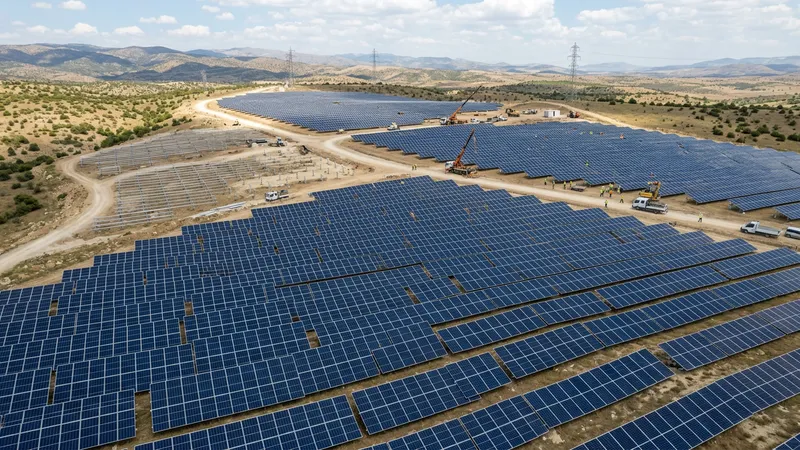
Türkiye’s green agency funding gives Washington a new climate-security signal
Washington has a new data point in its Türkiye file after Ankara publicly highlighted about 2.8 billion lira in support for 1,155 regional development projects tied to green transformation, resource efficiency and resilience. The figures, presented around Türkiye’s 2025 development-agency work, matter in Washington because climate finance increasingly overlaps with energy security, supply-chain policy and NATO planning.
No US funding announcement accompanied the Turkish figures, and there is no public evidence in the supplied material that Washington has endorsed the program. The immediate policy question for US officials is narrower: whether Ankara’s regional spending can be verified, measured and connected to Western-backed priorities such as energy efficiency, grid resilience, industrial decarbonization and disaster preparedness.
Türkiye’s development agencies are regional bodies that channel public support into local economic projects. In practice, they sit at the point where central-government priorities meet provincial needs: industrial zones, municipal infrastructure, small-business upgrading, skills programs, resource efficiency and resilience projects that can be too local for national ministries but too large for individual firms or towns.
The reported 2.8 billion lira package covers 1,155 projects, which makes the average support roughly 2.4 million lira per project if the total is spread evenly. That average is only a sizing tool, not evidence that each project received the same amount; regional-development programs usually vary by sector, province and implementation cost.
No US
For Washington, the relevance is not only environmental. Türkiye is a NATO ally, a major energy-transit country and a producer with links to European supply chains. Projects that reduce energy waste, harden local infrastructure or improve industrial compliance with climate rules can affect how Turkish firms compete, how exposed the country is to energy-price shocks and how closely Ankara can align with Western financing standards.
The State Department usually views these issues through diplomacy, development and regional stability. The Pentagon’s interest is different but connected: bases, logistics, ports, fuel systems and allied infrastructure are more useful when host economies can withstand blackouts, floods, supply disruptions and energy-market stress. Congress adds another filter, especially where transparency, procurement rules and Türkiye’s wider strategic posture affect appetite for cooperation.
The timing also fits a broader Western shift. Climate policy is no longer treated only as emissions policy in Washington; it is increasingly tied to industrial competitiveness, critical supply chains and geopolitical leverage. If Turkish agencies can show audited outcomes in energy efficiency or green infrastructure, they may have a stronger case for co-financing from Western institutions and donors.
The constraint is trust. Development money becomes strategically useful to Washington only when project selection, reporting and outcomes are clear enough for outside partners to defend.
If the spending is presented as climate-aligned but does not produce measurable efficiency gains, emissions reductions or resilience improvements, it will be harder for US agencies, Congress or allied lenders to treat it as a platform for deeper cooperation.
Ankara also has its own incentives. Green-transition funding can help Turkish manufacturers prepare for European climate rules, lower energy bills for industry and municipalities, and support regions exposed to drought, flooding or earthquake-related infrastructure risks. Those aims can overlap with US interests even when Washington and Ankara disagree on other files.
The development-agency model gives Türkiye a way to move at the local level without waiting for one national megaproject. That can be an advantage if the projects are well governed: small upgrades across many regions can produce cumulative gains in energy use, industrial standards and local resilience. It can also be a weakness if reporting is fragmented or if project outcomes are hard to compare across provinces.
From a Washington lens, the most important test is whether the Turkish program turns into a channel for rules-based financing. USAID, the World Bank, European institutions and allied development banks generally need procurement safeguards, climate criteria and measurable results. A Turkish regional program that can meet those tests would be easier to connect to Western funding and technical assistance.
The NATO angle is indirect but real. Alliance planning increasingly treats energy infrastructure, ports, transport corridors and civilian resilience as part of deterrence. If Türkiye’s local green-transition projects make industry less energy-intensive or infrastructure more reliable, they could support broader allied resilience without being branded as defense spending.
Energy security is the more immediate bridge. Türkiye’s location between the Caspian, the Black Sea, the Middle East and Europe gives it a role in transit and diversification debates. Local efficiency projects do not replace pipelines, gas storage or power-market reform, but they can lower demand pressure and reduce vulnerability to imported-fuel swings.
There is also a commercial angle for US firms. If future Turkish grants favor energy-management systems, grid equipment, water technology, insulation, advanced manufacturing or emissions-monitoring tools, American suppliers could see opportunities. That depends on tender rules, financing terms and whether Turkish authorities design programs open enough for foreign technology providers.
The main uncertainty is whether the reported support represents a durable policy shift or a one-year funding push. Washington will look for repetition: new calls for projects, published criteria, regional performance data and evidence that Turkish agencies are coordinating with international lenders rather than simply relabeling local development spending as green transformation.
By December 29, 2026, the clearest signal will be whether Turkish development agencies announce new memorandums, co-financed grant windows or technical programs with USAID, the World Bank, the EU or allied development lenders focused on green infrastructure, efficiency and resilience. If such announcements include climate criteria, procurement safeguards and measurable reporting, the Turkish program will look like a platform for deeper Western climate-security cooperation; if no follow-on financing appears, or if projects shift toward fossil-fuel support or opaque selection, the Washington reading will be that Ankara’s regional push is domestically useful but strategically limited.