

Turkey peace push tests US calculus for 900 Syria troops
Yalçın’s Diyarbakır message puts Turkey’s domestic Kurdish track against Washington’s reliance on the SDF for the counter-ISIS mission.
AK Parti Deputy Chairman Hasan Basri Yalçın used Dicle University’s 2026-2027 academic-year opening ceremony to cast Turkey’s peace drive as a gain for Diyarbakır, a Turkish news report said.
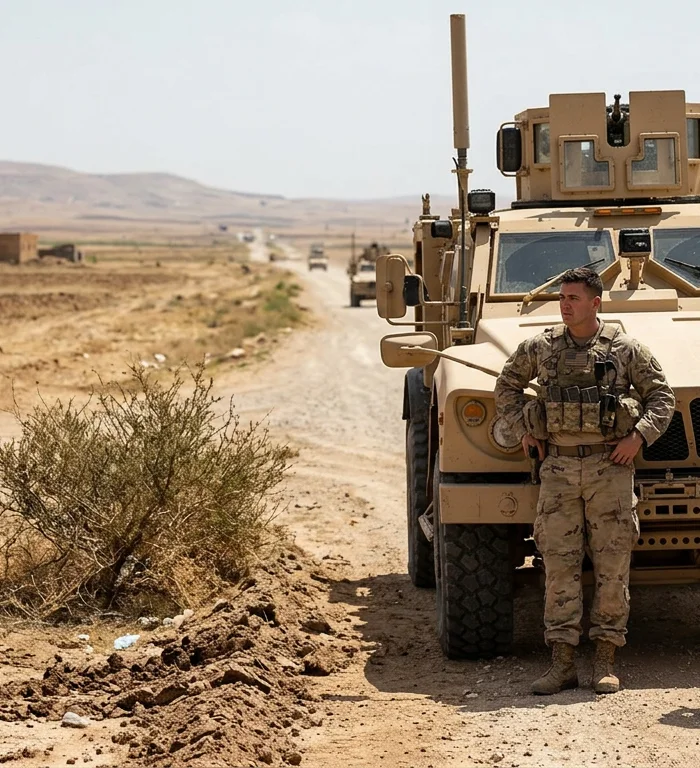
The report said Yalçın described the “Terror-Free Turkey” process as a historic opportunity. For Washington, that message touches the approximately 900 US troops in Northeast Syria who work with the Syrian Democratic Forces, the Kurdish-led partner force central to the counter-ISIS mission.
Yalçın’s remarks extend Ankara’s political messaging around a Yalçın’s remarks extend Ankara’s political messaging around a domestic Kurdish resolution framework into Diyarbakır, a city central to Turkey’s Kurdish politics. The report did not give a detailed policy mechanism, a timetable for negotiations or a formal security proposal tied to Syria.
The political backdrop is Devlet Bahçeli’s late-2024 call for Abdullah Öcalan to address parliament and declare the Kurdistan Workers’ Party, or PKK, dissolved. That move gave the governing bloc room to frame the process as a national-security initiative rather than a narrow party negotiation.
The US problem sits across the border. Ankara designates the YPG as the Syrian branch of the PKK, while the Pentagon has relied on the SDF, an umbrella force dominated by the YPG, to contain ISIS remnants in Northeast Syria.
If Turkey’s domestic track holds and Ankara links
If Turkey’s domestic track holds and Ankara links it to reduced pressure on Syrian Kurdish forces, State Department and Pentagon officials would have more space to manage deconfliction with a NATO ally while preserving the counter-ISIS mission. The macro effect would be lower regional risk around northern Syria; the direct effect for the SDF would be less exposure to Turkish strikes; the wider defense consequence would be fewer operational interruptions for US-backed stabilization work.
If Ankara instead treats the domestic process as separate from Syria, the US-Turkey divide would remain. Large-scale Turkish strikes against SDF command infrastructure would test the US troop presence, increase congressional scrutiny of Syria policy and harden the trade-off between NATO ties and the counter-ISIS campaign.
The immediate test is whether State Department or Pentagon readouts refer to US-Turkey security consultations on Northeast Syria deconfliction and the SDF’s status. Without that signal, Yalçın’s Diyarbakır message remains a domestic political marker rather than evidence of a cross-border security bargain.
More stories
- Ethiopia's coffee sector faces $453m EU export risk
- EU faces Vietnam rights test over $57.9bn trade gap
- Albania lawmakers clash over policing of student protests
- Policy Alert seeks Nigeria hearing over $50bn offshore plan
- WHO rejects Nigeria outbreak label after 1 imported Ebola case
- Cali Fund collects just $7,085 toward $1bn nature goal
- Trump Takaichi call puts China coordination back in focus
- Xi presses Trump-Xi summit toward Taiwan caution pledge
Latest news
- Gemini flags 69% of held-out thermal-video falls
- Obakulactone reduces joint swelling in arthritis-model rats
- Congress faces Supreme Court rulings with control at stake
- Lockheed Martin sets F-35 framework for at least 850 jets
- Anthropic reports $80.7 billion loss ahead of planned IPO
- Ronson and Remi gather 11 acts for Amy Winehouse tribute