

TSMC Stock Rises Ahead of Nvidia AI Earnings Report
TSMC shares gained ahead of Nvidia's Q1 earnings, indicating high market expectations for AI demand validation and TSMC's capital expenditure.
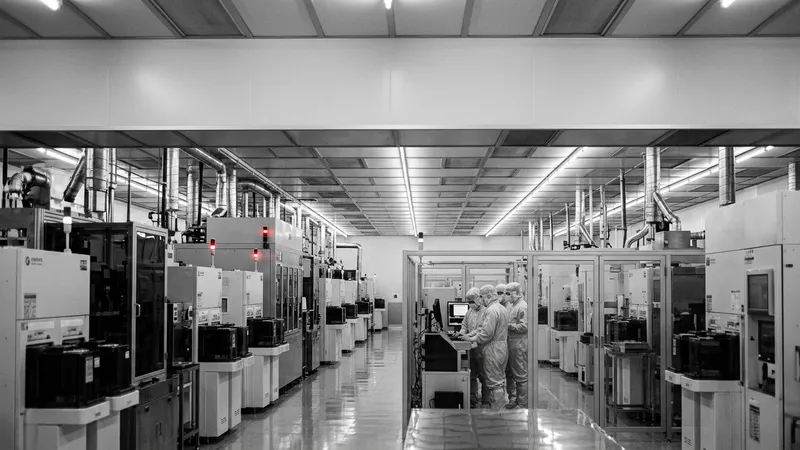
Shares of Taiwan Semiconductor Manufacturing Co. (TSMC) experienced an increase ahead of the anticipated earnings report from Nvidia, its primary artificial intelligence client. This upward movement suggests considerable market expectation that Nvidia's forthcoming financial disclosures will substantiate TSMC's significant investment in expanding its chip production capabilities.
The semiconductor sector has been a key driver in recent gains across U.S. stock indices, with investors heavily positioned for ongoing strength in the artificial intelligence domain. As the world's largest contract chip manufacturer, or 'foundry,' TSMC holds a central role in this trend. The company manufactures the advanced processors designed by 'fabless' firms such as Nvidia, providing it with a unique insight into real-time demand across the technology industry.
Nvidia's Performance and Market Expectations
In previous quarters, Nvidia has consistently surpassed analyst predictions, leading to continuously elevated market expectations. This consistent outperformance has increased its valuation multiple, which is the ratio of its stock price to its earnings per share (EPS). Consequently, the market now requires more than just meeting estimates; it demands robust forward 'guidance'—the company's own projections for the upcoming quarter.
A crucial question for the industry is whether Nvidia's outlook will support TSMC's multi-billion dollar commitment to construct new fabrication plants. These investments are specifically aimed at fulfilling anticipated orders for AI chips. The market's reaction to TSMC's stock ahead of Nvidia's report reflects this underlying tension between capacity expansion and sustained demand.
Broader Implications for AI Infrastructure
A strong financial report from Nvidia would affirm the overall investment thesis for AI infrastructure. Such a validation would not only boost Nvidia's stock but also benefit the broader ecosystem, including other chip designers and equipment suppliers. Given the significant market positioning towards AI leadership, a positive surprise could propel technology-heavy indices higher and reinforce confidence in the current market's concentrated gains, where a few large-cap stocks account for most of the appreciation.
This outcome would also confirm that TSMC's ongoing capacity expansion is a necessary strategic response to a durable demand cycle for advanced semiconductors. Conversely, any disappointment in Nvidia's reported revenue or its forward guidance would have a disproportionately negative effect. Investors who are heavily invested in the AI sector could face substantial losses.
A weaker-than-expected report would imply a slowdown in AI spending growth, potentially leading to a re-evaluation of risk across the entire semiconductor industry. It would also raise questions regarding TSMC's capital allocation strategy, possibly framing its expansion as an excessive build that could strain profit margins if new capacity remains underutilized.
Key Data Points and Future Outlook
The critical event to monitor is Nvidia's first-quarter earnings report, scheduled for release on May 22. Particular attention will be paid to the company's data center revenue. Most importantly, analysts will scrutinize Nvidia's revenue guidance for the second quarter.
If Nvidia exceeds revenue expectations and provides guidance significantly above consensus forecasts, it would signal that demand continues to outpace supply. This would validate TSMC's strategic decisions. However, if the company's guidance only meets or falls short of Wall Street's predictions, it would likely be interpreted as an indication that the AI hardware boom is reaching its peak, potentially triggering a significant sell-off across the sector.
More stories
- Putin relays Iran view to President Trump
- Red Cross says Gaza hostage access involved Haniyeh talks
- Trump urges Zelensky replacement over refinery strikes
- Saudi Arabia suspends Riyadh airport operations after attack
- Kyiv playground blast puts Ukraine air-defense stocks back on Washington’s agenda
- Rubio’s Athens speech hardens Washington’s public line on Iran
- Ascendis Pharma to Reveal Navepegritide 104
- Citi Trends Boosts FY26 Outlook Amid Strong Sales Growth
- Indonesia Mobilizes Cities Against Rising Extreme Heat Threat
- Rent the Runway Q2 Earnings Test Rental Model Viability