

Global Superpower Summit Collapses as Negotiations Reach Impasse
The U.S., China, and Russia trilateral summit ended with broad energy and law declarations but failed to reach nuclear arms control agreements.
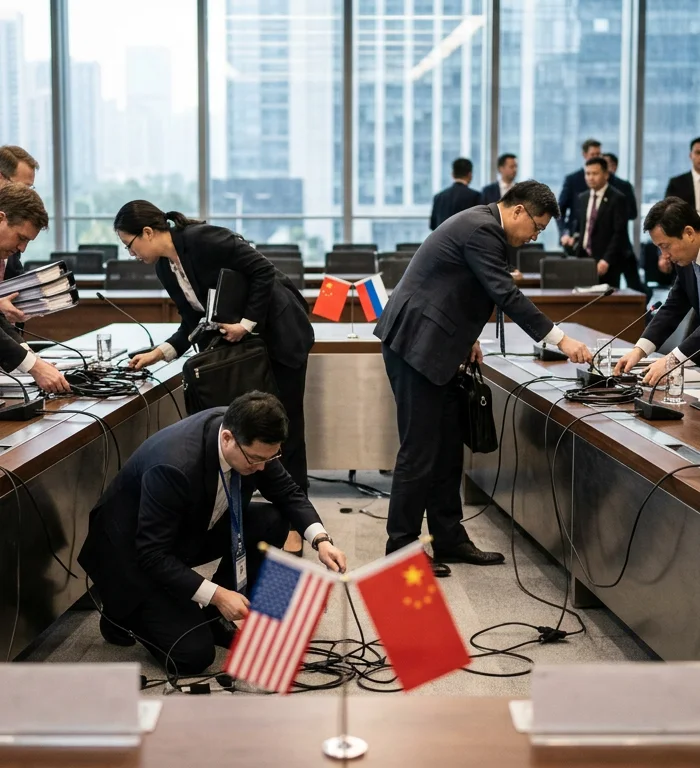
The trilateral summit held in Shenzhen between the leaders of the United States, China, and Russia concluded without substantive progress on nuclear arms control or security treaties. Despite initial objectives to address the reduction of global nuclear stockpiles—which account for over 90 percent of the world’s total—the meeting resulted in a brief joint declaration reiterating that nuclear war must not be fought. No formal negotiations or actionable frameworks for disarmament were established during the 70-minute session.
The joint statement prioritized three primary areas: reform of the United Nations, stabilization of global energy markets, and limitations on the jurisdiction of international judicial bodies. The leaders expressed a collective intent to increase the supply of refined petroleum products to stabilize energy flows, a move that follows recent U.S. efforts to ease sanctions on Russian oil. This shift in energy policy has drawn criticism from Western allies concerned about the implications for existing geopolitical pressure campaigns.
Regarding international law, the three nations issued a joint challenge to the authority of the International Criminal Court (ICC). The leaders argued that such institutions must not abuse their jurisdiction, specifically regarding the immunity of state officials. This stance aligns with ongoing efforts by the U.S. and Russia to undermine the court’s legitimacy, particularly following the issuance of international arrest warrants for high-ranking officials.
While the participating heads of state characterized the talks as constructive, the summit has faced significant domestic political opposition. Critics have labeled the engagement a strategic failure, citing a lack of tangible security gains and the potential for the meeting to undermine established international norms. The absence of concrete policy commitments suggests that the summit served primarily as a diplomatic signal rather than a shift in the underlying strategic competition between the three powers.
More stories
- COP31 climate talks collapse over fossil fuels and funds
- Russian military faces 1,087 recorded suicides in Ukraine war
- US faces China, Russia in Africa minerals contest
- Russian war deaths top 460,000, Guardian says
- Monrovia mayor-designate seeks $14.5m city budget
- Iran's attacks hit 25 tankers near Strait of Hormuz
- US envoys pursue Ukraine peace talks in Moscow with Putin
- Bundeswehr faces misconduct gap as few as one-sixth reported
Latest news
- Macy’s parade faces balloon limits as storm winds approach
- Highly diversified investors report 91% confidence in retirement
- Nvidia board gets Trump input on Jensen Huang return as CEO
- Rwanda faces budget strain from 85% electricity access push
- ICE arrests at Seattle airport draw protests and scrutiny
- AI doubts leave Asian stocks facing a new investment test