Trump Mulls NATO Pullout Amid Hormuz Tensions
Trump said April 1, 2026 he is considering NATO withdrawal after allies declined Hormuz ship deployments; Europe urged calm and backed NATO.
Lauren Collins ·
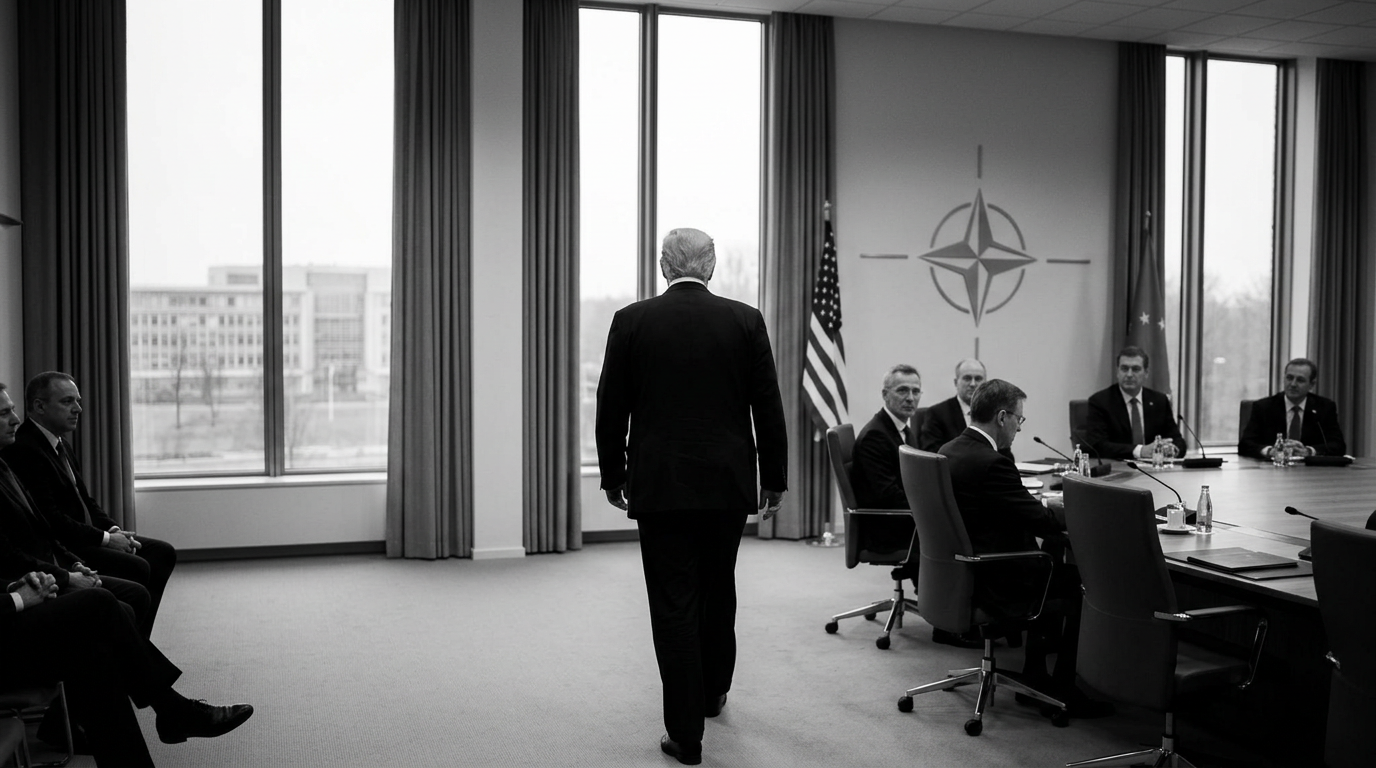
U.S. President Donald Trump said on April 1, 2026, that he is considering pulling the United States out of the North Atlantic Treaty Organization (NATO). He made the remarks to officials speaking to Reuters amid a sharp dispute with European allies over security cooperation linked to the Strait of Hormuz.
The immediate trigger described by officials was European governments’ refusal to send ships to help unblock the Strait of Hormuz, a key maritime corridor. The disagreement comes as Washington presses allies to back U.S. military actions in the area, and as tensions remain high around the ongoing conflict with Iran, according to the account of the comments.
In his remarks, Trump said he felt “disgust” toward NATO and argued that European members were not contributing enough to shared security efforts. The criticism focused on what he portrayed as an imbalance in collective responsibility, with the Hormuz dispute presented as a current example of allied reluctance to support U.S. operations.
The comments followed a separate signal from the Pentagon earlier the same day. U.S. Defense Secretary Pete Hegseth declined to restate the U.S. commitment to NATO’s Article 5, the alliance’s collective defense clause that treats an attack on one member as an attack on all, officials said.
European leaders responded by urging restraint and reiterating support for the alliance. Poland’s Defence Minister Wladyslaw Kosiniak-Kamysz stressed that the United States and NATO rely on each other, framing the relationship as mutually reinforcing rather than one-sided.
In Germany, a government spokesperson said Berlin remains committed to NATO. In the United Kingdom, Prime Minister Keir Starmer said Britain could shift toward closer European ties in response to global instability, according to officials familiar with his remarks.
The episode lands at a sensitive moment for transatlantic coordination, with NATO’s credibility closely tied to perceptions of unity and clarity around Article 5. Experts warned that public U.S. statements questioning the alliance could encourage adversaries to probe NATO’s resolve, even as European capitals seek to project steadiness.
What remains uncertain is whether Trump’s comments will translate into a formal policy process, and how quickly any decision could move through U.S. government channels. It is also unclear whether the dispute over naval deployments in the Strait of Hormuz can be narrowed through diplomacy, or whether it will continue to shape broader arguments about burden-sharing inside NATO.