US deploys third aircraft carrier and Marine units to Gulf as Iran campaign expands
US deploys a third carrier and more Marines to the Gulf as the Iran air campaign enters its second month, with rotations and arrivals underway.
Lauren Collins ·
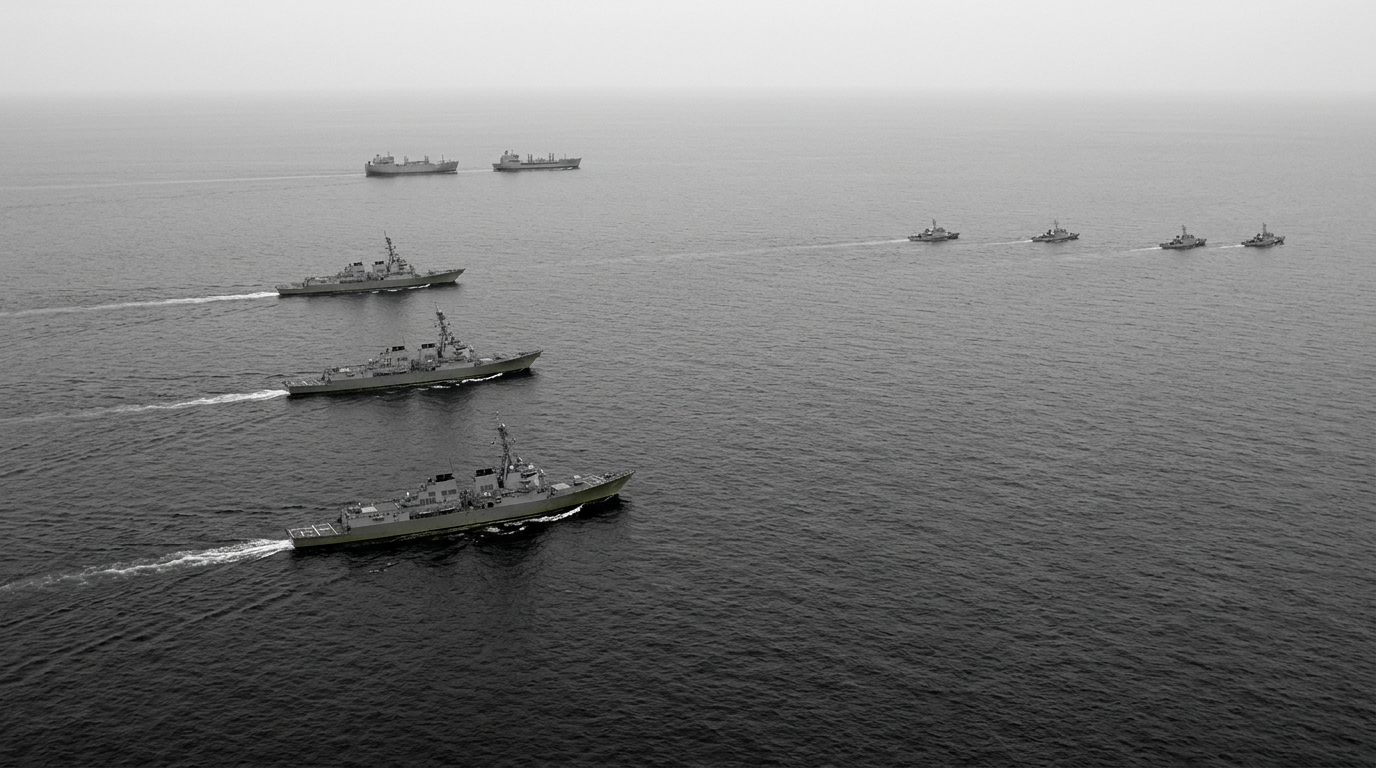
What happened: The United States is expanding its military footprint in the Middle East as an air campaign targeting Iranian military and nuclear infrastructure moves into its second month. On April 1, the U.S. Secretary of Defense announced that the USS George H.W. Bush will deploy to the region, adding a third aircraft carrier to the posture described by the Pentagon as both reinforcement and rotation.
Officials said two carrier groups are already involved in the operation. The USS Abraham Lincoln is conducting daily combat sorties against Iranian targets, while the USS George H.W. Bush is en route and is expected to replace the USS Gerald Ford, which is undergoing maintenance in Croatia. The Pentagon framed the carrier movements as a way to sustain operations while rotating high-value assets.
A typical Carrier Strike Group includes an aircraft carrier supported by 60 to 75 fighter jets and helicopters, two to four destroyers, a guided-missile cruiser, a submarine, and supply ships. The latest announcement signals a sizable increase in naval aviation capacity and escort vessels in Middle Eastern waters, coming weeks into the ongoing air campaign.
Amphibious forces are also being added. The USS Tripoli Amphibious Ready Group arrived on March 27, and the USS Boxer Amphibious Ready Group is expected to arrive by mid-April, officials said. Amphibious Ready Groups are designed for sea-to-land operations and typically consist of three specialized ships and about 2,200 Marines.
On the ground side, the Pentagon has ordered additional Marine Corps and Army units to the region. About 2,200 Marines from the 31st Marine Expeditionary Unit reached Middle Eastern waters on March 27 after departing Japan on March 13. A second Marine Expeditionary Unit—about 2,500 Marines from the 11th MEU—is en route from San Diego, and roughly 2,000 soldiers from the U.S. Army’s 82nd Airborne Division have also been ordered to deploy.
These moves add to an existing U.S. troop presence of approximately 50,000 personnel already stationed in the Middle East. Officials reported thousands of casualties over four weeks since “Operation Epic Fury” began on February 28, though the account provided limited detail beyond official statements. The expanded posture is intended to sustain the joint U.S.-Israeli air campaign, with commanders gaining more aviation, escort, and sea-to-land options.
What it means: The scale and sequencing of carrier rotations, amphibious arrivals, and additional ground forces are likely to be closely watched by regional governments and global markets focused on security conditions in the Gulf. W. Bush, the duration of the USS Gerald Ford’s maintenance in Croatia, and how the mid-April arrival of the USS Boxer ARG integrates with ongoing daily sorties and the broader campaign.