Trump Pope Criticism Ignites Political, Religious Firestorm
Trump-Pope clash intensified after Pope Leo XXIV’s April 11 Easter remarks, prompting Trump’s April 12 Truth Social attacks and political fallout.
Lauren Collins ·
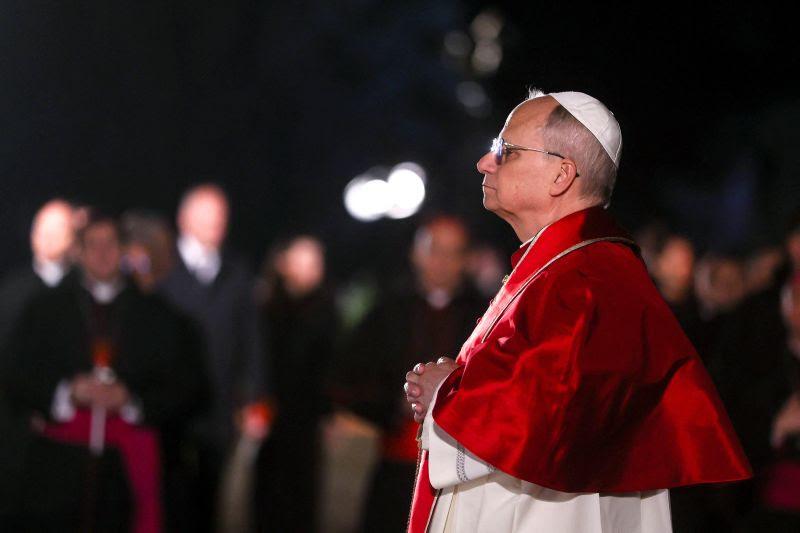
President Donald Trump has launched a public attack on Pope Leo XXIV after interpreting the pontiff’s Easter message as a personal rebuke, setting off a new political and religious dispute with potential electoral consequences in the United States.
During the traditional Easter “Urbi et Orbi” address on April 11 , Pope Leo XXIV criticized global leaders who, in his words, put personal enrichment and the pursuit of power ahead of selfless service to their people. The Pope did not name Trump, but the president treated the remarks as directed at him.
On April 12 , Trump responded in a series of posts on his Truth Social platform. He described the Pope as “disrespectful” and a “leftist,” and accused him of interfering in American political affairs. Trump also repeated a claim he has used previously when questioned about his faith, saying he has “done more for Christianity than any President” in history.
The episode revives a familiar pattern of high-profile confrontation between Trump and the Vatican. The source material links the latest dispute to a prior clash in 2016 , when Pope Francis said that people who advocate building walls rather than bridges are “not Christian.” Trump, whose campaign at the time emphasized a US-Mexico border wall , answered by calling the Pope’s comments “disgraceful.”
In the current dispute, the political context is already shifting toward the next election cycle. The source material describes unofficial positioning for the 2028 presidential campaign as beginning to take shape, and frames the attack on a major global religious figure as a tactic that could reinforce support among voters who respond to Trump’s combative approach toward institutions they view as liberal.
At the same time, the source material highlights risks for Trump inside the United States. It notes that criticism of the Pope could alienate many of the 52 million Catholic adults in the country, a large and diverse voting bloc. It also says moderates and independent voters may interpret the attacks as unpresidential, raising the stakes for how the dispute is received beyond Trump’s core supporters.
Internationally, the clash places a U.S. president in direct rhetorical conflict with the head of the Catholic Church, a figure with global reach. For now, the immediate uncertainty is institutional: the Vatican has not issued an official response to Trump’s posts, leaving attention focused on domestic political fallout and whether the dispute reshapes voter sentiment as the 2028 landscape develops.