Trump labels Burnham 'Extremely liberal' in first public remark
Trump comments on Burnham for the first time, calling him “extremely liberal” and suggesting it could affect any future UK stance on North Sea energy.
Lauren Collins ·
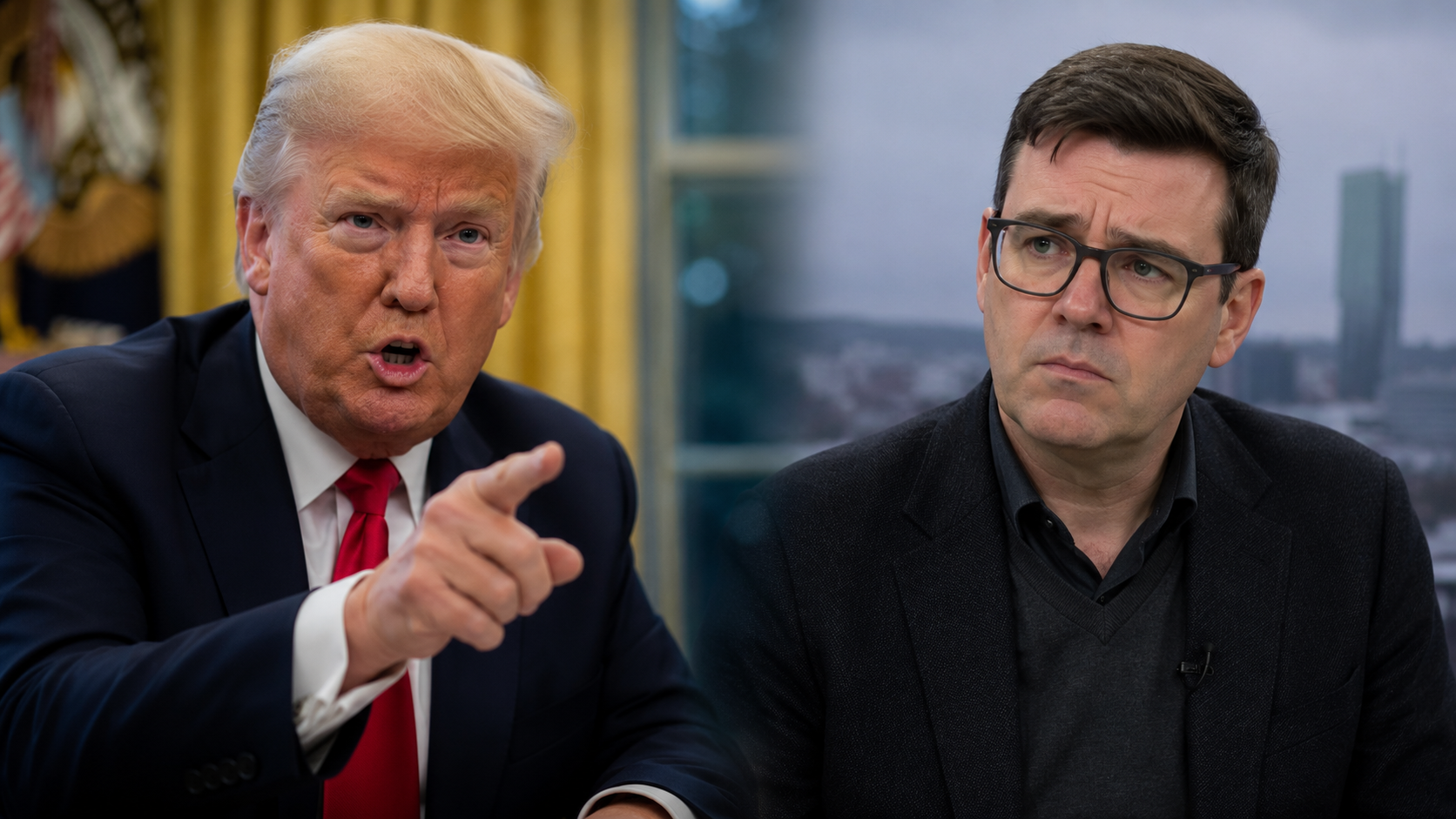
Trump comments on Burnham moved quickly from personal politics to energy, as the US president suggested a future UK leader’s ideology could shape North Sea decisions.
Speaking at the White House on Wednesday, Donald Trump said he had “heard” Andy Burnham was “extremely liberal” when asked what he knew about the UK politician. Trump added that he did not know Burnham personally and appeared uncertain about his background, referring to him as “the mayor of a town.”
Trump then linked that characterisation to offshore policy, saying that if Burnham were “extremely liberal” he “probably won’t open up the North Sea.” The remark was Trump’s first public comment on Burnham as a prospective British prime minister.
White House remarks spotlight North Sea energy politics
By invoking the North Sea, Trump placed energy development at the centre of his assessment, even while acknowledging limited familiarity with Burnham. The North Sea remains a politically sensitive area in the UK, where debates over licensing, production levels and the transition to lower-carbon power have divided parties and regions.
Trump did not cite specific UK policies or proposals in his response, and he did not indicate any planned engagement with Burnham. The comment nonetheless signalled that Washington could frame its expectations of a future UK government through the lens of energy output and regulatory openness.
In the UK, decisions over North Sea activity sit with the government and regulators, and are influenced by domestic priorities such as energy security, consumer prices, and climate targets. Trump’s phrasing suggested a preference for policies that expand supply, mirroring his broader public posture in support of increased fossil-fuel production.
Burnham’s leadership bid raises questions on US relations
Burnham is campaigning to remove Sir Keir Starmer as Labour Party leader and UK prime minister, a contest framed largely around domestic issues. Even so, any leader of the UK’s opposition—or government—must manage a working relationship with the US president, where trade, defence and energy are recurring points of leverage.
The exchange also underscored how quickly a British leadership contest can be pulled into transatlantic politics. Trump’s description was political rather than policy-based, but it carries consequences in a media environment where a brief White House remark can become a lasting shorthand.
For Burnham, the challenge is complicated by past criticisms of Trump that are part of the public record. During the January 6, 2021 unrest at the US Capitol, Burnham wrote on X that “any UK politician who gave Trump the time of day should be ashamed right now.”
Burnham also criticised Trump in a separate interview last year, arguing that the US president had brought “instability to the world,” according to The London Economic. Those earlier statements could become reference points as he seeks to position himself as a credible national leader on foreign policy as well as domestic governance.
Implications for a future UK-US agenda
Trump’s decision to connect Burnham to North Sea development hints at how energy policy may be used as a proxy for broader ideological alignment. In practice, UK-US relations typically span security commitments, intelligence cooperation and trade, but energy remains a high-visibility arena where rhetoric can quickly harden into expectations.
If Burnham’s leadership push gathers momentum, scrutiny is likely to intensify over how he would balance climate commitments, regional economic concerns and the UK’s role as a long-standing US partner. The immediate next step is whether Burnham responds publicly to Trump’s characterisation, and how Labour figures frame the exchange as the internal contest develops.