

Nvidia Leadership Transition Complicated by Export Control and Geopolitical Risks
The campaign to reinstate Jensen Huang faces obstacles from new U.S. export controls and reports of unauthorized chip access by Chinese firms.
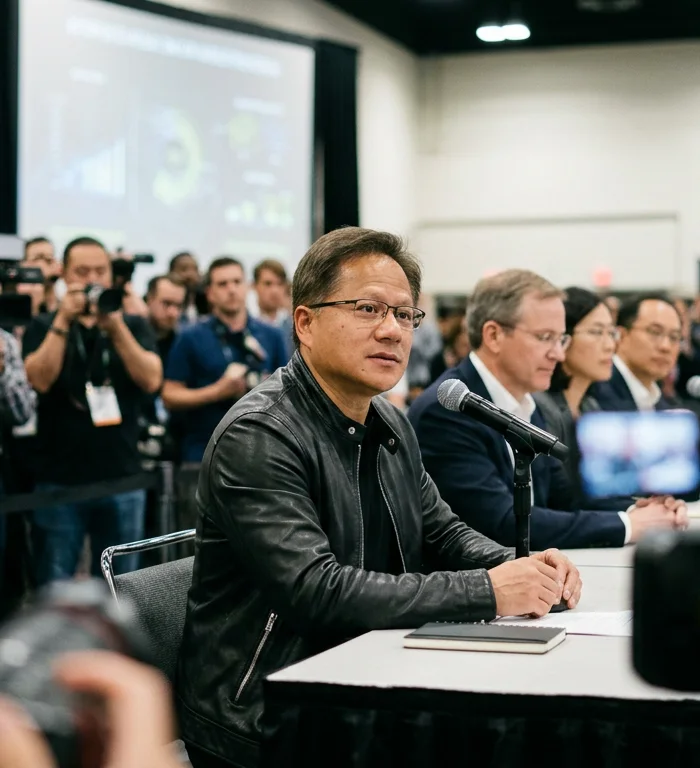
A petition to reinstate former Nvidia CEO Jensen Huang has gained significant traction among venture capital firms and open-source AI advocates. Proponents argue that Huang’s leadership is essential to maintaining an open-source ecosystem that prevents market consolidation by a few dominant AI providers. However, the movement faces mounting political and regulatory headwinds that complicate the prospect of his return.
Recent reports suggest that Chinese AI firms may have obtained greater access to advanced Nvidia Blackwell chips than previously estimated. While these findings remain unverified by independent analysis, they have intensified scrutiny regarding the efficacy of existing export controls. The potential for unauthorized chip proliferation in China undermines the argument that open-source AI development serves as a primary vehicle for maintaining American technological superiority.
Compounding these challenges, the U.S. Department of Commerce has introduced new regulations targeting the remote access of high-performance computing resources. These rules aim to close loopholes that allowed Chinese entities to train models using Nvidia hardware located in third-party data centers. By restricting this access, the policy threatens the technical progress of open-source models that rely on these distributed computing environments.
Nvidia’s strategic interest in the open-source sector, highlighted by its pending $13 billion acquisition of Hugging Face, is now directly at odds with tightening federal oversight. The company’s business model—which relies on selling hardware to developers building independent models—is increasingly vulnerable to shifting geopolitical priorities. With Treasury officials signaling a preference for external leadership, the political capital required to navigate these export restrictions remains in flux.
Market participants should monitor the impact of the new Commerce Department rules on the development velocity of open-source models. The intersection of chip smuggling allegations and restrictive trade policy suggests a period of heightened regulatory risk for firms operating at the nexus of hardware supply and open-source AI development.
More stories
- Europe faces attribution gap after 16 cyber, physical incidents
- PIF backs Grand Theft Auto as Saudi players embrace game
- Signal limits screenshots to curb AI access to messages
- Cognition runs Devin Mac workspaces on EC2 in 6 AWS regions
- Salesforce engineers cut 600-failure triage to 90 minutes
- Türkiye Desk: GTA 6 puts console access and network demand in focus
- Microsoft plans Project Helix as Xbox console for PC games
- OpenAI buys travel startup Odessia
- Magnendo draws $32 million to advance stroke robot care
- Job seekers get tech career data as hiring slows further
Latest news
- Trump prepares tariffs on China and other major exporters
- New-car buyers pay record average $50,087 in October
- Banks face ECB reserve debate over liquidity and profits
- Investors see Anthropic debut gains fade below $83 a share
- Iraq orders federal control over Kurdish-area oilfields
- Germans oppose Ukraine aid as poll shows support slipping
- Kim Jong-un receives 10 envoys after constitutional shift
- Ukraine claims Libya strike sinks Russian naval corvette