

Stelco Initiates Layoffs Amidst US Tariff Pressures and Strategic Restructuring
Cleveland-Cliffs has laid off 500 Canadian steelworkers, citing US tariffs and market decline, while unions allege it is a strategic pressure tactic.
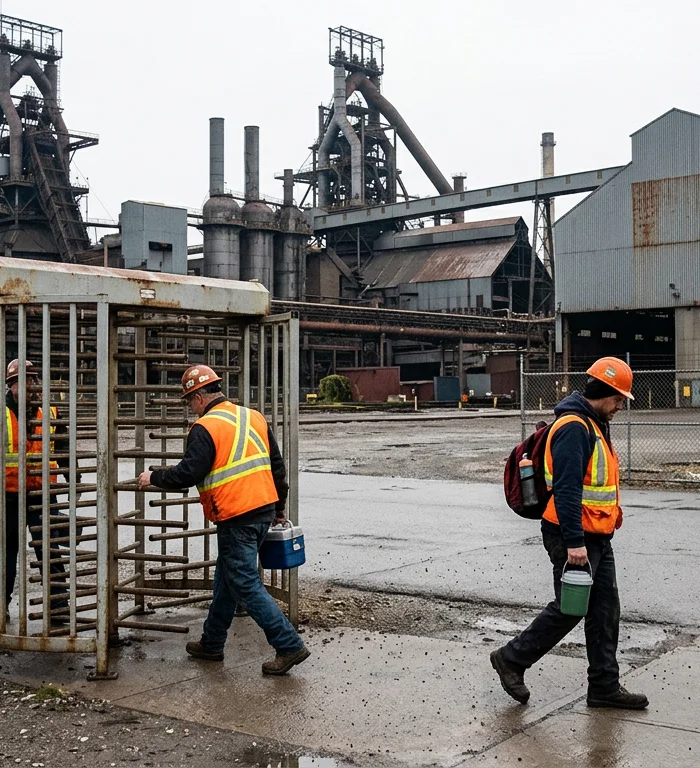
Cleveland-Cliffs has initiated temporary production shutdowns at its Stelco facilities in Hamilton and Nanticoke, Ontario, resulting in the layoff of approximately 500 Canadian steelworkers. The company attributes these operational reductions to the 50 percent tariff on steel and aluminum imports imposed by the United States in June 2025, which has significantly curtailed export volumes. Data indicates that Canadian exports of cold-rolled and coated steel to the US declined by 58 percent in the second quarter of 2026 compared to pre-tariff averages.
However, labor representatives and economic analysts suggest that the layoffs may also reflect broader corporate strategy rather than solely external trade pressures. During a July 2026 earnings call, the CEO of Cleveland-Cliffs explicitly stated that scaling back Canadian production could yield a positive financial impact for the parent company, provided that Ottawa does not implement further protectionist measures against foreign steel imports. This has led to accusations from the United Steelworkers union that the workforce is being utilized as leverage to influence Canadian government policy.
Internal friction has intensified due to the company’s refusal to collaborate with union leadership on lobbying efforts for domestic steel protections. While the company cites a decline in both US demand and domestic automotive sector consumption as primary drivers for the shutdowns, the lack of transparency regarding the duration of these measures has created significant uncertainty for the affected workforce. The situation highlights the vulnerability of Canadian industrial assets within a multinational corporate structure facing volatile North American trade policies and shifting market demand.
More stories
- Nvidia board gets Trump input on Jensen Huang return as CEO
- Rwanda faces budget strain from 85% electricity access push
- AI doubts leave Asian stocks facing a new investment test
- Singapore core inflation eases to 1.5% in October
- Greece targets 2.3% growth in 2027 budget
- US stocks face Goldman warning on further forced selling
- MEPs seek EU cloud shift with US groups at 70% share
- AI investment boom binds global suppliers to US spending
- EU household power prices fall 1.6% in first half
- KBC posts higher profit with 7% loan growth
Latest news
- Macy’s parade faces balloon limits as storm winds approach
- COP31 climate talks collapse over fossil fuels and funds
- Highly diversified investors report 91% confidence in retirement
- Russian military faces 1,087 recorded suicides in Ukraine war
- US faces China, Russia in Africa minerals contest
- Russian war deaths top 460,000, Guardian says
- ICE arrests at Seattle airport draw protests and scrutiny