

Formula 1 Hits Roadblock as 2030 Engine Regulations Face Mounting Uncertainty
Retracted 2030 engine rule announcements reveal ongoing clashes between manufacturers and regulators, threatening the future technical timeline.
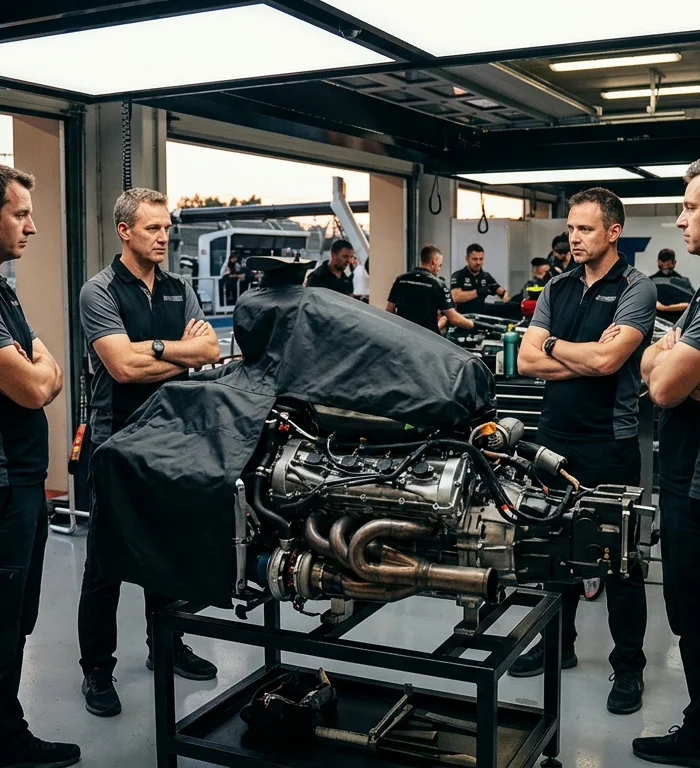
The governing body for Formula 1 recently retracted social media announcements regarding a transition to V8 engine architectures for the 2030 season. The premature publication of these details highlights a persistent lack of consensus among key stakeholders, including engine manufacturers, the commercial rights holder, and the sport's regulatory authority. While the governing body has expressed a desire to accelerate the introduction of new engine regulations, the current technical framework is contractually locked until 2031 under the existing Concorde Agreement.
Discussions currently center on a proposed 2.1-liter turbocharged V8 engine with reduced electrical hybridization. The governing body advocates for this shift to simplify manufacturing, reduce development costs, and lower the overall weight of the vehicles. However, manufacturers remain divided on the technical specifications. Entities focused on the North American market have signaled support for reduced hybridization, while other manufacturers have identified the removal of forced induction as a non-negotiable barrier, citing the necessity of maintaining hybrid components for brand alignment.
Concorde Agreement
Under the current proposal, the electrical motor output would be significantly reduced from the current 350kW to a baseline of 100kW, with an additional 100kW available for overtaking maneuvers. Despite these technical parameters, the retraction of the initial announcement indicates that stakeholders have not reached a unified interpretation of the proposed terms. The lack of a formal agreement poses a risk to the development timelines for manufacturers, who require regulatory clarity by the end of the current calendar year to meet a 2030 implementation deadline.
The governing body intends to present a definitive regulatory framework to the World Motor Sport Council on December 10. For this timeline to remain viable, a binding consensus must be secured among all parties prior to the meeting. Failure to achieve this alignment could delay the transition or necessitate a renegotiation of the commercial terms governing the sport's technical direction.
More stories
- Hull City 2–0 Brighton: When Resilience Beat Reputation
- Aleksey Batrakov Attracts Barcelona Transfer Interest
- Manchester United weigh Osimhen move, transfer report says
- Ravens 20, Chargers 23: A season at the edge
- Billie Jean King ties 39 majors to equal-pay fight
- Cavaliers list Jarrett Allen questionable for Hornets game
Latest news
- Eisenkot secures first coalition deal but lacks majority
- Trump prepares tariffs on China and other major exporters
- New-car buyers pay record average $50,087 in October
- Banks face ECB reserve debate over liquidity and profits
- Investors see Anthropic debut gains fade below $83 a share
- Iraq orders federal control over Kurdish-area oilfields
- Germans oppose Ukraine aid as poll shows support slipping
- Kim Jong-un receives 10 envoys after constitutional shift