Strait of Hormuz tankers keep moving despite Iran claim
Strait of Hormuz shipping continued this weekend as tanker tracking data showed transits near Oman despite Iran’s renewed claim of a closure.
Amira Hassan ·
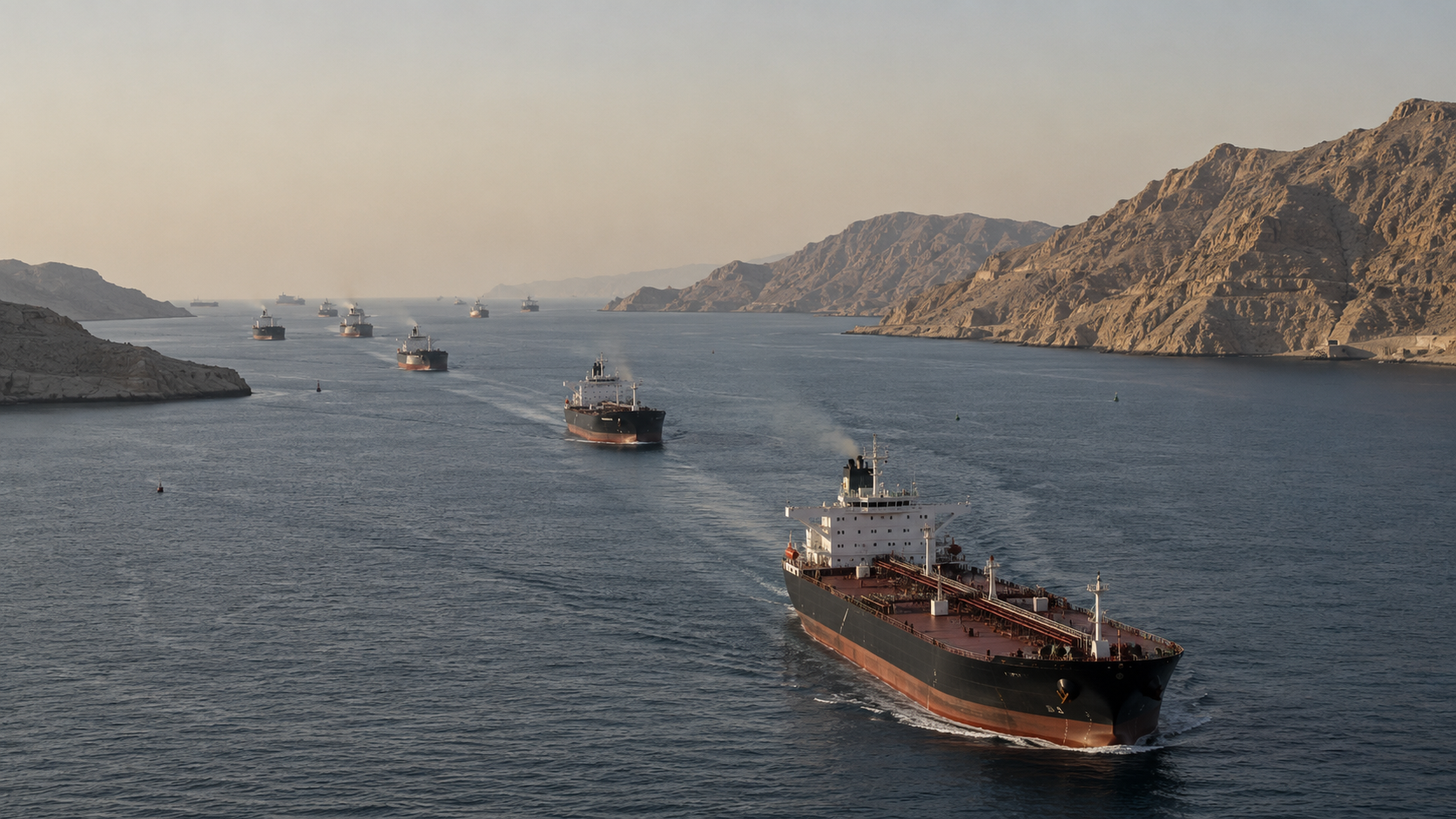
Strait of Hormuz shipping continued this weekend as tanker tracking data showed transits near Oman despite Iran’s renewed claim of a closure.
Signals from three loaded supertankers indicated they were moving through the narrow channel on Saturday, using a path close to Oman’s coastline, according to ship-tracking information. The vessels have a combined carrying capacity of about 6 million barrels, underscoring the scale of energy cargoes still attempting to pass through the chokepoint.
The developments set up a fresh clash of narratives between Tehran and Washington over the status of the waterway. Iran has again asserted it has shut the passage, while the US military has maintained that traffic can be protected along the southern side of the strait near Oman.
Ship signals point to continued transits near Oman
The three tankers were observed transmitting automated position signals as they approached and moved through the strait on Saturday, following the southern route that skirts Oman’s coast. One of the vessels later began broadcasting again early Sunday after reaching the Gulf of Oman, suggesting it had cleared the bottleneck.
The Gulf Sunrise, carrying roughly 2 million barrels of Saudi crude bound for Japan, was shown crossing the Gulf of Oman after its tracking data disappeared near the strait’s narrowest section on Saturday. The pattern—brief signal loss followed by reappearance farther east—can occur for a range of operational reasons, but the Sunday reemergence indicates onward movement beyond Hormuz.
Another ship, the Angola B, loaded with crude from the United Arab Emirates, was last seen near the tip of the Musandam Peninsula on Saturday. Musandam is an Omani exclave that protrudes into the entrance of the strait, making it a geographic marker for vessels approaching the corridor.
A third tanker, the Monaco Loyalty, had not yet reached the narrowest point when its signals stopped on Saturday. Tracking data did not immediately confirm whether it later resumed transmissions beyond the strait.
Competing corridors reflect military and political pressure
The route along Oman’s shoreline has become central to the US position that commercial traffic can be defended even when tensions rise. If the three vessels successfully pass, their movement would align with the US military’s assertion that the southern lane can remain viable despite Iranian statements that it can control access to the waterway.
Iran’s claim of a closure, if implemented, would represent a major escalation given the strait’s role in linking the Persian Gulf to global markets. The Strait of Hormuz is widely viewed as the most consequential maritime chokepoint for oil, and disruptions there can quickly ripple through energy prices and shipping insurance costs.
Tracking data also showed additional vessels entering the Persian Gulf using the same southern approach, indicating that at least some operators continue to treat the corridor as passable. In practice, ship operators may adjust routing, speed, and communications behavior in response to perceived risks, sometimes limiting signal transmissions in sensitive areas.
What the weekend traffic could signal for markets
The immediate market relevance lies in whether the observed traffic becomes a sustained pattern or a short-lived window. Regular transits would suggest that commercial shipping can still function under heightened rhetoric, while interruptions or a pullback in sailings would indicate rising operational constraints.
For governments, the episode highlights how quickly competing statements can test credibility when open-source tracking data is available to traders and analysts. For shippers, it reinforces the importance of route planning near Oman’s coast and monitoring official advisories, naval guidance, and on-the-water conditions.
A request for comment to the ships’ manager was not immediately answered, leaving key operational details—such as security measures and any voyage adjustments—unclear. Attention in the coming days will remain on whether more laden tankers publish consistent positions through the strait and whether official claims shift alongside observable traffic.