Strait of Hormuz crisis forces allies to weigh risks
The U.S. wants Britain to host allied talks on reopening the Strait of Hormuz as the Iran war disrupts shipping and energy markets.
Lauren Collins ·
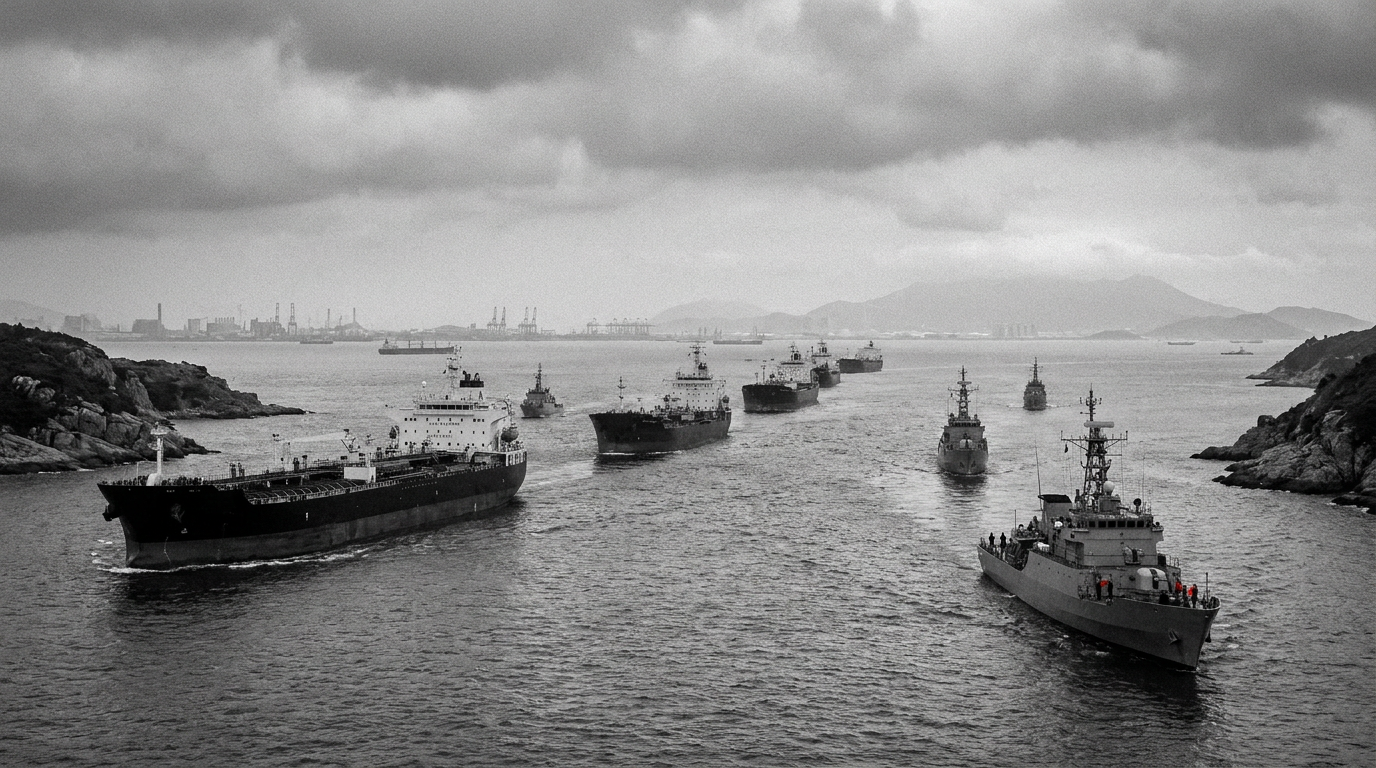
The Strait of Hormuz is at the center of a new U.S. push for Britain to convene allies on reopening a war-disrupted shipping route.
Defense Secretary Pete Hegseth spoke Friday with Britain’s new defense secretary, Wes Streeting, about a possible summit on maritime protection, people familiar with the private talks said. The U.S. wants the UK to host the meeting and Hegseth would attend, though no decision has been made; the Pentagon declined to comment.
Britain asked to convene allies
The request puts the UK in a visible diplomatic role at a moment when President Donald Trump is under pressure to reopen the waterway. For Washington, a British-hosted gathering would spread the burden of securing ships beyond the U.S. military and frame the problem as a shared international one.
Trump administration officials have repeatedly urged other governments, particularly U.S. allies, to help restore passage through the strait. The route is vital for global shippers, and its closure has added a direct maritime dimension to a war already testing allied unity over Iran.
A reopened route needs a ceasefire
The strait was shut soon after the U.S. and Israel attacked Iran in late February, people familiar with the matter said. It has closed again in recent weeks as violence has intensified, leaving commercial traffic exposed to decisions made by militaries and insurers rather than by shipping schedules alone.
Tehran has effectively blocked the route through repeated attacks on ships, roiling energy markets and raising the cost of inaction for countries that depend on maritime flows. Many governments have resisted joining the effort, concerned that participation could deepen their role in a conflict they opposed from the start.
The UK and other European governments have drawn a line around naval involvement. They have long said they would send assets into the strait for de-mining only after a lasting ceasefire is in place, a condition that makes diplomacy as important as ships and mine-clearing equipment.
UK basing choices narrowed
Britain’s own position has shifted during the war. The UK initially opposed allowing the U.S. to use British bases for operations tied to the conflict, before former Prime Minister Keir Starmer changed that stance and his replacement, Andy Burnham, approved the use of bases for defensive strikes.
That sequence has left London closer to Washington’s operational needs, but not fully aligned on how far to go inside the strait. Hosting a summit would be less risky than deploying naval assets immediately, though it would still attach Britain more closely to Trump’s strategy toward Iran.
For the Trump administration, a UK-led meeting could help convert private requests into a public coalition. For Burnham’s government, the same move would test whether Britain can support maritime security without crossing the European condition that de-mining should wait for a durable pause in fighting.
Rubio presses shared costs
Secretary of State Marco Rubio framed the issue as one that should not fall on Washington alone. “I think the world should unite on that point,” Rubio said in an interview published Thursday. “Every country in the world should be calling Iran and saying: you can’t do this or we’re also going to come after you.”
The comment captures the administration’s leverage problem. Nations that rely on the route share an interest in reopening it, but the act of joining a security mission could expose them to Iranian retaliation, domestic criticism or pressure to take further military steps.
If Britain hosts the summit and a credible ceasefire follows, allies could move toward de-mining with clearer legal and political cover; energy markets would get a signal that the route may reopen, Washington would share responsibility, and shippers could begin planning safer schedules.
If allies hold back until fighting stops, uncertainty would stay with oil-linked markets, the Trump administration would carry more of the diplomatic load, and insurers and shipowners would likely remain cautious.
If attacks continue and Tehran holds out despite nearly two weeks of sustained strikes, U.S. pressure on partners is likely to intensify. The open questions are whether Britain agrees to convene the meeting, whether European conditions on a ceasefire soften, and whether Iran sees more advantage in keeping the chokehold than in reopening the channel.