Houthis widen Red Sea threat with Saudi missile claims
Houthis claimed missile and drone attacks on Saudi oil-linked facilities, raising pressure on Red Sea export routes during the wider Iran conflict.
Lauren Collins ·
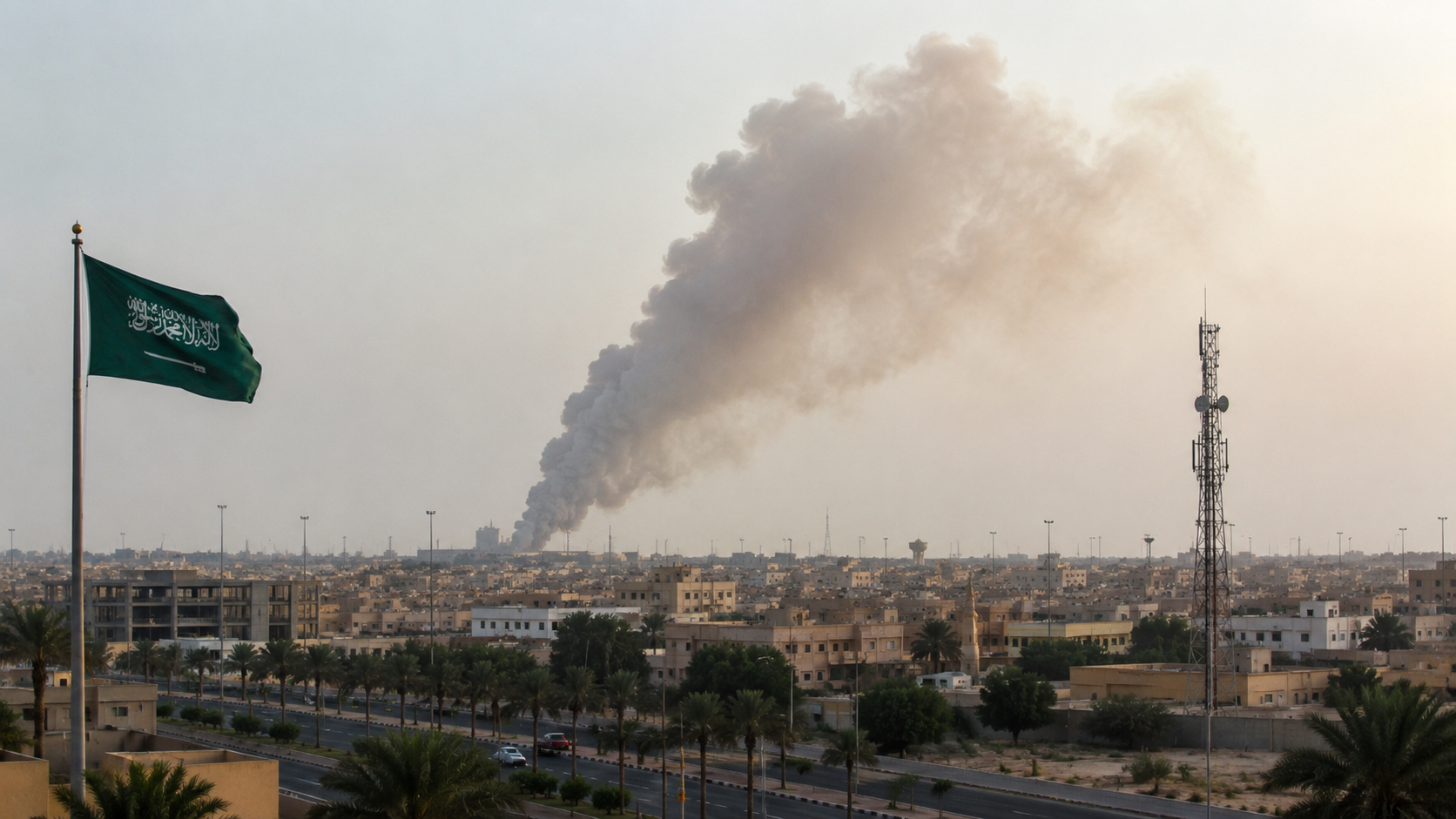
Houthis claimed attacks on Saudi oil-linked sites after alerts in Jazan and Yanbu, adding pressure to Red Sea energy routes.
Saudi alerts in Jazan and Yanbu
Saudi authorities issued emergency warnings for Jazan and Yanbu at about 6:10 a.m. local time on Saturday. Residents were told to seek shelter, and the alerts were lifted shortly afterward.
The Houthis said they launched missiles and drones at facilities connected to Saudi Aramco in the Red Sea port towns of Jizan and Yanbu. Saudi authorities and Aramco had not immediately confirmed that company sites were targeted.
Aramco routes face Red Sea strain
Yanbu has become more important to Saudi oil exports since the Strait of Hormuz was effectively closed at the start of the U.S.-Israel war on Iran in February, according to the account provided. Jizan, in Jazan province, includes both a port and a Saudi Aramco refinery.
The latest account described Hormuz as normally carrying about one-fifth of global crude supplies. With traffic there largely paralyzed by hostilities, any lasting disruption around Saudi Red Sea ports would narrow alternative export capacity.
The Houthi claim also extends the group’s role beyond ship attacks in the Red Sea. The Yemen-based movement, backed by Iran, had announced a blockade of Saudi ports and warned that vessels visiting them could be struck.
Coalition strikes answer port threats
A Saudi-led coalition struck Houthi military positions later Saturday, according to a channel aligned with Yemen’s internationally recognized government. A day earlier, the coalition attacked Hodeida, a southern Red Sea port linked in the report to several Houthi maritime operations in recent years.
The coalition presented the Hodeida operation as an answer to Houthi attacks on commercial shipping over the past week. The Houthis had attacked two Saudi-linked oil tankers in the Red Sea, hitting at least one, and damaged another Saudi vessel on Friday, according to an official Saudi account.
The Houthis said their blockade threat was retaliation for recent Saudi strikes on Sanaa, Yemen’s capital. That sequence has shifted the confrontation from episodic maritime attacks toward direct pressure on Saudi ports and export infrastructure.
For Saudi Arabia, the immediate company exposure sits with Aramco, even though confirmation of a direct strike was absent. The risk is operational and reputational: alarms around ports and refineries can raise security costs, slow logistics and test customer confidence.
Oil market scenarios narrow
If Saudi warnings remain brief and no Aramco damage is confirmed, the global macro effect would likely stay limited to a risk premium in crude markets. Aramco would be able to keep using Red Sea routes, while tanker operators would treat the episode as another security cost rather than a shutdown.
If the Houthis can sustain pressure on Yanbu or Jizan while Hormuz remains constrained, the mechanism changes. Global crude markets would face fewer export lanes, Aramco would have to prioritize routing and facility protection, and tanker operators could demand higher compensation for Red Sea voyages.
A third path is escalation through retaliatory strikes. If coalition attacks reduce Houthi launch capacity, maritime risk could ease; if they instead prompt more missile or drone attempts, insurers, shipowners and refiners would have to price a longer Saudi-Red Sea disruption into planning.
The key uncertainties are basic but consequential: whether any Aramco-linked site was actually hit, whether Saudi port warnings recur, and whether the apparent pause in U.S. strikes on Iran holds. Those answers will determine whether Saturday’s claims fade as a scare or become a new front around Saudi energy infrastructure.