Oil Prices Sustain Above $100 Amid Supply Concerns
Oil prices held above $100 a barrel due to ongoing supply concerns and reduced transit through the Strait of Hormuz.
Atlas Newsdesk ·
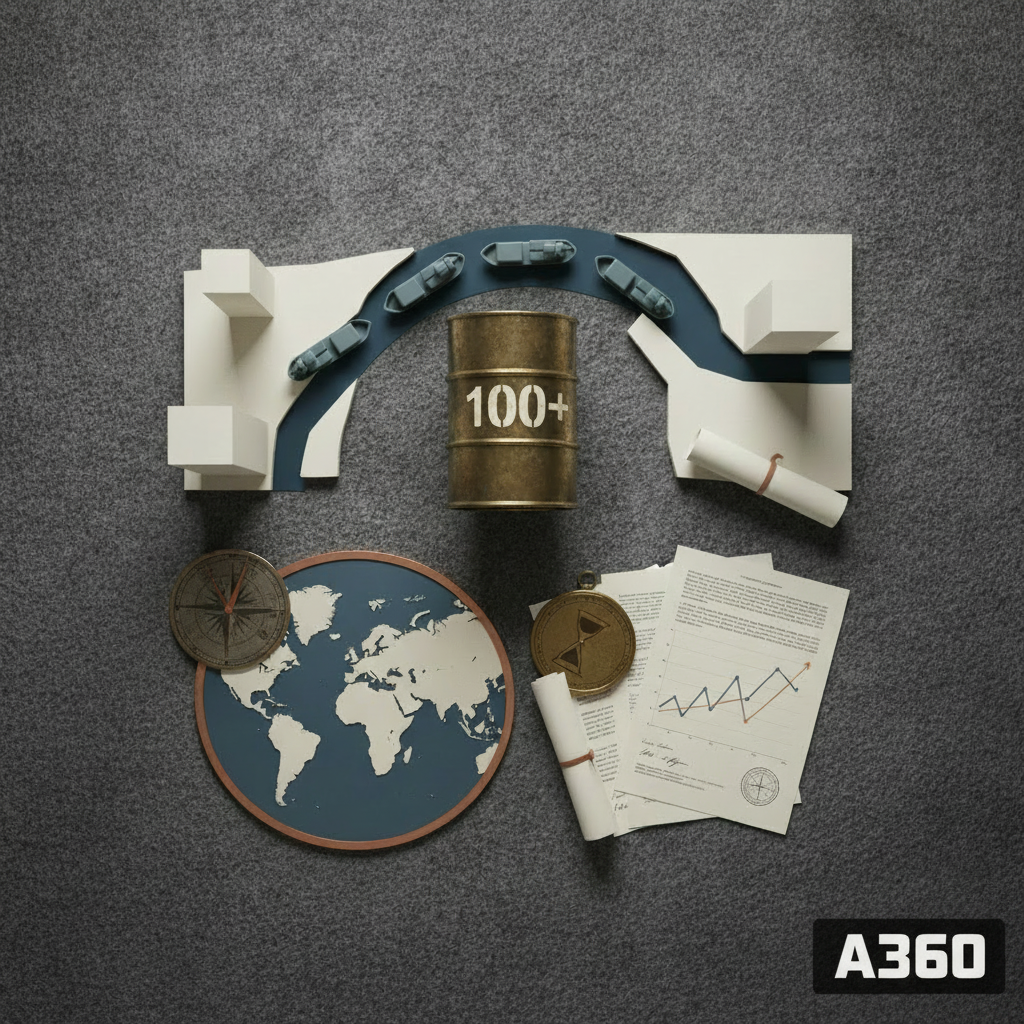
Oil prices remained firm above $100 per barrel on Tuesday, as markets weighed a complex U.S. strategy to boost global supply against severe disruptions in a critical Middle East waterway. The U.S. Treasury authorized the purchase of sanctioned Russian crude already in transit to calm prices. However, this measure was juxtaposed with plans for potential U.S. Navy escorts in the Strait of Hormuz, where traffic has plummeted, signaling prolonged instability for the energy sector.
The U.S. Treasury Department's decision specifically targets an estimated 124 million barrels of Russian oil currently at sea on various tankers, according to shipping data.
This volume, if fully absorbed by the market, is comparable to the amount of oil that would typically transit through the Strait of Hormuz over five to six days, representing a significant potential injection of supply.
This policy adjustment is a nuanced approach to the G7-led price cap and sanctions imposed on Moscow following its invasion of Ukraine. The primary goal of the sanctions has been to curtail Russia's revenue for its war effort without causing a catastrophic global supply shock. This temporary allowance for oil already in transit suggests policymakers are attempting to fine-tune that balance amid stubbornly high prices.
Chokepoint Crisis in the Strait of Hormuz
A more alarming development for market stability is the near-paralysis of the Strait of Hormuz, the world's most vital oil transit chokepoint. Current tanker traffic has fallen to less than one million barrels per day (bpd). This figure represents a more than 95% reduction from the typical daily flow of approximately 20 million bpd, which accounts for about 20% of global petroleum consumption.
In response, U.S. Treasury Secretary Scott Bessent announced plans to deploy Navy escorts for commercial vessels "when conditions allow," a measure aimed at restoring confidence for shippers. The few tankers still navigating the hazardous strait are reported to be primarily Chinese and Russian-controlled vessels, which may operate with different risk calculations and insurance arrangements than their Western counterparts.
[ANALYSIS] The plan for naval escorts echoes historical precedents like Operation Earnest Will during the Iran-Iraq War in the 1980s, when the U.S. Navy protected Kuwaiti oil tankers. However, oil analysts project prolonged market instability, noting that such escorts are a reactive measure and do not resolve the underlying geopolitical tensions causing the disruption. For shipping companies, the heightened risk translates directly into soaring insurance premiums, adding another layer of cost that is ultimately passed on to consumers.
Inflation Data Looms Over Market Sentiment
Adding to the complex trading environment, market participants are closely watching for the upcoming release of key U.S. inflation data. The personal-consumption expenditures (PCE) price index for January, the Federal Reserve's preferred inflation gauge, is due this week and could significantly influence market direction.
[IMPLICATIONS] A higher-than-expected inflation reading could compel the U.S. central bank to maintain high interest rates for a longer period. Sustained high rates are designed to slow economic activity to control inflation, which in turn could dampen global demand for oil. This macroeconomic headwind creates a powerful counterforce to the supply-side pressures, leaving oil prices caught between geopolitical risk premiums and fears of a potential economic slowdown.