South Korea Says Pilot Filming Caused Mid-Air Jet Collision
Ayla Demirhan ·
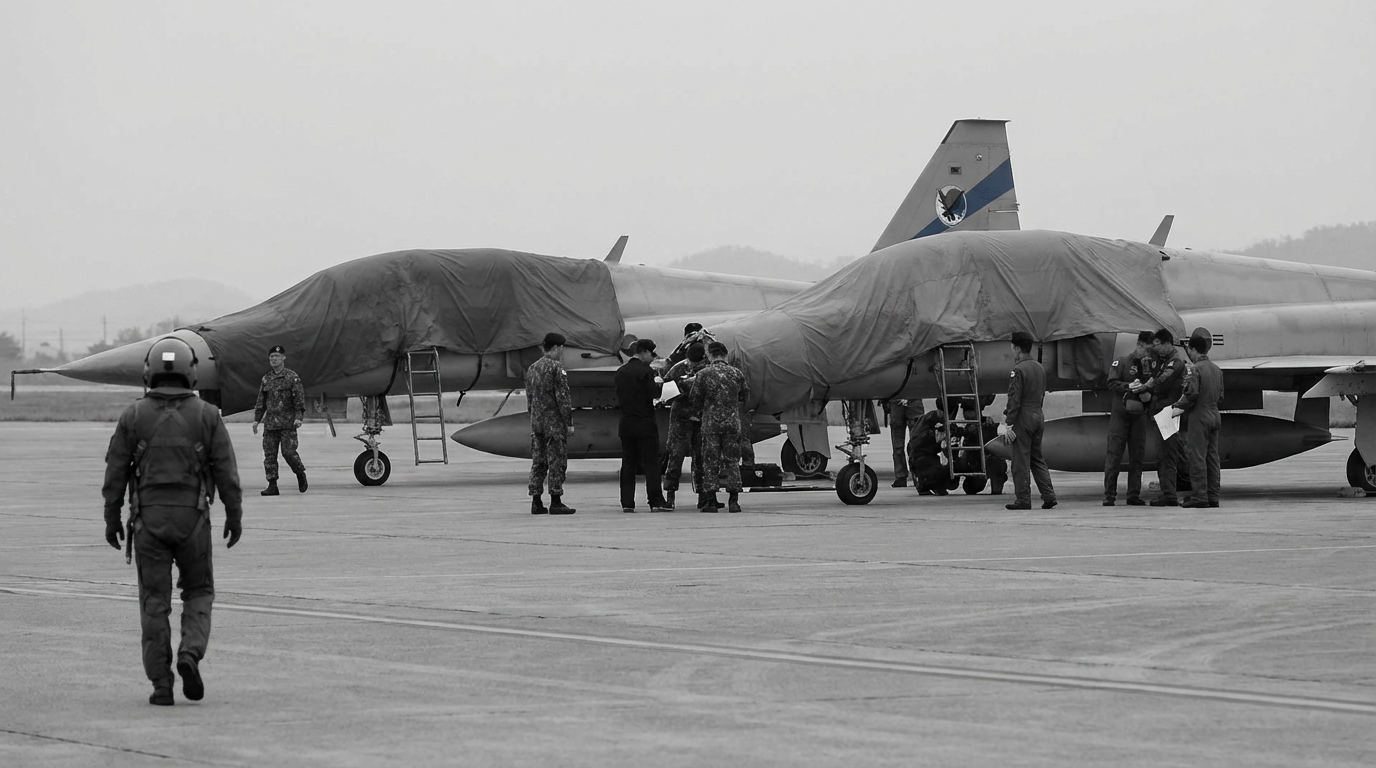
A South Korean audit found that two fighter jets collided in 2021 after pilots attempted to film and photograph each other mid-flight, highlighting safety lapses and weak oversight.
South Korean authorities have concluded that a mid-air collision between two fighter jets in 2021 was caused by pilots attempting to capture photos and video during a routine mission. The incident involved two F-15K aircraft flying near Daegu, both of which were damaged but managed to return safely without injuries. Repair costs reached 880 million won, roughly $596,000.
Responsibility and Practices
What changed is the clarity around responsibility. A report from Seoul’s Board of Audit and Inspection determined that one pilot, flying as the wingman, initiated risky maneuvers while using a personal mobile phone to take photos. The lead aircraft’s crew also participated by filming, creating a situation where both planes operated at dangerously close range without proper coordination.
The broader context points to a culture that tolerated such behavior. Investigators said taking photos during meaningful flights had been a common, informal practice among pilots at the time. The wingman had even mentioned his intention to take pictures during a pre-flight briefing, suggesting that the activity was neither hidden nor explicitly prohibited.
Collision Details
The collision occurred when the wingman aircraft abruptly climbed and inverted to improve camera angles, bringing it too close to the lead jet. In response, the lead aircraft attempted a rapid descent to avoid contact, but both planes still struck each other, damaging the wing and tail stabilizer. Despite the impact, the pilots regained control and returned to base, preventing a more severe outcome.
Financial and Disciplinary Fallout
The financial and disciplinary fallout was significant. The air force initially sought to recover the full repair cost from the wingman pilot, though the audit board later reduced the penalty to 88 million won. Officials cited shared responsibility, pointing to inadequate rules governing personal device use in the cockpit. The case underscores how informal practices can persist in high-risk environments when enforcement is unclear.
Broader Military Implications
Beyond this incident, the findings raise questions about operational discipline in advanced air forces. Fighter jet missions demand strict adherence to protocol, especially in formation flying where small miscalculations can escalate quickly. The report suggests that even well-trained units can develop habits that erode safety margins if oversight does not keep pace with evolving behavior, such as the use of personal technology.
Future Oversight
The audit did not specify whether other crew members faced consequences, leaving some uncertainty around accountability across the chain of command. It also remains unclear whether the air force has since imposed stricter controls on in-flight recording devices. Future policy changes—and how rigorously they are enforced—will determine whether similar risks are reduced or quietly persist.