Trump's Diet Soda Theory Revealed by Dr. Oz
Dr. Mehmet Oz's podcast remarks about Donald Trump's diet soda beliefs have sparked debate on health literacy and public trust ahead of the 2024 elections.
Hazal Anyalı ·
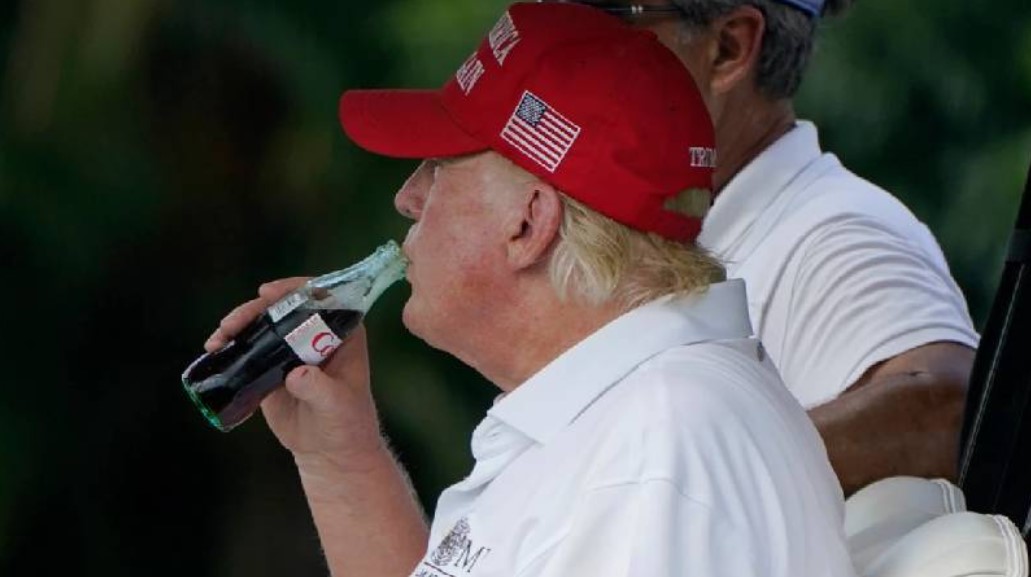
Former U.S. President Donald Trump's personal views on diet soda and other carbonated drinks have reignited discussions about health literacy and decision-making capabilities as the 2024 election cycle approaches. These claims stem from statements made by Dr. Mehmet Oz, a physician and politician known for his close ties to Trump, during an appearance on Donald Trump Jr.'s podcast, “Triggered with Don Jr.” Oz indicated that Trump believes diet cola possesses the ability to "kill cancer cells."
Oz explained that Trump's reasoning originates from a daily observation: the beverage's capacity to dry out grass when spilled. This led Trump to conclude it might have a similar "destructive" effect within the human body. This approach, relying on anecdotal evidence rather than medical proof or clinical mechanisms, has been widely reported. News coverage has also recalled Trump's past controversial remarks concerning health and scientific topics.
Unconventional Beverage Beliefs
Diet cola was not the only example shared during the podcast. Oz recounted that Trump held similarly unusual views regarding Fanta. According to Oz, Trump considered Fanta to be akin to "freshly squeezed" orange juice, justifying this by the drink's production from orange juice concentrate.
While such statements do not directly translate into policy decisions, they trigger institutional risk discussions concerning leaders' relationship with scientific evidence and the credibility of their public health messages. Debates about the health status and cognitive fitness of presidential candidates are a regular feature of U.S. election campaigns. Notably, these claims emerged not from an opposing campaign, but from an individual within Trump's inner circle.
Donald Trump Jr., during the same broadcast, defended his father's dietary habits, emphasizing his energy, memory, and stamina despite his age. Although this defense aimed to frame the discussion around "personal habits," public discourse largely focused on reasoning and scientific approaches.
Political Context and Future Implications
Mehmet Oz's involvement amplifies the political dimension of this news. Oz was appointed to the President's Council on Sports, Fitness, and Nutrition during Trump's presidency. He later ran for the Senate in Pennsylvania with Trump's endorsement but was unsuccessful. This background makes Oz's statements significant, both as an alleged insider observation and due to the dynamics of their political relationship.
In the upcoming period, such narratives are expected to be increasingly utilized in campaign communications under the themes of "health, reasoning, and trust." Furthermore, the spread of inaccurate health beliefs could indirectly fuel discussions in the U.S. about combating misinformation, platform accountability, and public health communication.
Potential Ramifications
These assertions could intensify the debate in the U.S. regarding leaders' health literacy and the reliability of public health messages. During campaigns, candidates' health and decision-making processes may face increased scrutiny.
For the health communication, media, and platform sectors, discussions about content moderation and misinformation could accelerate. Food and beverage brands might reassess their reputation management and communication strategies due to the risk of being drawn into political debates.
Perceptions of political uncertainty could influence market volatility through risk premiums during the election season. Regulatory pressure expectations for media and platform companies might heighten valuations and news flow sensitivity.