

Snabbit’s Rs 195 crore spend tests instant househelp economics
India’s 10-minute domestic-help startups are expanding order volumes, but discounts, worker utilisation and acquisition costs remain unresolved profit tests.
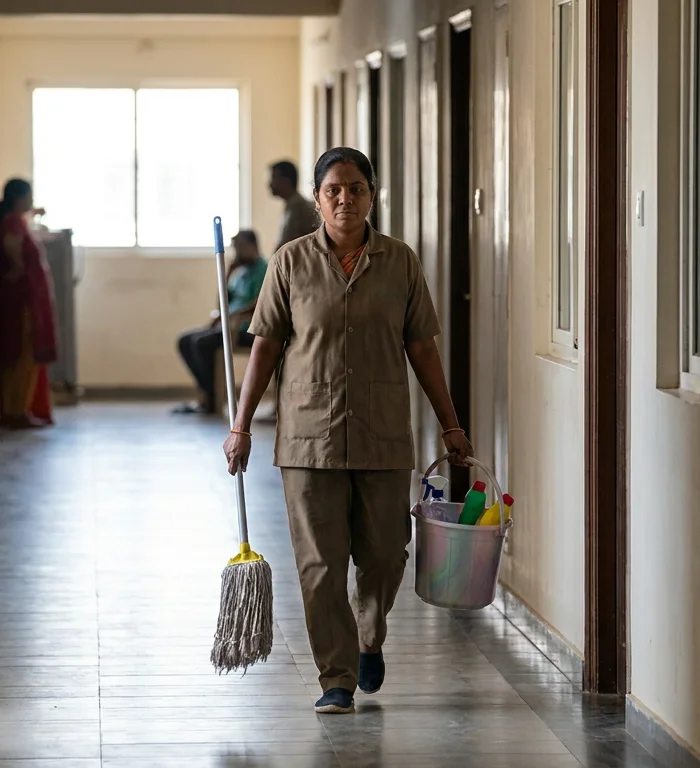
Snabbit spent Rs 195 crore in FY26 against Rs 12.2 crore of operating revenue, The Economic Times reported on Oct. 17, showing the cost of India’s instant househelp race.
Urban Company’s InstaHelp also expanded despite higher losses, the Oct. 17 news report said, with its post-discount average order value falling to Rs 118 in the September quarter from Rs 134 in June.
The business promise is simple: book domestic help for chores such as cleaning, dishes or laundry at short notice, often at introductory prices around Rs 100 or below. The unresolved issue is whether frequent use can offset the cost of recruiting workers, subsidising orders and building dense local supply.
Urban Company said InstaHelp’s lower September-quarter order value reflected introductory pricing aimed at acquiring customers, according to the report. In July, the company said the service would need an average order value of about Rs 300 to break even, compared with Rs 138 at that time, and CEO Abhiraj Singh Bhal said reaching that level could take as long as five years.
Density versus discounts
Instant househelp is more operationally demanding than a standard online marketplace. Platforms need enough workers close to customers, and enough jobs close to workers, so travel and waiting time do not consume the economics of each booking.
Snabbit’s cost base illustrates that pressure. The report said expert service costs were Rs 63.1 crore in FY26, marketing spending was Rs 48.7 crore and employee benefits were Rs 46 crore. Total expenses reached Rs 195 crore.
The company also reported rapid expansion. Snabbit said it grew from about 500 daily jobs across eight micro-markets at the start of FY26 to a run rate of 35,000 jobs across more than 100 micro-markets by the end of the year, according to the report.
That scale has not yet settled the unit-economics question. The Economic Times reported that the three major instant househelp platforms processed 3.97 million orders in June, up 20% from May, while their combined monthly cash burn rose 14% to $16 million-$17 million.
The gap matters because order volume and profit quality are not the same measure. A platform can increase bookings through discounts and marketing, but it still needs higher revenue per order, better worker utilisation or lower acquisition costs to narrow losses.
Capital buys time
Urban Company has a funding advantage because its established home-services operations remain profitable, according to the report. In its latest shareholder communication, the company said businesses outside InstaHelp generated Rs 119 crore in adjusted EBITDA, a profit measure before interest, tax, depreciation and amortisation, over the first nine months of the financial year.
Urban Company also reported Rs 1,901 crore of cash as of Sept. 30 and approved a plan to raise Rs 2,500 crore through a qualified institutional placement, a sale of shares to institutional investors. Bhal has said InstaHelp losses will stay elevated for several quarters as the company prioritises scale over near-term profit, the report said.
Snabbit faces a sharper funding-efficiency test. Its FY26 net loss was Rs 168 crore, almost 14 times operating revenue of Rs 12.2 crore. Founder Aayush Agarwal said the annual accounts did not capture more recent operating progress, according to the report.
Agarwal said loss per job fell below Rs 200 in September from about Rs 1,500 at the start of FY26, a company-reported metric that will need to hold as the company enters more neighbourhoods. The report did not provide independently verified unit-economics data.
Investor interest has not disappeared. Pronto raised an additional $20 million, doubling its valuation to $200 million within two months of an earlier round, according to the report. The startup said bookings had climbed to more than 26,000 a day from 3,000 since December and that burn per booking fell 55% while worker payouts were maintained.
The next test is behavioural as much as financial. The market is more attractive if households use instant help routinely, rather than only when regular domestic workers are unavailable. The report said Urban Company has indicated its core business can fund InstaHelp losses from Q3 FY28, while Snabbit is relying on denser local networks to improve its economics.
Source: news report, The Economic Times, Oct. 17, 2026
More stories
- Bank of America backs 5 tech stocks before earnings
- Hyperscalers face $1.2tn AI spending test after tech selloff
- Shopify price increases may add $40m revenue in JPMorgan call
- Exiro Nickel takes Thompson mines with up to $200m to invest
- US sanctions Iran oil trustee tied to millions of barrels a month
- Bonfiglioli Transmissions IPO to cut promoter stake to 77%
- EA buyout lifts games M&A to $57.8 billion in Q3
- EU Full Self-Driving review tests Tesla's safety evidence
Latest news
- Wall squats may lower blood pressure after four weeks
- 8-hour eating windows beat controls by 5 pounds in TRE trials
- Researchers link diabetic ulcers to stalled immune repair
- Loneliness and isolation linked to 5.8 fewer healthy years
- Weiss warns of breast cancer care gap after treatment
- CoreWeave gains ARK backing as borrowing concerns persist
- DeepSeek updates AI model as speed and cost rivalry grows
- CoreWeave bond yields hit 15% as AI funding doubts deepen