

Hyperscalers face $1.2tn AI spending test after tech selloff
Meta’s results will help determine whether investors keep backing AI capital spending as semiconductor shares cool and rates threaten funding costs.
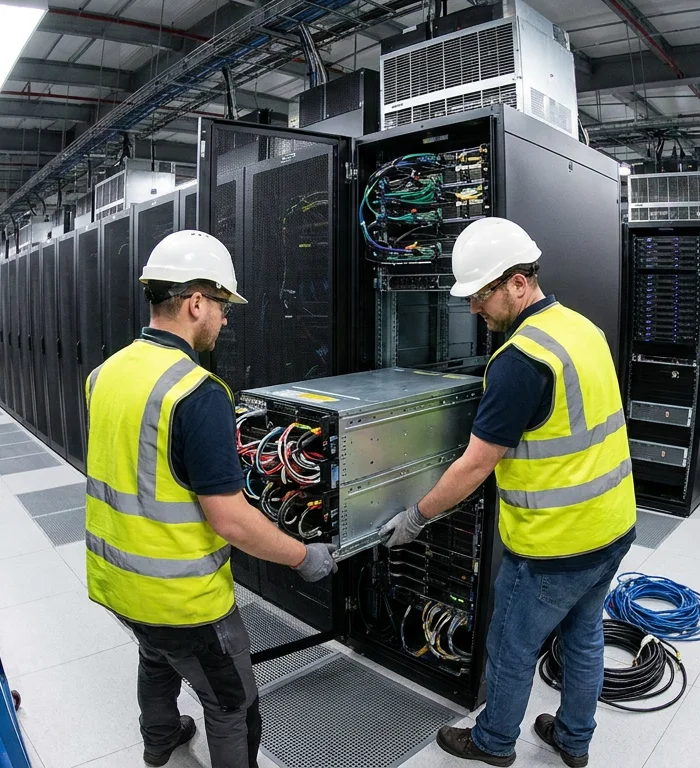
Meta Platforms leads next week’s U.S. earnings test of AI spending, Reuters reported on Oct. 17, as five hyperscalers, large cloud platforms, are forecast to lift 2027 capital spending near $1.2 trillion.
The test matters now because the S&P 500 just posted its largest weekly decline since June and the Philadelphia SE Semiconductor index is down about 12% this month, increasing pressure on hyperscalers to show AI returns can support their spending plans.
Garrett Melson, portfolio strategist with Natixis Investment Managers Solutions, said the market’s tone had become less settled as investors reassess the artificial-intelligence trade. “It certainly feels like the narrative in the market is a little bit jittery,” he said.
Kevin Shea, senior equity analyst at BNY Wealth, said earnings need to show that cash generation can keep up with investment plans. “One of the most important takeaways of earnings season is whether or not the profitability of the hyperscalers can grow faster than the pace of their capex,” he said.
Chuck Carlson, chief executive officer at Horizon Investment Services, said higher funding costs increase scrutiny of AI infrastructure returns. “With the cost of capital going up, this capex blowout is going to become more expensive, which raises the bar for returns,” he said.
The immediate test comes after AI-linked stocks and hardware suppliers weakened, including Dell Technologies and semiconductor companies, Reuters reported. Investors also monitored CoreWeave, an AI cloud company with about $50 billion in debt, whose shares fell this week, according to the report.
Goldman Sachs estimated that five AI hyperscalers together will lift capital spending to about $1.2 trillion next year, Reuters reported. That sum is equal to about two-thirds of Meta’s roughly $1.8 trillion market value, according to Atlas360 calculations based on figures in the Reuters report.
LSEG IBES expects S&P 500 companies to deliver more than 30% third-quarter earnings growth, putting pressure on large technology companies to justify the investment surge. Meta’s shares have risen in recent weeks after the company launched its Muse AI assistant, Reuters reported.
The semiconductor read-through is also central. The Philadelphia SE Semiconductor index remains up 57% in 2026 despite October’s roughly 12% decline, compared with an approximately 12% year-to-date gain for the S&P 500, Reuters reported. Lam Research shares are up 54% this year, while Texas Instruments is up 59%.
Wall Street caution has broadened beyond individual stocks. Deutsche Bank strategists said on Oct. 9 that the move into technology had “run far and the risk-reward no longer looks favorable in the near term,” while RBC Capital Markets also reduced its technology-sector recommendation, Reuters reported.
The rate backdrop may complicate the earnings test. Reuters reported that stronger inflation data this week lifted bets on another Federal Reserve rate increase at its meeting at the end of October, though futures pricing still suggested most investors expected the central bank to wait until December.
Next earnings tests
Lam Research and Texas Instruments are due to report on Wednesday, Reuters reported. Their results could give investors broader signals on semiconductor demand after the Philadelphia SE Semiconductor index’s roughly 12% October decline.
Tesla, SpaceX, Netflix, Procter & Gamble and GE Aerospace are also among companies scheduled to report next week, Reuters reported. Investors will look for whether technology-heavy earnings can offset pressure from higher Treasury yields.
The Federal Reserve’s meeting at the end of October is the next policy catalyst cited in the Reuters report. Futures pricing still suggested most investors expected the U.S. central bank to wait until December to raise rates for a second time this year.
Source: wire report, Reuters via The Economic Times, Oct. 17, 2026
More stories
- Bank of America backs 5 tech stocks before earnings
- Snabbit's Rs 195 crore spend tests instant househelp economics
- Shopify price increases may add $40m revenue in JPMorgan call
- Exiro Nickel takes Thompson mines with up to $200m to invest
- US sanctions Iran oil trustee tied to millions of barrels a month
- Bonfiglioli Transmissions IPO to cut promoter stake to 77%
- BioNTech selects KPMG as 2027 auditor, pending shareholder approval
- NextNRG receives Nasdaq delisting notice; procurement and vendors should brace for tighter terms
Latest news
- Wall squats may lower blood pressure after four weeks
- 8-hour eating windows beat controls by 5 pounds in TRE trials
- Researchers link diabetic ulcers to stalled immune repair
- Loneliness and isolation linked to 5.8 fewer healthy years
- Weiss warns of breast cancer care gap after treatment
- CoreWeave gains ARK backing as borrowing concerns persist
- DeepSeek updates AI model as speed and cost rivalry grows
- CoreWeave bond yields hit 15% as AI funding doubts deepen