RTX 5090 AI Card Repaired with Reduced Memory
A technician in China repaired an RTX 5090 AI card by reducing its memory, highlighting the repurposing of gaming GPUs for AI applications.
Jason Kwon ·
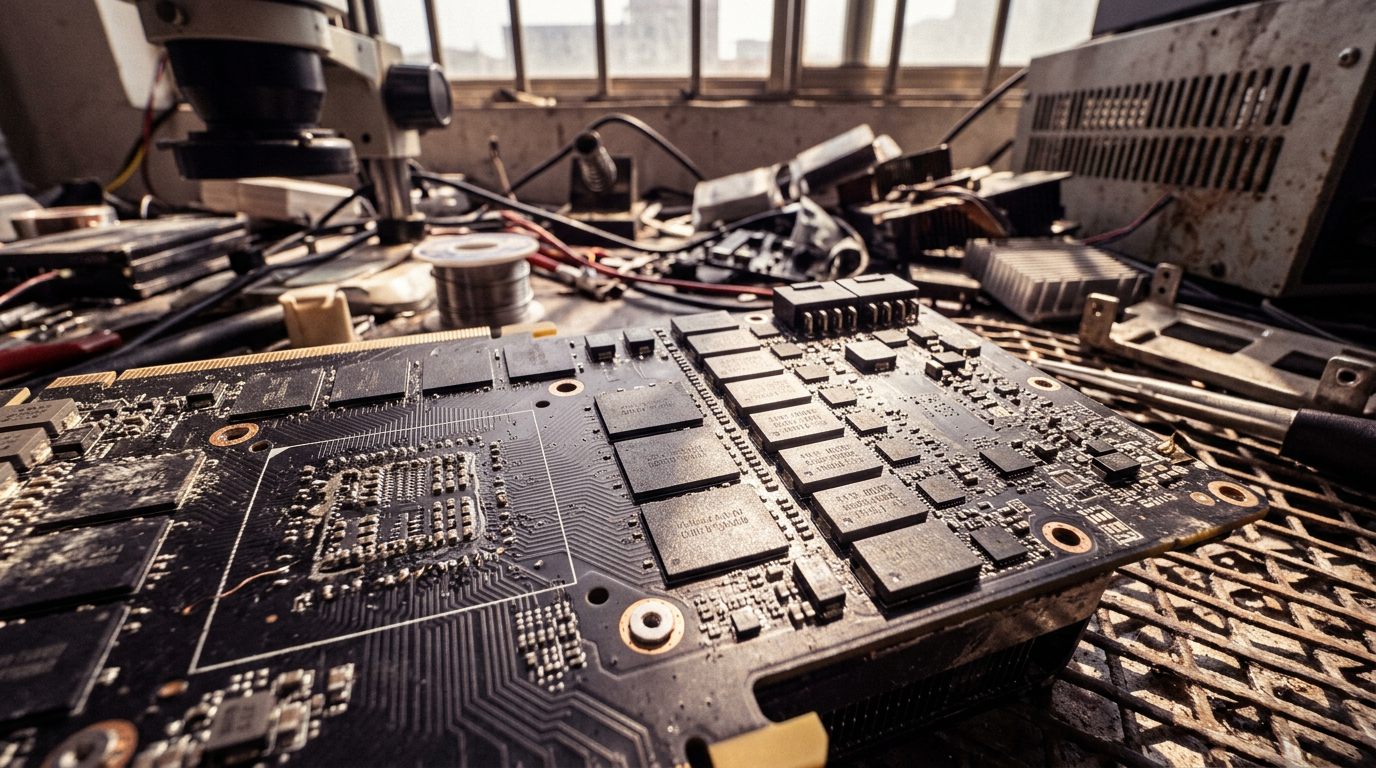
A specialized technician in China successfully restored functionality to a non-operational GeForce RTX 5090 AI graphics card on March 15, 2026. The repair involved a modification that reduced the card's GDDR7 memory capacity from 32GB to 28GB by disabling one memory channel. This specific type of AI card, often featuring a blower-style cooler, is reportedly assembled in China using components salvaged from standard gaming RTX 5090 units.
Component Repurposing in AI Hardware
These AI cards are not official products from NVIDIA's board partners. Instead, they are constructed by transferring components, including the GPU, from consumer-grade RTX 5090 gaming cards onto different printed circuit boards (PCBs) designed for AI and server applications. This repurposing strategy aims to meet demand for AI accelerators, particularly in regions with specific market dynamics.
Repair Process and Technical Challenges
The repair, conducted by technician Brother Zhang, addressed a card previously considered beyond repair due to damage to its GPU package and memory lines. The process involved extensive component testing, re-soldering, and ultimately bypassing a damaged memory controller. This method allowed the card to operate with a reduced memory configuration, making it usable for AI workloads despite the alteration.
Market Implications and Quality Concerns
The existence and repair of such modified cards highlight a segment of the AI hardware market where unofficial solutions are prevalent. These cards, sometimes identified as AFOX RTX 5090 blower cards, raise questions regarding ethical sourcing, product reliability, and the availability of post-sales support. The extensive modifications and component transfers inherent in their assembly process can lead to quality control challenges.
Broader Context of AI Hardware Supply
The practice of repurposing gaming GPUs for AI applications reflects ongoing pressures in the global supply chain for high-performance computing hardware. As demand for AI processing power continues to surge, particularly for large language models and complex data analytics, various methods are employed to meet this need. This includes both official enterprise-grade solutions and, as seen here, more unconventional approaches involving component reuse and modification.
Future Outlook for Modified Hardware
While such repairs demonstrate technical ingenuity, they also underscore potential risks for end-users regarding performance consistency and longevity. The market for AI accelerators remains highly competitive, with a constant push for innovation and efficiency.
The prevalence of modified hardware may indicate gaps in the official supply chain or a cost-effective alternative for certain applications, but it also necessitates careful consideration of reliability and support for these non-standard configurations.
Implications
Country Impact: The repair activity in China highlights a localized market for repurposed AI hardware, potentially driven by specific demand and supply dynamics within the region. It suggests a domestic capacity for advanced technical repairs and modifications.
Industry Impact: The practice of repurposing gaming GPUs for AI applications indicates a strong demand for AI accelerators that outstrips official supply or pricing. It points to a secondary market for AI hardware with implications for official manufacturers' market share and warranty policies.
Market Impact: The existence of modified and repaired AI cards suggests a segment of the market where cost-effectiveness and availability outweigh official support and warranty. This could influence pricing strategies for new AI hardware and create a niche for specialized repair services.