Harvard Astronomer Avi Loeb Thinks a Strange Cylinder on Mars Deserves Another Loo
Harvard astronomer Avi Loeb has drawn attention to a peculiar, metallic-looking cylindrical object observed in Mars' Gale Crater by NASA's Curiosity rover in…
Jason Kwon ·
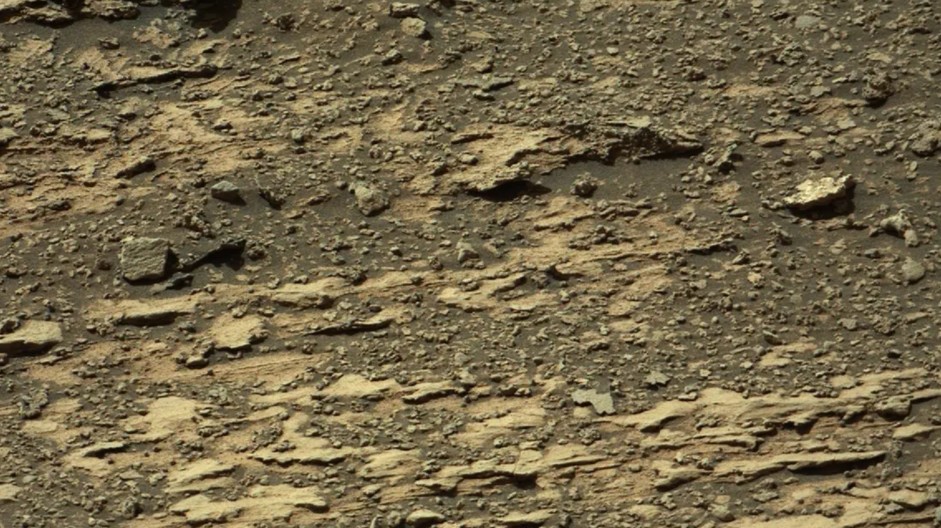
Astronomer Avi Loeb has a knack for finding the scientific equivalent of a loose thread—and tugging on it until everyone else notices. This week, the Harvard astrophysicist turned his attention to a curious object spotted years ago in the dusty slopes of Mars’ Gale Crater: a small metallic-looking cylinder half-buried in Martian soil.
The image itself isn’t new. NASA’s Curiosity rover captured it on August 7, 2022 using its Mastcam cameras while exploring Paraitepuy Pass, a narrow gap along Mount Sharp. But like many anomalies in massive planetary datasets, it sat quietly inside NASA’s archives until independent researchers noticed it.
According to Loeb, the object was first flagged by Rami Bar Ilan and later brought to his attention by Dr. Jan Špaček, a researcher studying biosignatures on Mars, and philosopher of science Carol Cleland, who focuses on scientific anomalies and how they shape discovery. The image—and a cluster of related frames from Curiosity’s Mastcam—shows what appears to be a shiny, perfectly cylindrical object about 20 centimeters long with a flat end.
That description alone is enough to spark internet speculation. But Loeb isn’t claiming alien technology. In fact, he says the most likely explanation is much more mundane: space junk.
Rovers routinely leave debris behind. During Curiosity’s dramatic 2012 landing, its descent system scattered pieces of heat shield and Sky Crane hardware across the Martian surface. Over time, wind can move those fragments. The rover itself has also shed small pieces of equipment during its decade-long mission.
“The most likely explanation,” Loeb notes, “is that the cylinder corresponds to human-made debris.”
Still, the object stands out. Mars is famous for geological illusions—hematite “blueberries,” crystalline gypsum, and rocks sculpted by relentless wind. But the apparent symmetry and metallic sheen of this object make it visually distinct enough that Loeb believes it deserves closer inspection.
Curiosity has already traveled far from the site. The rover is currently exploring the lower slopes of Mount Sharp, roughly eight kilometers away from where the cylinder was photographed. But Loeb points out that Curiosity’s maximum driving speed—about 0.16 kilometers per hour—means it could theoretically return within days if mission planners wanted to investigate.
NASA hasn’t commented on the object publicly. And that’s not unusual. Planetary missions generate millions of images, and small anomalies rarely trigger official follow-ups unless they affect mission science priorities.
Loeb argues that this is exactly why open scientific discussion matters.
“Anomalies are best analyzed in the open,” he wrote, suggesting that public scrutiny can sometimes motivate new data collection or deeper analysis.
For Loeb, the point isn’t to prove something extraordinary. It’s to resist the instinct to dismiss odd data too quickly.
Mars exploration is full of moments where strange-looking objects turned out to be mundane geology—or the occasional piece of rover hardware. But occasionally, those curiosities reveal something genuinely new about planetary processes.
So the question Loeb poses is simple: if there’s even a small mystery sitting on the surface of another planet, should we just assume we know what it is—or take the time to go look?