

Pope Francis’s 140-page diary reveals private doubts over 32 years
The 140-page notebook edited by Cardinal Víctor Manuel Fernández spans from his 1992 bishop appointment to 2024, focusing on personal spiritual struggles…
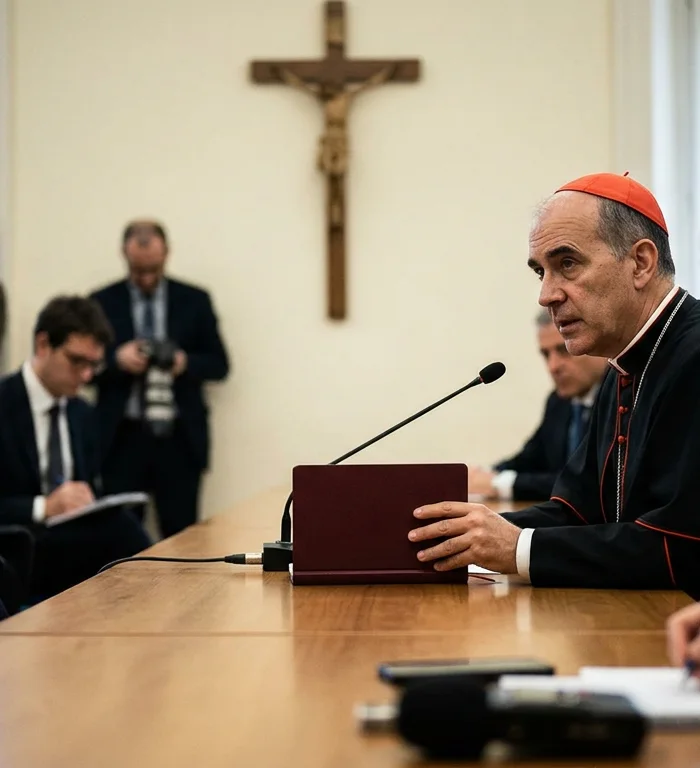
A newly published 140-page personal diary of Pope Francis details 32 years of private spiritual reflections and personal self-doubt, according to a book review published by The Guardian on Nov. 27.
Edited by Cardinal Víctor Manuel Fernández and issued 20 months after the pontiff's death, the notebook sidesteps curial politics and policy disputes to record private devotional battles spanning his 12-year papacy.
The volume draws from an eight-by-six-inch jotter that Jorge Mario Bergoglio kept from his December 1992 appointment as an auxiliary bishop in Buenos Aires until August 2024. In an entry from 2010, he confessed to feeling vulnerable to moral failure, writing, “I saw how many times I allow feelings of disdain, envy, pride to overtake me. I feel so ashamed.”
Even after ten years on the papal throne, he cautioned against “the proud, self-sufficient, cynical, self-deceptive Jorge,” and noted in 2017: “I must be careful not to feel too confident in my ministry.”
The text highlights an intense devotional life rather than an academic theology, recording how Francis slipped written prayers under an image of St Joseph. It also recounts visceral spiritual struggle; in 2021, Francis recorded confronting demonic presence during a meeting: “I was in a meeting, I saw him and heard his voice … I can’t forget the powerful raspiness. The Lord gave me an opportunity to leave that meeting and thus he freed me.”
Reflecting on destitute people in Argentina, he recorded, “When I see those who are drunk on the street, I feel humble, I could be one of them, or a delinquent, or a murderer.”
Bergoglio was elected in March 2013 as the 266th Roman Catholic pontiff, becoming the first Jesuit pope and the first born outside Europe since the eighth century. He chose simplicity over Vatican grandeur, eschewing the official papal apartments for a Vatican guest house after arriving on a return ticket from Buenos Aires. During his 12-year reign, he denounced economic inequality as “all the more serious because it exists in countries that call themselves Catholic” and famously replied “who am I to judge?”
regarding gay Catholics.
Reviewers noted that the volume, edited by the prefect of the Dicastery for the Doctrine of the Faith, offers little institutional insight and leaves out the inner workings of church reform. His March 2013 election receives only four words: “They elected me pope.” The only living characterisation of a peer concerns his predecessor, Benedict XVI, whose presence in retirement Francis likened to “like having your grandfather in the house”.
Non-chronological organisation obscures whether Francis's worldview shifted across three decades, leaving unresolved questions about editorial omission.
Source: Book review, The Guardian, Nov. 27, 2026.
More stories
- Laura Brand curbs prison messages after YouTube dispute
- David Parr House to honor Victorian art-workman with blue plaque
- Al-Fatlawi recasts Iraq on screen with about $2.5m debut
- Strictly expands stage for 8 couples in Blackpool return
- Anoop Lokkur seeks backers for $1.3m Bengaluru dark comedy
- Jeff Buckley track tops 500,000 TikTok uses this year
Latest news
- Duterte faces ICC trial over 85 alleged murders, 2 attempts
- Norse Atlantic suspends flights in urgent rescue funding bid
- Bardella denies antisemitism claims over teenage messages
- Retailers rethink Black Friday as discount fatigue grows
- Japan data centers face lawsuits over residential sites
- S&P puts Nvidia credit rating on watch over board concerns
- Musk pledges two SpaceX shares per child in new US giveaway
- Washington targets China in new tariff push on trade ties