Poland Expands LNG Capacity to Bolster Regional Energy Security
Poland is expanding its LNG regasification capacity to 20 billion cubic meters by 2030 to secure energy independence and transition away from coal.
Lauren Collins ·
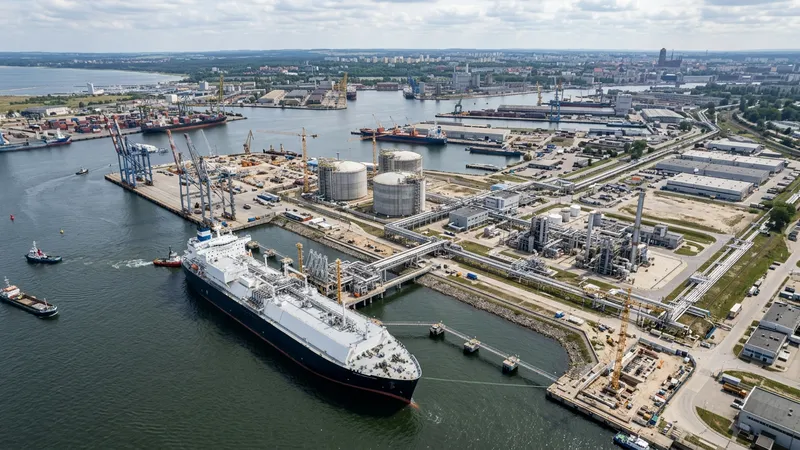
Poland is accelerating the development of its offshore floating storage and regasification unit (FSRU) in Gdańsk, aiming to mitigate regional energy dependency on Russian supplies. The project is scheduled to become operational in early 2028, providing an additional 6.1 billion cubic meters of annual regasification capacity. A second vessel is planned for 2030, which will further increase the nation's total capacity to over 20 billion cubic meters per year.
This infrastructure expansion aims to transition Poland from a domestic consumer to a central energy hub for Slovakia, the Baltic states, and broader Central and Eastern Europe. The initiative seeks to insulate the region from volatile global energy markets and geopolitical supply disruptions by diversifying supply routes. This shift follows the 2022 cessation of Russian gas imports, which necessitated a rapid pivot to global liquefied natural gas (LNG) markets.
Boosting Regional Energy Independence Officials involved in the project emphasize its importance beyond Polish borders. Agnieszka Ozga, director of the energy transition division, highlighted that the Gdańsk FSRU is critical not only for Poland but also for Slovakia, other Central and Eastern European countries, and the Baltic states, which were fully dependent on Russian gas inflows. This effort aims to end the isolation of these nations within the European Commission's energy strategy. The acceleration of the FSRU project follows significant historical context. Poland historically imported more than half of its gas from Russia but refused to pay in rubles in 2022 following the invasion of Ukraine. Prior initiatives, such as a Norwegian pipeline under the Baltic Sea and an LNG terminal at Świnoujście, helped to sustain energy supply. Challenges in Energy Transition
Eastern Europe
Despite advancements in gas diversification, Poland remains heavily reliant on coal, which currently accounts for over 50 percent of its electricity generation. The country faces a complex transition, balancing the decommissioning of legacy Soviet-era fossil fuel infrastructure with European Union decarbonization mandates. Maintaining energy stability while gradually phasing out coal-dependent sectors remains a significant structural challenge for the economy.
The open question for Poland is how quickly it can reconcile its expanded gas infrastructure, aimed at immediate energy security, with its long-term commitments to reduce coal dependency and achieve broader decarbonization goals.