

Pasithea plans NF1 data update from 18 patients
The company says PAS-004 is designed for chronic use in neurofibromatosis type 1, where safety may shape the commercial opportunity.
Pasithea Therapeutics plans to present initial PAS-004 data from 18 patients in its ongoing NF1 study next month, according to a Defense World article published Oct. 23.
The readout matters because Chief Executive Officer Dr. Tiago Reis Marques said NF1 currently affects an estimated 150,000 people in the U.S., compared with about one in 3,000 newborns, and cutaneous disease lacks an FDA-approved systemic therapy.
PAS-004 is an oral MEK inhibitor, a drug designed to block part of a cell-signaling pathway involved in tumor growth. Pasithea is testing it in neurofibromatosis type 1, a genetic disorder that Marques said is caused by mutations in the NF1 gene.
The company is in the dose-escalation portion of a Phase Ib trial, an early clinical stage used to test dosing and safety. The study spans six dose cohorts from 4 milligrams to 24 milligrams, the article said.
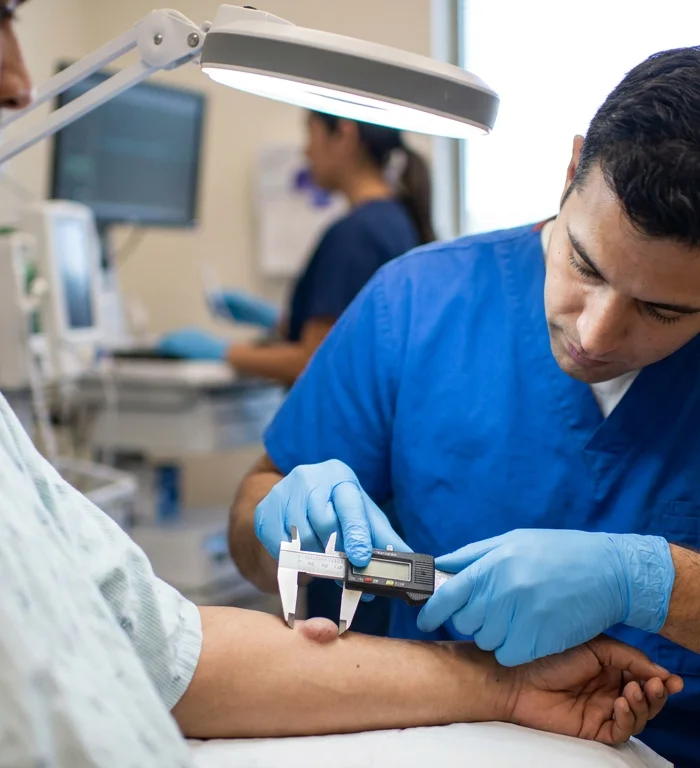
The planned presentation will include about 70 lesions across two NF1 manifestations: cutaneous neurofibromas, which appear on the skin, and plexiform neurofibromas, which develop from deeper nerves. Pasithea is measuring plexiform tumors with MRI scans and cutaneous lesions with digital calipers, according to the article.
Marques said the NF1 gene produces neurofibromin, a protein that normally restrains the RAS-RAF-MEK-ERK, or MAPK, pathway. When neurofibromin is disrupted, he said, that pathway can become overactive and contribute to tumor formation.
Cutaneous neurofibromas are central to Pasithea’s commercial and clinical case. Marques said they affect more than 99% of NF1 patients, can number from dozens to thousands, and may cause pain, itching, stigma and quality-of-life burdens.
He said lesions generally start around puberty and increase in number and volume over time. By age 50, more than 80% of participants in large cohorts have over 100 lesions, according to Marques.
For plexiform neurofibromas, Marques said investors and clinicians should focus first on the direction of tumor-volume change. He said approved therapies selumetinib and mirdametinib have average response times of about seven to eight months, which makes early efficacy signals harder to interpret.
Safety may be the larger near-term test. Marques cited rash, gastrointestinal toxicity, ocular toxicity and cardiac toxicity as concerns linked to currently approved MEK inhibitors for NF1, especially in chronic, non-oncology treatment settings.
Pasithea says PAS-004 was designed as a macrocyclic MEK inhibitor with a rigid molecular structure and a roughly 60-hour half-life. Marques said the company believes those features may help avoid drug-concentration peaks and troughs associated with some therapies that require twice-daily dosing.
That remains a company view rather than a proven outcome from the pending dataset. The conference presentation is expected to include safety information such as dose reductions, treatment interruptions, discontinuations and serious adverse events, according to the article.
Patient exposure differs across cohorts. Marques said some lower-dose participants have received treatment for more than a year, while higher-dose participants have generally been enrolled for about four to six months.
Regulatory pathways may differ between the two disease manifestations. Marques said plexiform neurofibroma development falls under the FDA’s Division of Oncology, while cutaneous neurofibroma development would proceed through the FDA’s Division of Dermatology.
For plexiform neurofibromas, he said earlier MEK inhibitor approvals have used Phase II registrational pathways, including comparisons with historical controls or placebo. For cutaneous neurofibromas, Pasithea expects a large Phase II study using lesion-volume reductions and patient-reported outcomes or an Investigator Global Assessment tool, followed by one Phase III registrational trial.
Upcoming NF1 milestones
Next month, Pasithea plans to present initial data from 18 patients and about 70 lesions at the European Neurofibromatosis Conference. The main observable will be lesion-volume changes and the accompanying safety profile.
Around the first or second quarter of 2027, Pasithea expects to choose doses for the expansion portion of its study, Marques said. That decision would indicate which dose levels the company considers suitable for further testing.
Over the 12 months after the Oct. 23 article, Pasithea also expects to seek an investigational new drug application with the FDA’s Division of Dermatology for a Phase II cutaneous neurofibroma trial, Marques said.
More stories
- Infosys faces FY27 guidance cut despite 11% Q2 revenue estimate
- Private equity healthcare deals fall to 135 in third quarter
- Emirates NBD expands loans 27% in nine months
- Loop Capital cuts Apple target to $330 on iPhone forecast
- Damen challenges Rheinmetall's Mangalia deal at 75% of start
- iShares Semiconductor ETF gains after SOX loses 15.7%
- Nvidia's reported $1 billion Figure bet tests AI supply loop
- RBL Bank slides 8% as provisions temper Q2 profit jump
Latest news
- Malawi judge faces scrutiny over $150,000 Land Cruiser ruling
- India caps margins on 137 cancer drugs
- EU shoppers face smaller products at unchanged prices
- French vandals face compensation under Senate-backed riot bill
- Steward AI trader limits live-test loss to 0.3%
- Major emitters face climate-health gap in 132-plan review
- UN climate fund earmarks $20m for Nepal flood recovery
- Gemini flags 69% of held-out thermal-video falls