

OpenAI Grants NATO and European Governments Access to Daybreak Cybersecurity Tool
OpenAI is providing NATO and European governments with its Daybreak tool to automate vulnerability detection and patching for critical infrastructure.
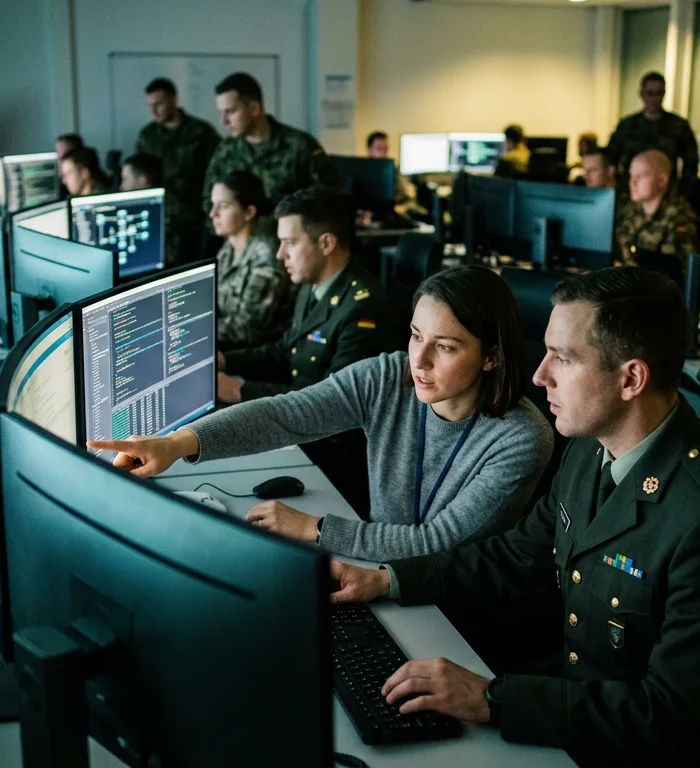
OpenAI has expanded access to its proprietary cybersecurity tool, Daybreak, to NATO and several European governments. The platform utilizes large language models to assist cyber defense teams in auditing software, identifying vulnerabilities, and automating the patching of security gaps.
The NATO Communications and Information Agency (NCIA) has integrated these models into its operational framework, characterizing the technology as a significant advancement in defensive cyber capabilities. During the recent 'Crossed Swords 2026' exercise, NATO participants deployed AI agents for cyber operations under human supervision, marking a shift in the integration of autonomous systems within alliance defense protocols.
Practical applications of the technology have already yielded measurable results across European institutions. The European Union Agency for Cybersecurity (ENISA), in collaboration with CERT-EU, utilized the models to audit 27 software projects, identifying four critical vulnerabilities. Analysis confirmed that 95 percent of the 88 reported issues flagged by the system were verified as genuine software bugs.
National cybersecurity entities are also leveraging the tool for active threat mitigation. Poland’s CERT Polska utilized the platform to identify six vulnerabilities in MikroTik routers that were subject to active exploitation. Additionally, the technology is currently being deployed to secure civilian infrastructure in Ukraine, while France and Germany have also been granted access to the tool.
The NATO Communications
The deployment of Daybreak represents a strategic shift toward AI-augmented vulnerability management. By automating the identification of security flaws, the tool reduces the time required for manual code review and remediation. However, the reliance on third-party AI models for critical infrastructure security introduces new dependencies on private sector technology providers for national and collective defense operations.
Future developments will likely focus on the scalability of these AI agents in high-intensity cyber conflict scenarios. Policymakers should monitor the long-term implications of integrating commercial AI models into sovereign defense architectures, particularly regarding data sovereignty and the potential for adversarial manipulation of the underlying models.
More stories
- Europe faces attribution gap after 16 cyber, physical incidents
- PIF backs Grand Theft Auto as Saudi players embrace game
- Signal limits screenshots to curb AI access to messages
- Cognition runs Devin Mac workspaces on EC2 in 6 AWS regions
- Salesforce engineers cut 600-failure triage to 90 minutes
- Türkiye Desk: GTA 6 puts console access and network demand in focus
- Microsoft plans Project Helix as Xbox console for PC games
- OpenAI buys travel startup Odessia
- Australia social media ban: fines lifted to A$99m cap
- SpaceX joins Nasdaq 100 on July 7, fuels ETF inflows
Latest news
- Trump prepares tariffs on China and other major exporters
- New-car buyers pay record average $50,087 in October
- Banks face ECB reserve debate over liquidity and profits
- Investors see Anthropic debut gains fade below $83 a share
- Iraq orders federal control over Kurdish-area oilfields
- Germans oppose Ukraine aid as poll shows support slipping
- Kim Jong-un receives 10 envoys after constitutional shift
- Ukraine claims Libya strike sinks Russian naval corvette