NVIDIA Introduces DLSS 5 for Enhanced Game Graphics
NVIDIA DLSS 5, launching March 16, 2026, features a real-time neural rendering model for photorealistic game graphics, lighting, and materials.
Jason Kwon ·
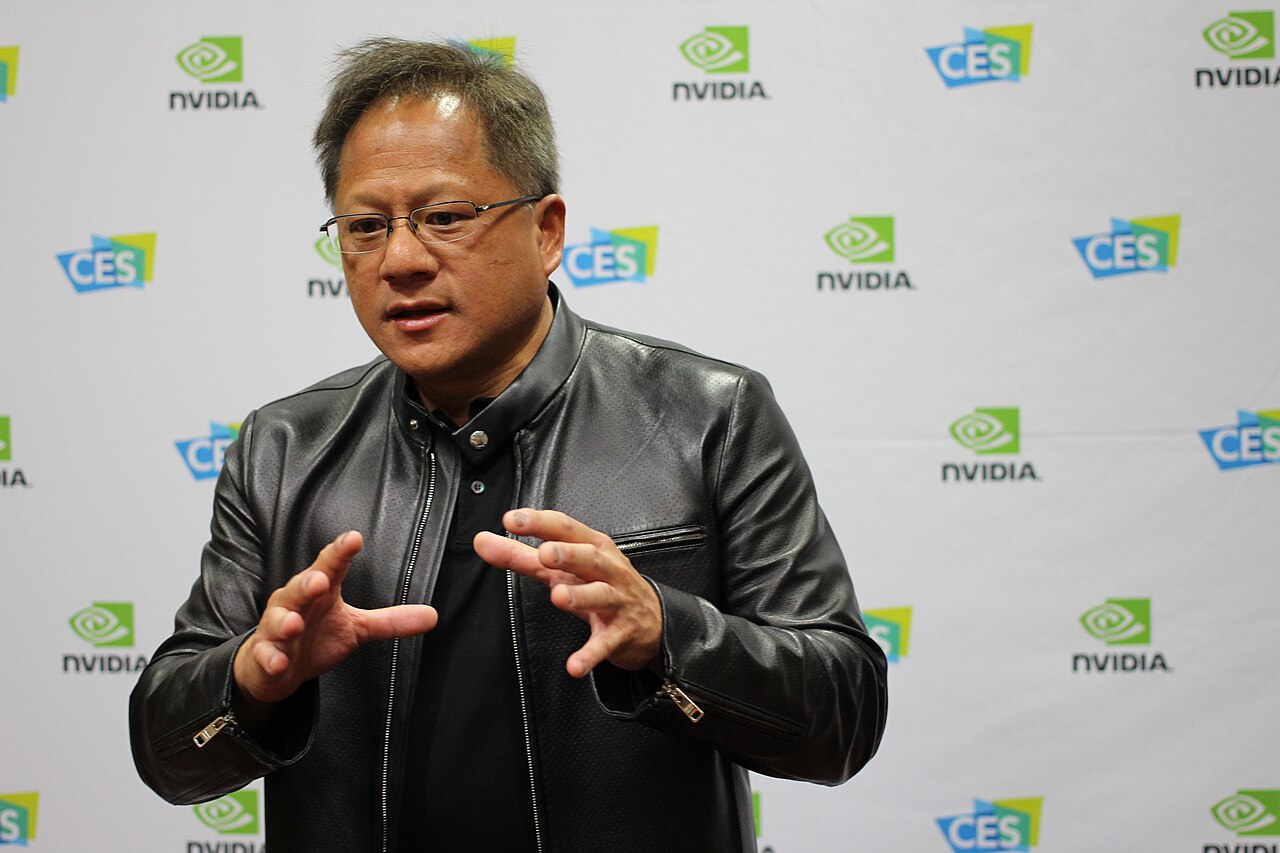
NVIDIA has officially unveiled its latest graphics technology, Deep Learning Super Sampling (DLSS) 5, marking a significant evolution in real-time rendering for video games. Announced on March 16, 2026, at the company's GTC conference, this iteration aims to elevate visual realism by integrating advanced artificial intelligence directly into the rendering pipeline.
The core innovation of DLSS 5 lies in its neural rendering model, which processes game environments to generate highly detailed and photorealistic imagery. This AI-driven approach allows for the infusion of realistic lighting and material properties into individual pixels, moving beyond traditional rendering techniques.
Advanced AI Rendering Capabilities
The technology functions by analyzing a game's color and motion vectors, enabling the AI model to comprehend complex scene semantics. This includes recognizing distinct elements such as character models, environmental lighting conditions, and the intricate interactions between light and various materials within a scene. For instance, DLSS 5 can accurately render subtle effects like subsurface scattering on skin textures and the nuanced interplay of light on hair.
Crucially, the system is engineered to maintain the original artistic vision and structural integrity of the game world. Developers retain control over key visual parameters, including intensity, color grading, and masking, ensuring that creative intent is preserved while leveraging the AI's enhancements.
Industry Adoption and Performance
Major game publishers and development studios have committed to supporting DLSS 5. This includes prominent names such as Bethesda, CAPCOM, Hotta Studio, NetEase, NCSOFT, S-GAME, Tencent, Ubisoft, and Warner Bros. Games. This broad industry backing suggests a rapid integration of the technology into upcoming game titles.
DLSS 5 is designed to operate in real-time, supporting resolutions up to 4K. This capability is vital for delivering smooth gameplay experiences even with the increased graphical fidelity. The technology builds upon previous DLSS iterations, which have progressively utilized AI to upscale lower-resolution images to higher resolutions, thereby improving performance without a significant loss in visual quality.
Evolution of DLSS Technology
Since its initial introduction, NVIDIA's DLSS framework has continuously evolved, leveraging deep learning to reconstruct frames. Earlier versions primarily focused on upscaling and anti-aliasing. DLSS 5 represents a shift towards generative AI, where the system actively creates or enhances pixel data based on its understanding of the scene, rather than merely interpolating or reconstructing.
This advancement positions DLSS 5 as a key component in the ongoing pursuit of photorealistic graphics in interactive entertainment, potentially setting new benchmarks for visual quality and performance in the gaming industry.
Implications
Country Impact: The adoption of advanced graphics technologies like DLSS 5 could further solidify the position of countries with strong technology and gaming sectors, particularly in North America and Asia, as leaders in digital entertainment innovation.
Industry Impact: The gaming industry is poised for a significant visual upgrade, potentially driving demand for more powerful graphics hardware. Game developers will gain new tools to achieve higher fidelity with optimized performance, influencing production pipelines and artistic approaches.
Market Impact: The introduction of DLSS 5 is likely to boost NVIDIA's market position in the high-end GPU segment, potentially increasing sales of compatible graphics cards. It could also stimulate competition among hardware manufacturers to develop similar AI-driven rendering solutions.