

Global Coalition Pledges to Triple Nuclear Energy Capacity by 2050
Global nuclear energy targets aim for a threefold capacity expansion by 2050 as expanding data centers and electric vehicles drive grid demand.
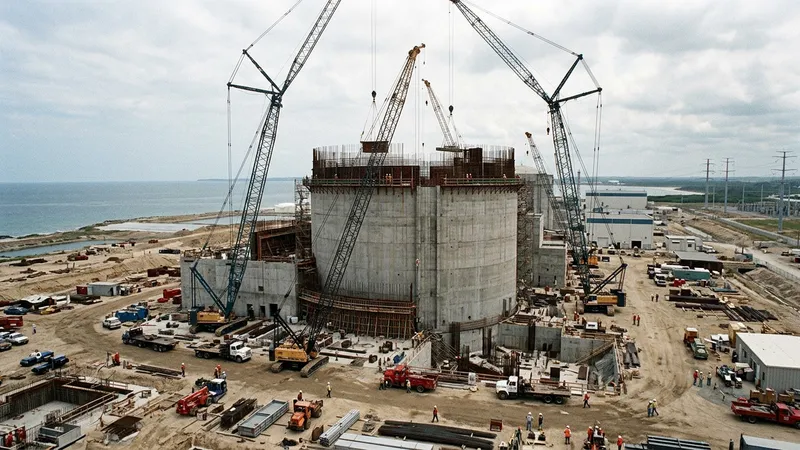
Escalating global electricity consumption fueled by expanding data facilities and electric vehicle power demands is accelerating a major realignment across international energy markets. To accommodate these growing grid requirements, an international coalition of 31 nations has formally committed to tripling total nuclear power capacity by the year 2050.
Achieving this international goal requires dual strategic priorities: extending operational lifespans across existing plants alongside deploying newly designed reactors.
Project developers within the United States navigate persistent operational uncertainties that complicate infrastructure investments. Protracted regulatory approval timelines and unpredictable construction expenditures present ongoing obstacles to project execution. Additionally, broader economic factors—such as proposed trade policies that might levy import tariffs on essential building supplies like steel—introduce further risks to the financial viability of future projects.
Although the United States maintains the largest operational
Although the United States maintains the largest operational reactor fleet globally, the nation currently lacks major conventional reactors actively under build. Consequently, domestic sector expansion relies primarily on life extensions for older units and the commercialization of next-generation concepts rather than building traditional utility plants.
Asian Construction Surge and New Civil Nuclear Entrants
Nuclear development displays a contrasting pattern in Asia, where sovereign strategy drives aggressive power grid expansion. Countries in the region, led by China, are rapidly building out energy infrastructure by fast-tracking the operational startup of large conventional power units. This momentum reflects a concerted regional effort to bolster baseline electricity supply through substantial capital investments.
This regional activity is complemented by new participants entering the civil nuclear sector for the first time. Emerging nations including Bangladesh and Turkey are initiating their initial civil nuclear programs aimed at diversifying local electric supplies. The entry of these new market players signals a broader realignment of global energy security priorities and power generation distribution.
Generation IV Systems Target Key Operational Benchmarks
Industry research and technology initiatives are focusing heavily Industry research and technology initiatives are focusing heavily on Generation IV systems. Such advanced architectures utilize non-traditional cooling methods and tailored fuel enrichment ratios designed to enhance safety protocols and operational efficiency. By leveraging these technical upgrades, developers seek to deliver more adaptable and reliable utility options.
Within the American market, multiple technology firms are moving proprietary Generation IV blueprints past preliminary engineering into physical construction. Prototype facilities built by these vendors are slated to hit target operational milestones from 2026 through 2027. Full completion and trial operation of these pilot plants will establish a decisive benchmark, measuring commercial scalability alongside long-term financial viability for advanced reactor technology.
More stories
- Prime Minister Releases Secret Manchester City Meeting Records
- Climate and AI Risks Drive Litigation, Reshaping Corporate Liability
- Net Zero Cost Projections Inflated by Nearly Half a Trillion Pounds
- Trump Administration Actions Lower Fuel Prices, Raise Long-Term Economic Risks
- New US AI Export Curbs Ignite Global Tech Supply Chain Chaos
- Conservative Air Defense Plan Faces Scrutiny Over Cost, Scope
- Dr. Heidi Overton Nominated as FDA Commissioner
- Stars and Stripes Publisher Resigns Amid Pentagon Editorial Clash
Latest news
- ESA Astronaut Completes Record-Breaking 237-Day International Space Station Mission
- Computational Breakthrough Enables Predictive Modeling of Quantum Material Behavior
- Quantum Vacuum Engineering Increases Superconductor Critical Temperature
- ChangXin Memory Technologies Advances 4F Square DRAM Architecture
- Expansion of Enhanced Geothermal Energy Capacity and Market Scaling
- Houthi strike kills 14 at Riyadh airport
- ASOS Data Breach Highlights Vulnerabilities in Third-Party SaaS Integration
- Emerging Cybersecurity Risks from AI Agent Manipulation