Moon's Nuclear Future: US Aims for 2030 Power Reactor
U.S. lunar nuclear power strategy targets orbital reactors by 2028 and a Moon reactor by 2030, involving NASA, Defense and Energy.
Jason Kwon ·
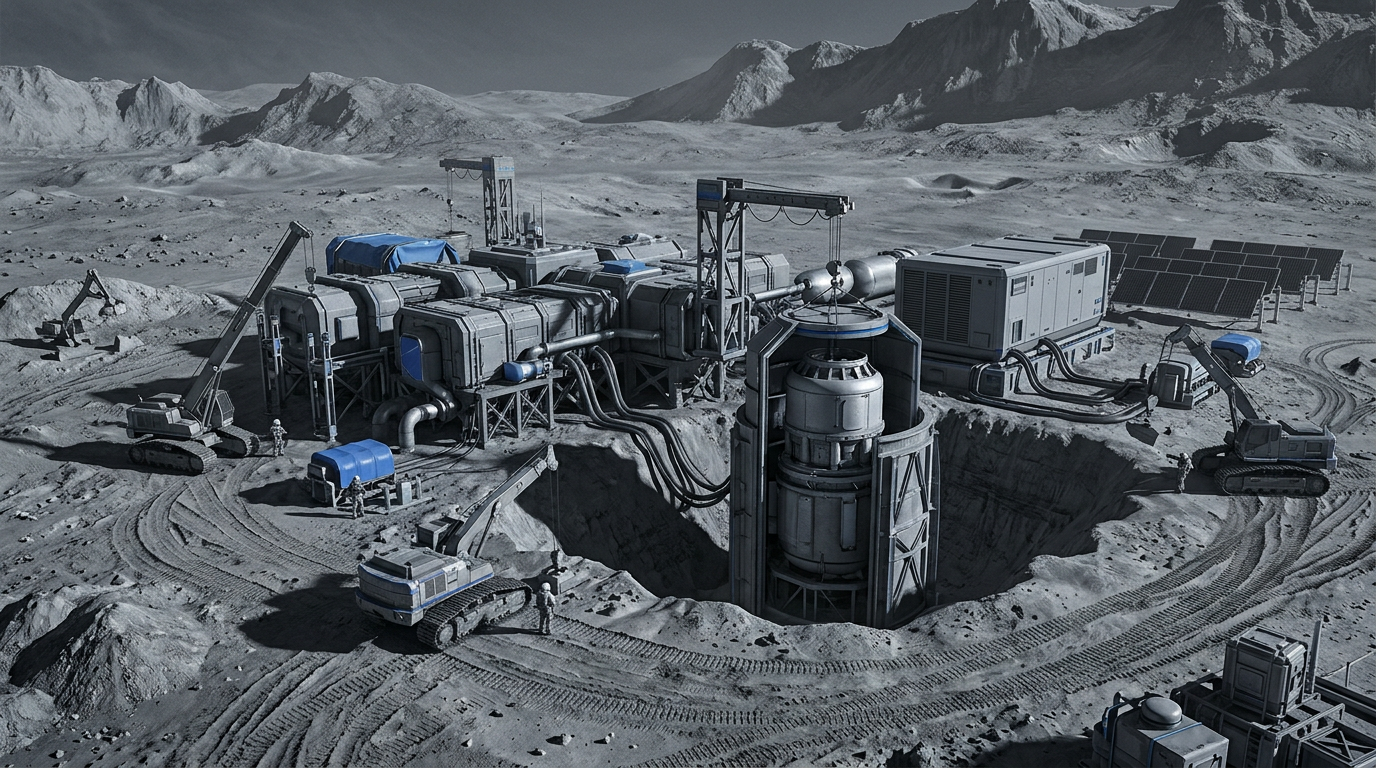
The United States is moving to place nuclear fission reactors in orbit and on the Moon by 2030 under a new federal strategy aimed at maintaining U.S. space superiority, according to a plan set out by the White House Office of Science and Technology Policy (OSTP). Officials framed the effort as a way to secure reliable power for sustained operations beyond Earth, where energy needs can exceed what solar arrays and batteries can consistently provide.
The strategy brings together the National Aeronautics and Space Administration (NASA), the Department of Defense, and the Department of Energy. The plan describes nuclear power as a response to the limits of solar generation for long-duration missions, noting that solar output can be intermittent and that storing enough energy requires large battery systems.
By contrast, nuclear fission reactors are described as capable of delivering steady electricity for years, supporting extended missions, subsistence for a lunar base, and nuclear electric propulsion.
OSTP’s timeline sets two major milestones. The strategy calls for a medium-power nuclear reactor in orbit by 2028, including a version intended to support nuclear electric propulsion. It also directs the development of a functional large reactor on the lunar surface by 2030, positioning lunar power generation as a core enabler for longer stays and more demanding infrastructure.
To reach those targets, the plan assigns parallel development tracks to NASA and the Pentagon, with the stated goal of advancing energy technologies while encouraging competition among contractors. The Department of Energy is tasked with ensuring fuel supply, building out supporting infrastructure, and incorporating safety features.
The strategy also says the Department of Energy will assess industrial capacity to produce up to four reactors within five years, linking the program’s feasibility to manufacturing readiness and supply-chain execution.
Technical requirements in the strategy emphasize flexibility and growth. The reactors are expected to be modular and scalable, and to generate at least 20 kilowatts of electricity (kWe) for three years in orbit and five years on the lunar surface. The design is also required to be adaptable to 100 kWe, indicating an intent to move from initial deployments toward higher-power systems as missions expand.
The initiative is presented within a broader technological competition with China focused on space infrastructure. S. agencies and domestic industrial capacity, its implications extend to global space governance and the international market for advanced power systems, as sustained lunar and orbital operations could reshape procurement priorities and technology standards.
Key uncertainties highlighted by the strategy include whether industrial capacity can meet the stated production pace and whether the required fuel, infrastructure, and safety features can be delivered on the schedule set out for 2028 and 2030.