

NASA Validates Supersonic Rotor Technology for Future Mars Missions
NASA has successfully tested helicopter rotor blades at supersonic speeds, achieving a 30% increase in lift capacity to enable heavier scientific payloads…
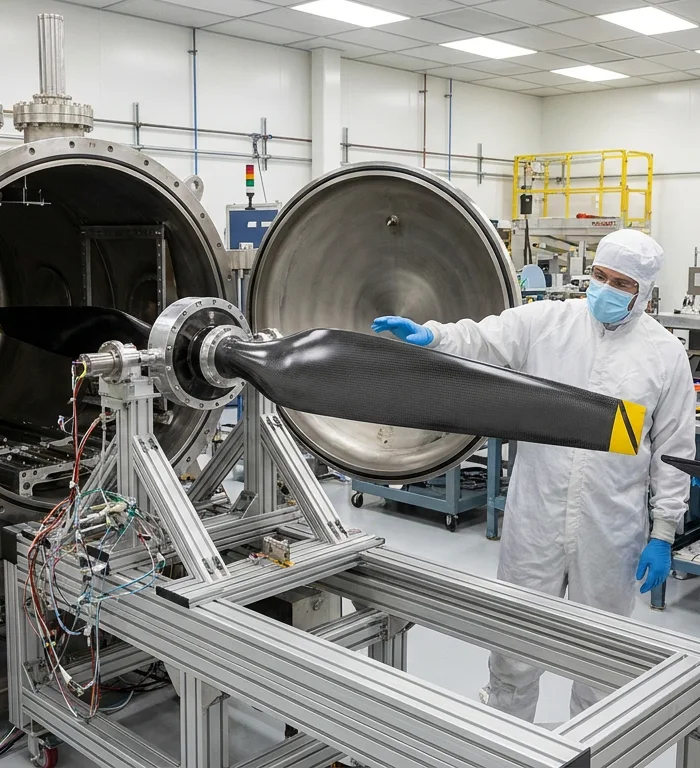
Engineers have successfully tested helicopter rotor blades at supersonic speeds in simulated Martian atmospheric conditions. The testing, conducted at the Jet Propulsion Laboratory, demonstrated that rotor tips can operate at Mach 1.08 without structural failure. This technical milestone represents a significant shift from previous flight parameters, which were strictly limited to subsonic speeds to ensure stability.
The ability to operate at supersonic speeds increases potential lift generation by approximately 30%. This performance gain is critical for future Mars exploration, as the planet's thin atmosphere—roughly 1% the density of Earth's—severely limits the payload capacity of aerial vehicles. By overcoming these aerodynamic constraints, future aircraft will be capable of carrying heavier scientific instrumentation and conducting more extensive aerial surveys.
Previous missions utilized rotor speeds capped at Mach 0.7 to maintain a safety margin against unpredictable atmospheric turbulence. The new testing protocols, which involved 137 individual runs in a specialized vacuum chamber, confirm that next-generation composite-skinned rotors can withstand the mechanical stresses associated with the sound barrier. These findings provide the necessary data to transition from technology demonstration missions to functional, instrument-carrying aerial platforms.
This development directly supports the objectives of upcoming initiatives such as the SkyFall project. By enabling flight at lower altitudes with increased payload capacity, these advancements will facilitate more detailed data collection for both robotic and future human exploration missions. The successful validation of these high-speed rotor systems reduces the primary engineering barrier to deploying more robust, long-range aerial assets on the Martian surface.
More stories
- Europe faces attribution gap after 16 cyber, physical incidents
- PIF backs Grand Theft Auto as Saudi players embrace game
- Signal limits screenshots to curb AI access to messages
- Cognition runs Devin Mac workspaces on EC2 in 6 AWS regions
- Salesforce engineers cut 600-failure triage to 90 minutes
- Türkiye Desk: GTA 6 puts console access and network demand in focus
- Steward AI trader limits live-test loss to 0.3%
- Gemini flags 69% of held-out thermal-video falls
Latest news
- Trump prepares tariffs on China and other major exporters
- New-car buyers pay record average $50,087 in October
- Banks face ECB reserve debate over liquidity and profits
- Investors see Anthropic debut gains fade below $83 a share
- Iraq orders federal control over Kurdish-area oilfields
- Germans oppose Ukraine aid as poll shows support slipping
- Kim Jong-un receives 10 envoys after constitutional shift
- Ukraine claims Libya strike sinks Russian naval corvette